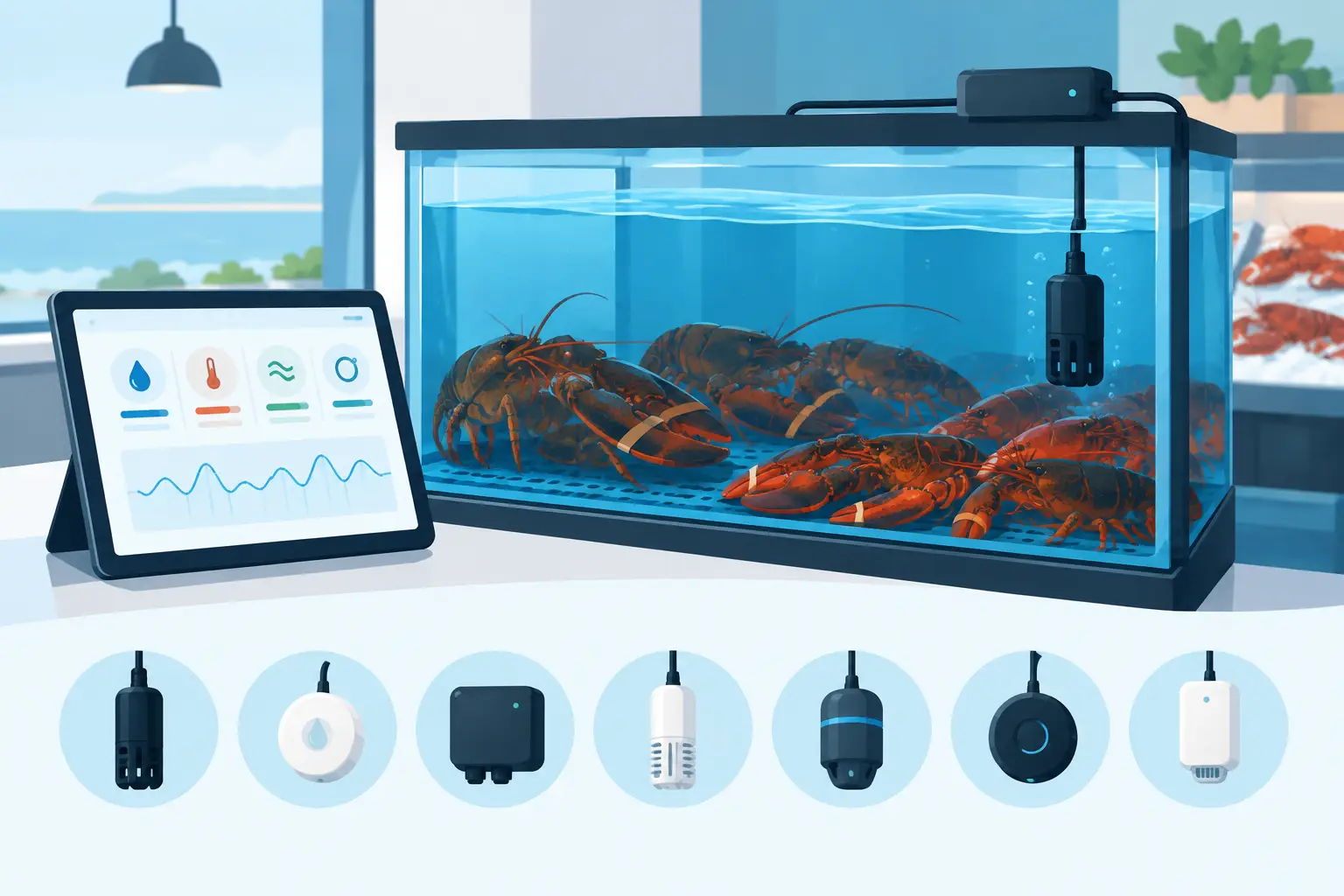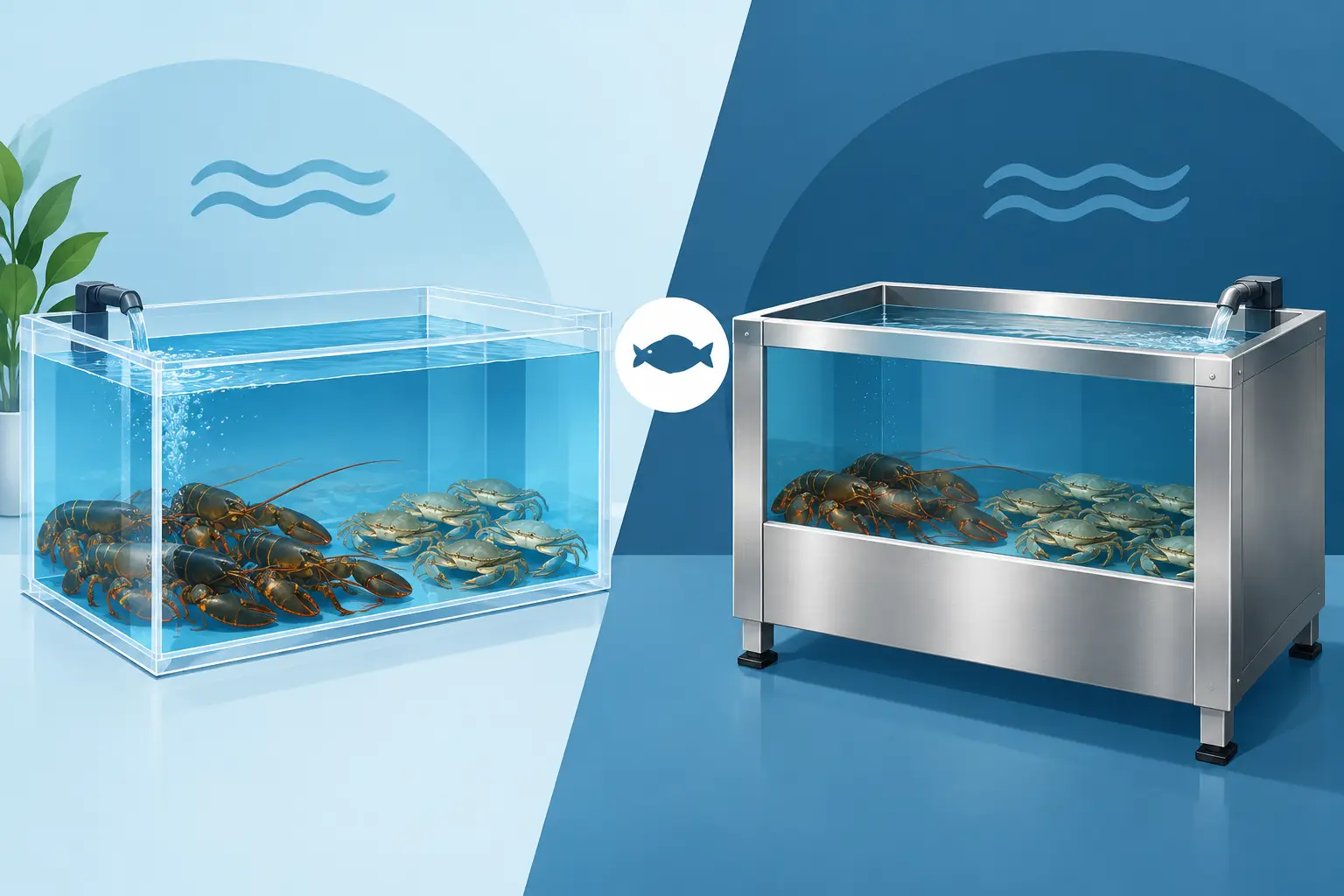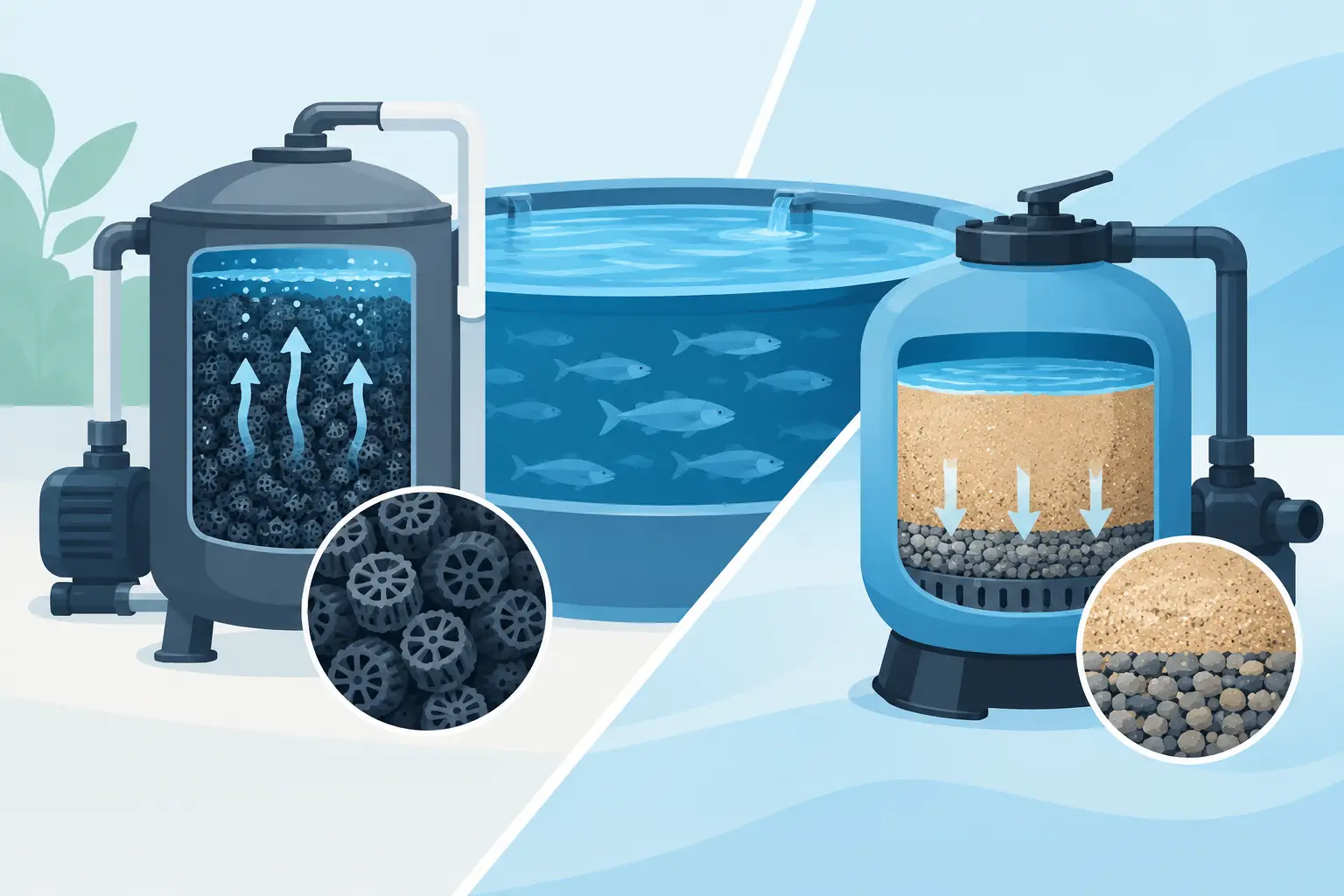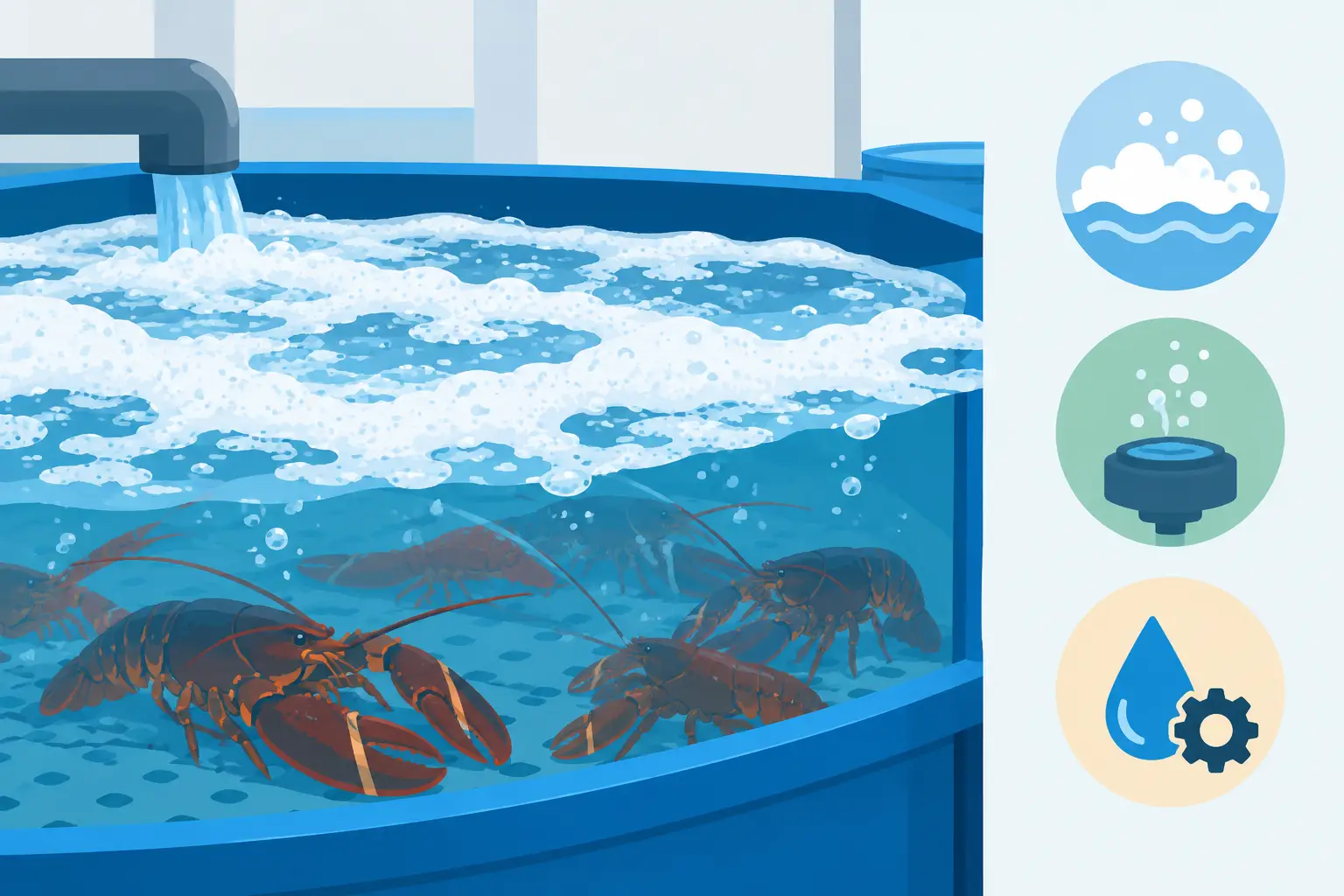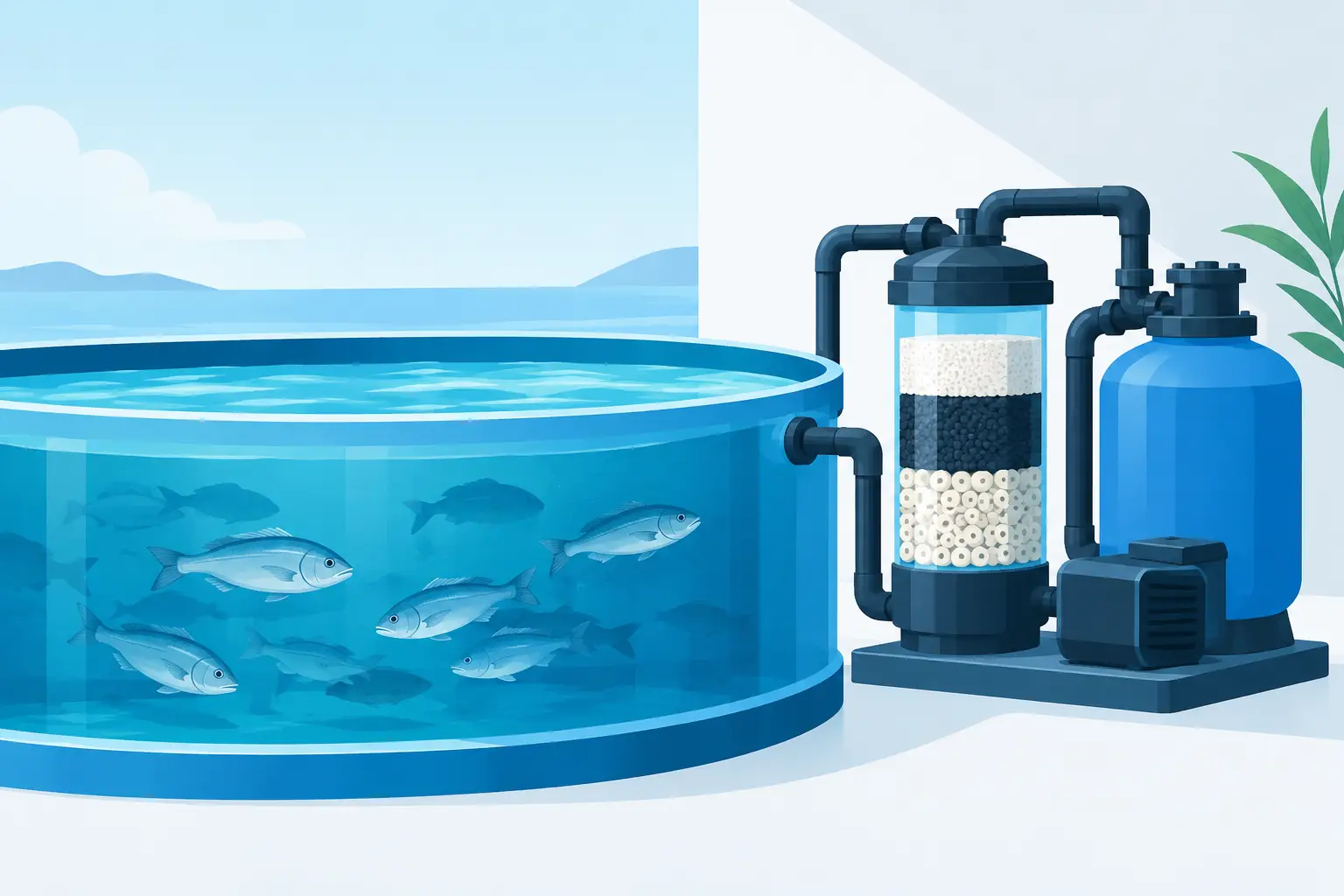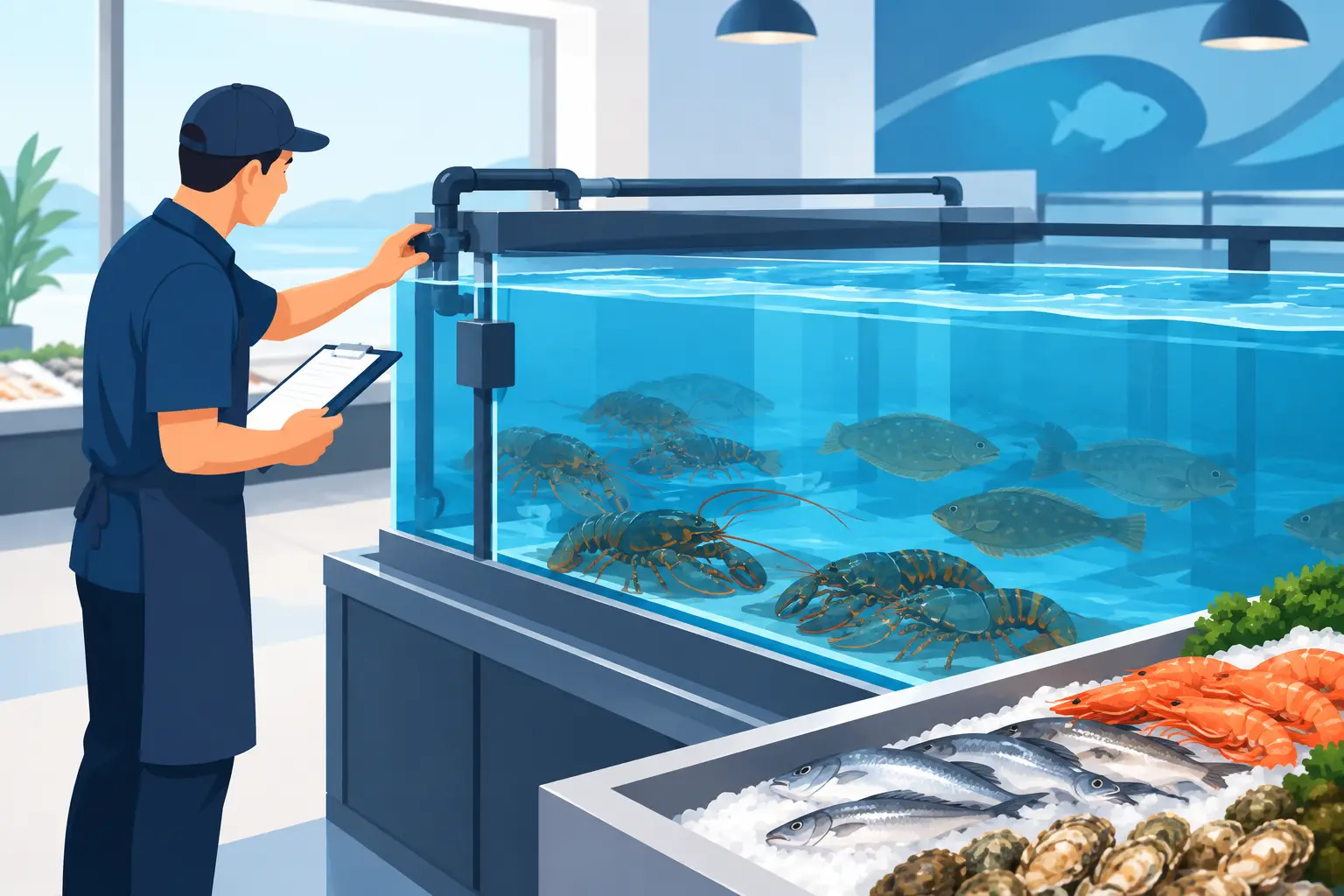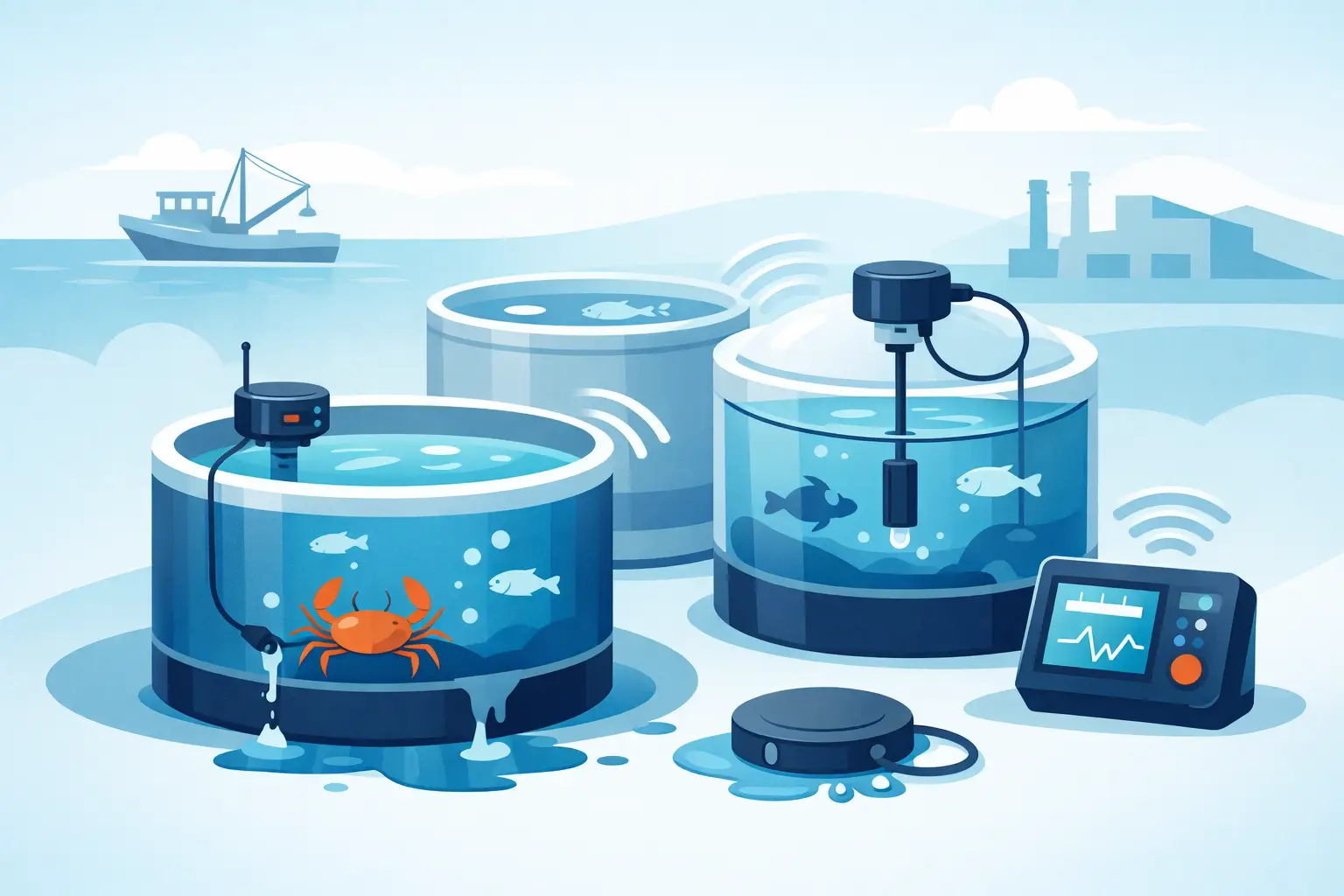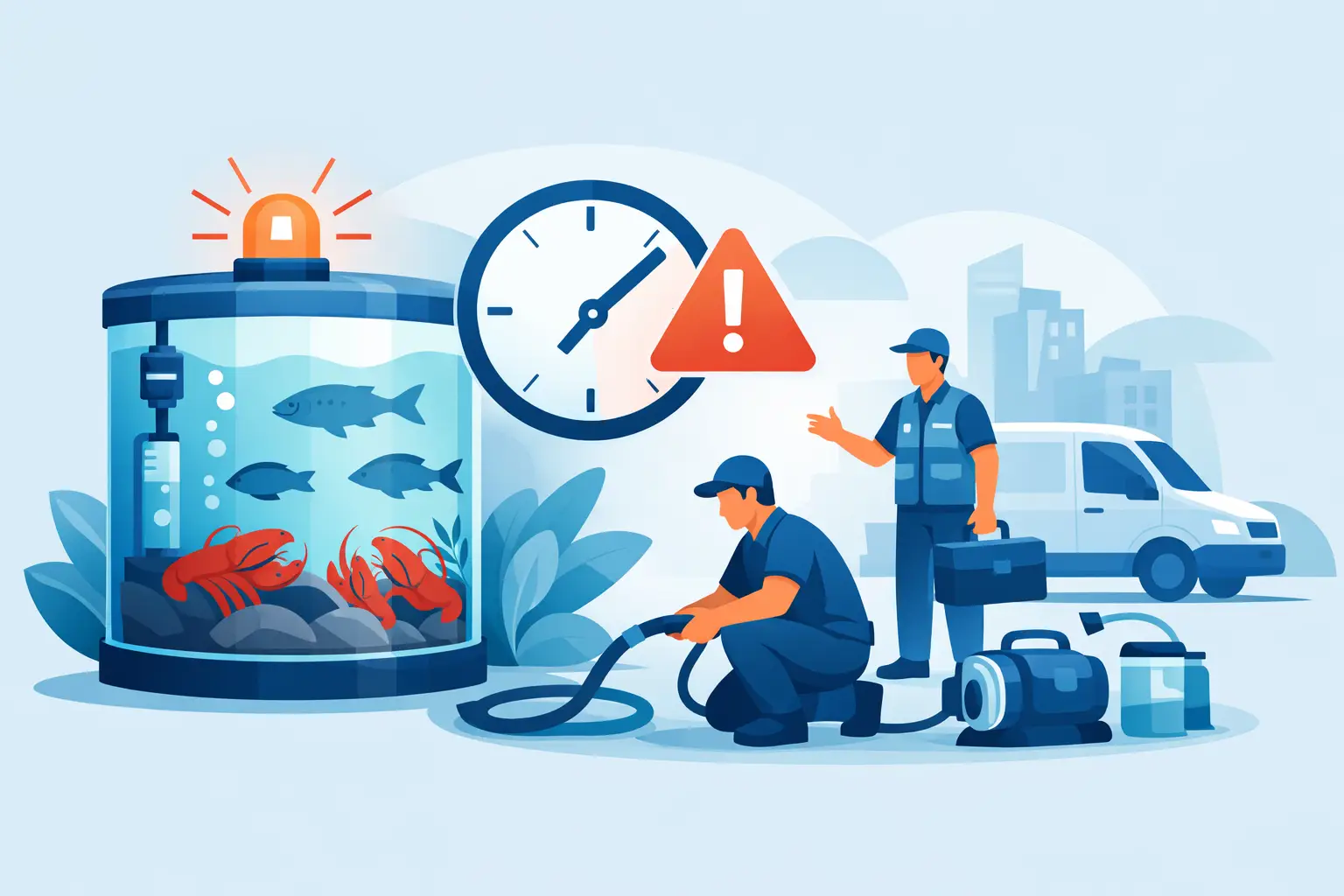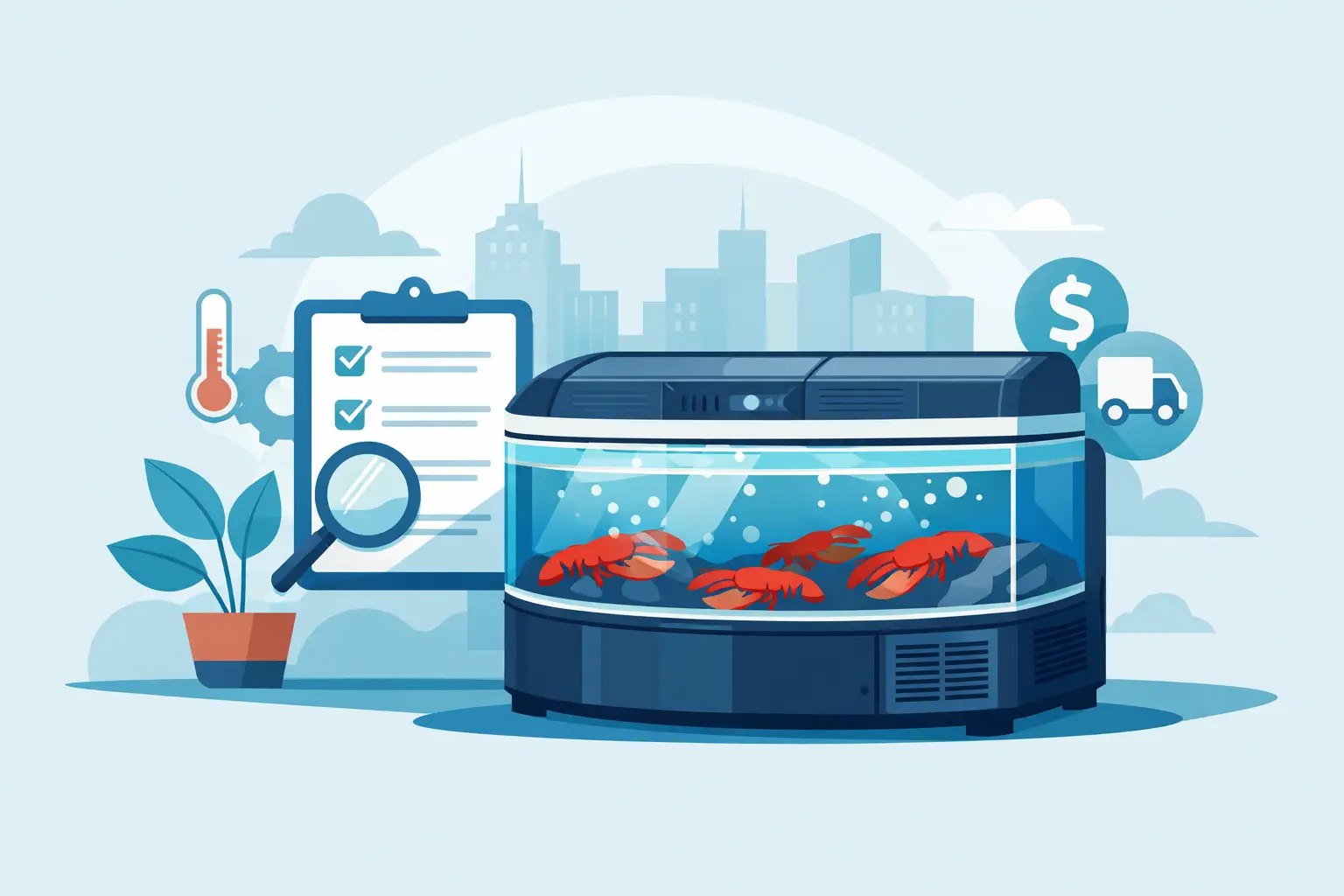

A lobster tank can look clear, run quietly, and still be heading toward an expensive loss. A failed chiller, blocked circulation line, drifting salinity level, or overnight power interruption can change holding conditions long before a customer or associate sees a problem. The best lobster tank monitoring devices give seafood departments early warning, so the team can respond before live inventory, product presentation, and sales are affected.
For supermarkets, wholesalers, restaurants, and independent seafood retailers, the right monitoring package is not always the one with the most screens or the most sensors. It is the one that matches the tank’s design, the volume of inventory being held, the hours the location is staffed, and the speed at which someone can take corrective action. Monitoring must support a dependable commercial system, not become another piece of equipment that requires constant attention.
What the Best Lobster Tank Monitoring Devices Must Do
A commercial lobster tank needs more than a basic thermometer. Water conditions are connected: temperature affects oxygen demand, circulation affects filtration performance, and a mechanical failure can quickly create several water-quality issues at once. The strongest monitoring setups combine direct water-condition readings with equipment and alarm monitoring.
Accuracy matters, but reliability matters just as much. A probe that reads precisely when it is clean but drifts after a week in saltwater is not helping the operator. Commercial-grade devices should be selected for marine use, be accessible for cleaning and calibration, and provide alarms that can be heard or received when the seafood department is not staffed.
The goal is not to automate judgment out of tank care. It is to give trained staff clear information quickly enough to protect the lobsters and correct the cause of the problem.
7 Best Lobster Tank Monitoring Devices to Consider
1. Continuous temperature monitor
Temperature is usually the first reading a seafood operator needs to see. Lobsters are cold-water animals, and a temperature change can place immediate stress on live inventory. A continuous digital temperature monitor is more useful than occasional manual readings because it reveals trends, not just a single moment in time.
Look for a waterproof probe built for saltwater service, a clear local display, and high- and low-temperature alarms. Remote alert capability is especially valuable for stores that close overnight or facilities where the tank is not in direct view of staff. Set alarm points according to the system design, local operating procedures, and supplier guidance rather than relying on generic settings.
2. Salinity or conductivity monitor
Marine salt concentration has a direct effect on lobster health and on the performance of the overall holding system. A conductivity monitor translates the water’s ability to carry electrical current into a useful indication of salinity. It can identify dilution after top-off water is added, mistakes during salt mixing, or gradual changes caused by maintenance practices.
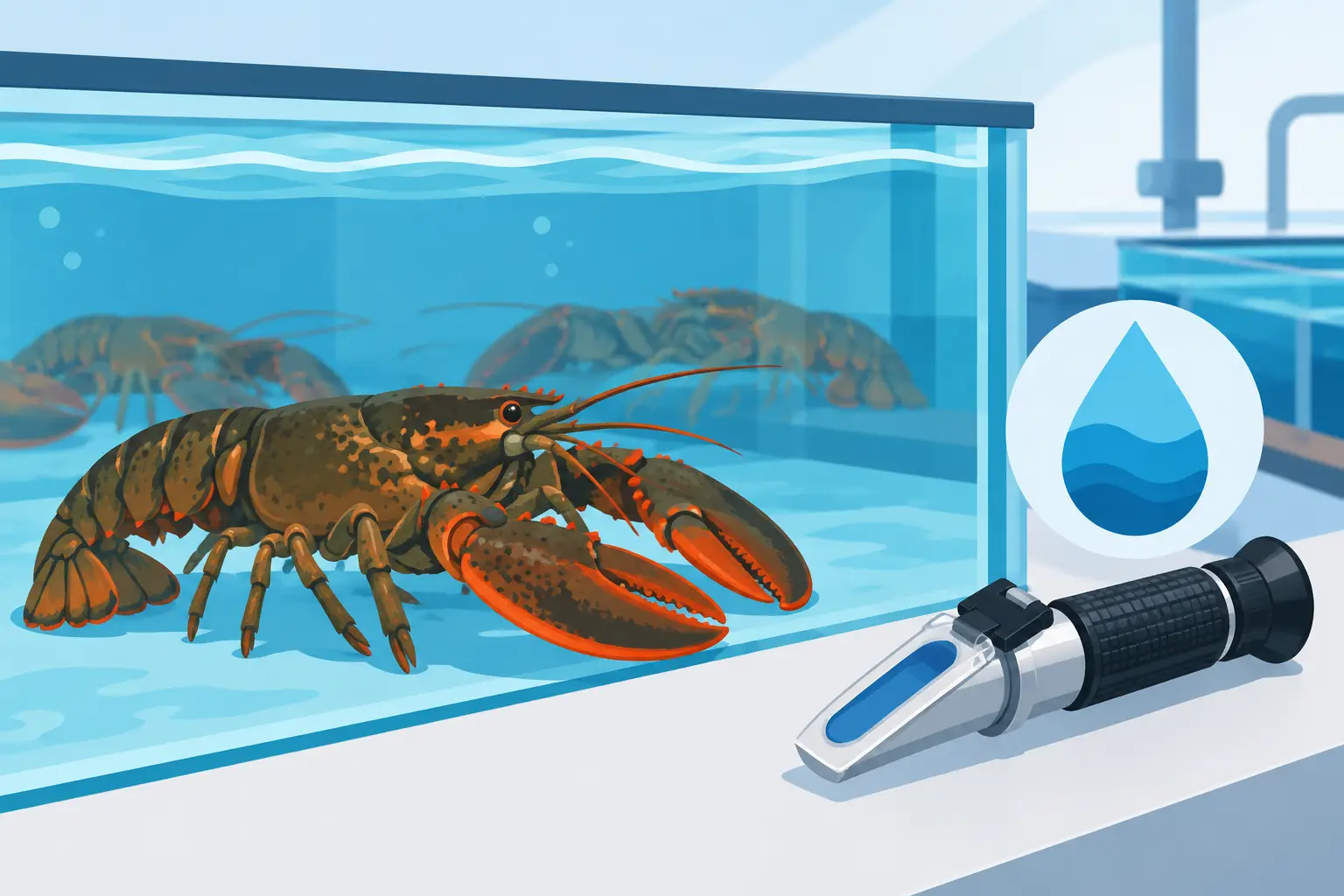
A handheld refractometer remains useful as a verification tool, but a continuously monitored conductivity probe gives operations managers a better picture of what is happening between checks. This is particularly helpful in higher-volume seafood departments, where multiple employees may handle water additions and routine cleaning.
3. Dissolved oxygen meter
Dissolved oxygen is one of the most meaningful indicators of whether a lobster tank is supporting live inventory properly. Low oxygen can result from high water temperature, poor circulation, an aeration issue, excessive loading, or a problem elsewhere in the filtration process.
For tanks holding significant volume or premium inventory, a dissolved oxygen meter with alarms can be a wise investment. It provides a direct reading instead of asking staff to infer oxygen conditions from the behavior of the lobsters. These meters do require routine calibration and proper probe maintenance. That work is worthwhile when the tank’s volume and inventory value justify continuous oxygen oversight.
4. Water-level sensor
A low-water event can create trouble fast. Depending on tank configuration, it can expose pump intakes, reduce circulation, strain equipment, and change the system’s operating balance. A water-level sensor or float switch can alert staff before a small loss becomes a filtration or livestock emergency.
Water-level monitoring is often overlooked because the tank itself is visible. The problem is timing. A slow leak, evaporation issue, drain problem, or refill failure may occur after hours, when nobody is watching the system. Pairing a level sensor with a high-level alarm is also worthwhile where automatic make-up systems are used.
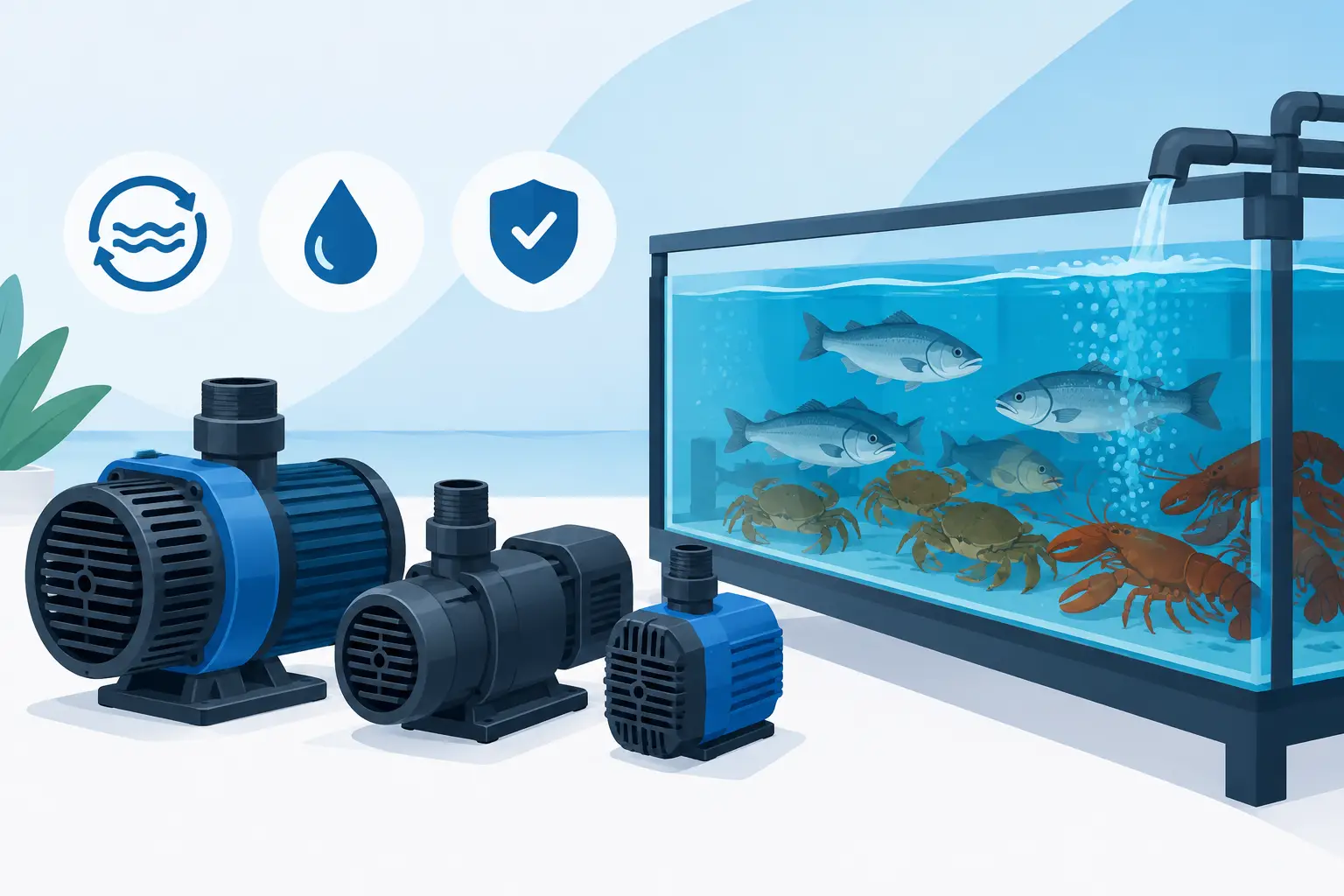
5. Pump and flow monitor
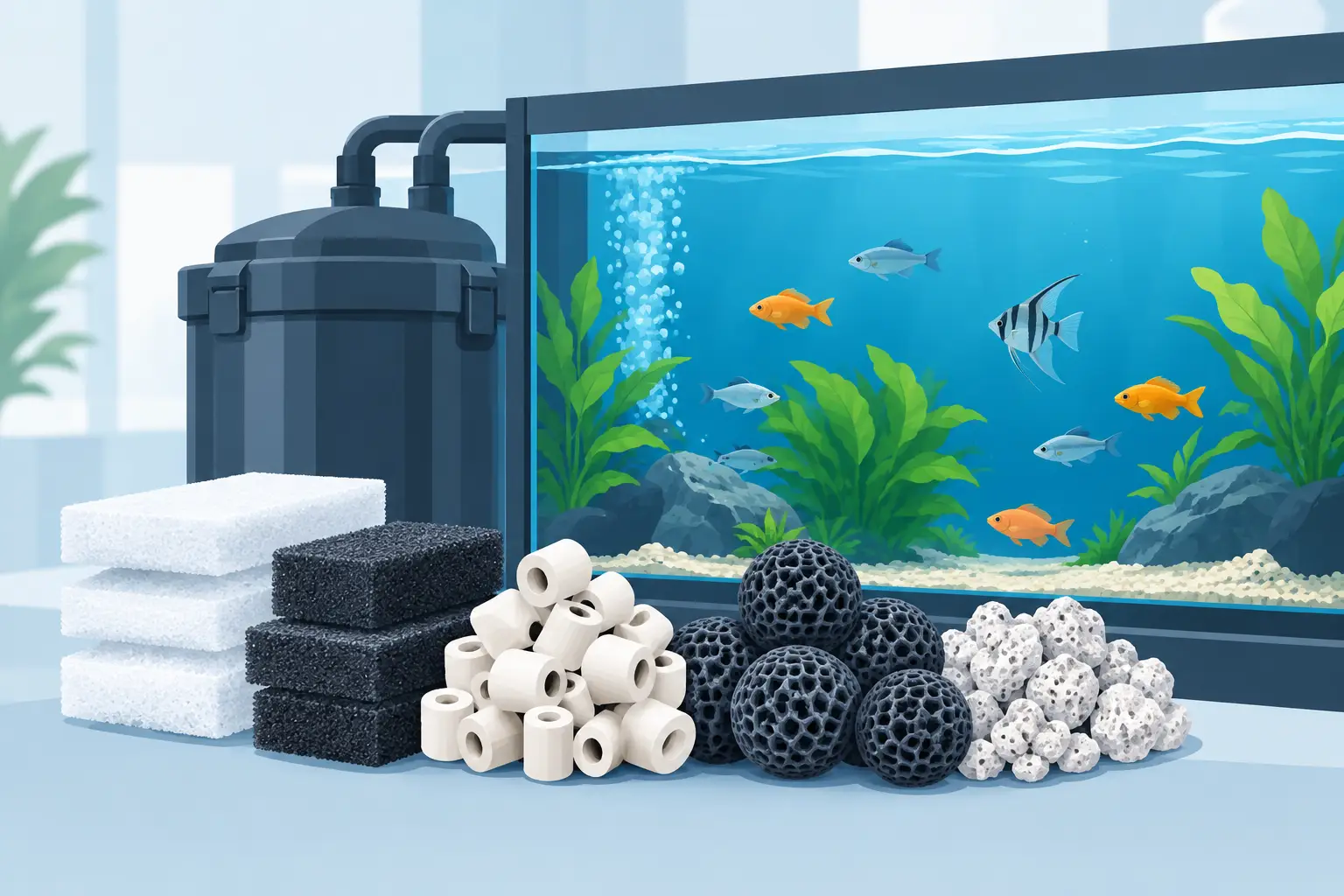
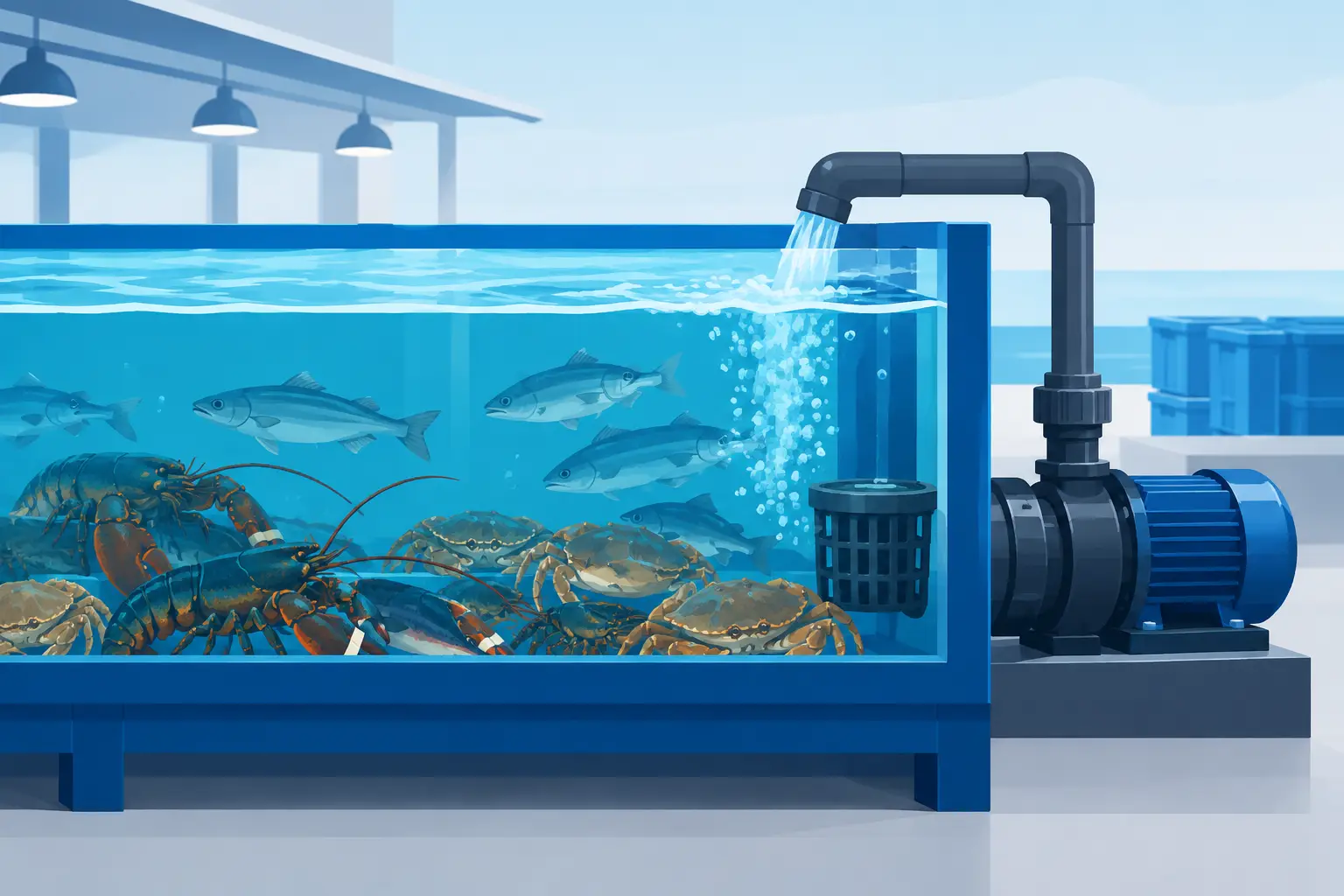
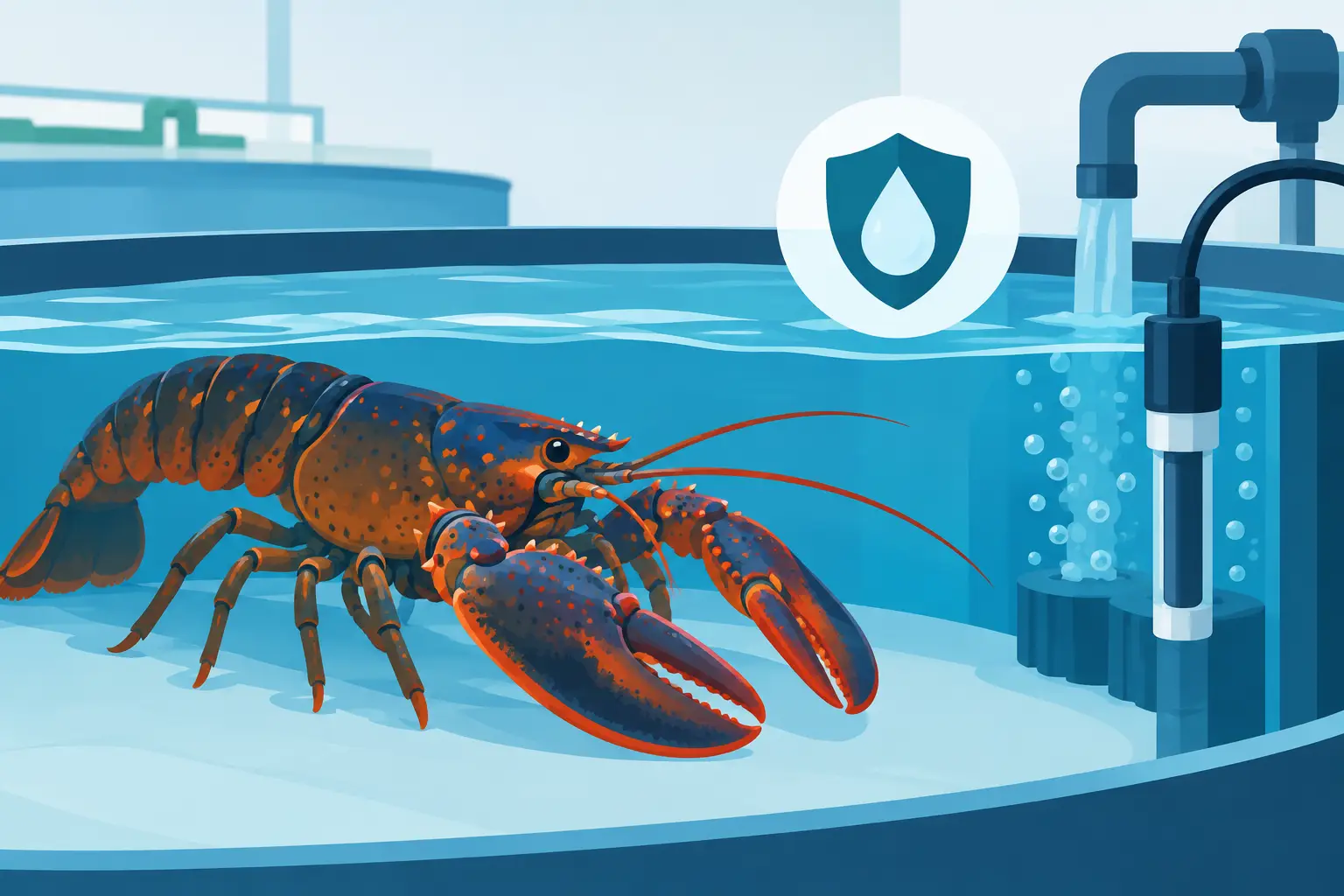
A tank can have water in it, power at the wall, and a temperature reading that appears normal while circulation has weakened or stopped. Flow monitoring helps identify whether water is actually moving through the filtration system as intended. This is a practical safeguard for pump failure, clogged plumbing, closed valves, or a filter condition that is restricting movement.
Some commercial applications use a dedicated flow switch; others use pump-status monitoring tied into a controller or building alarm system. The right choice depends on the tank design. What matters is that the alert identifies a true circulation issue, not merely that a piece of equipment has electrical power.
6. Power-loss alarm and backup notification
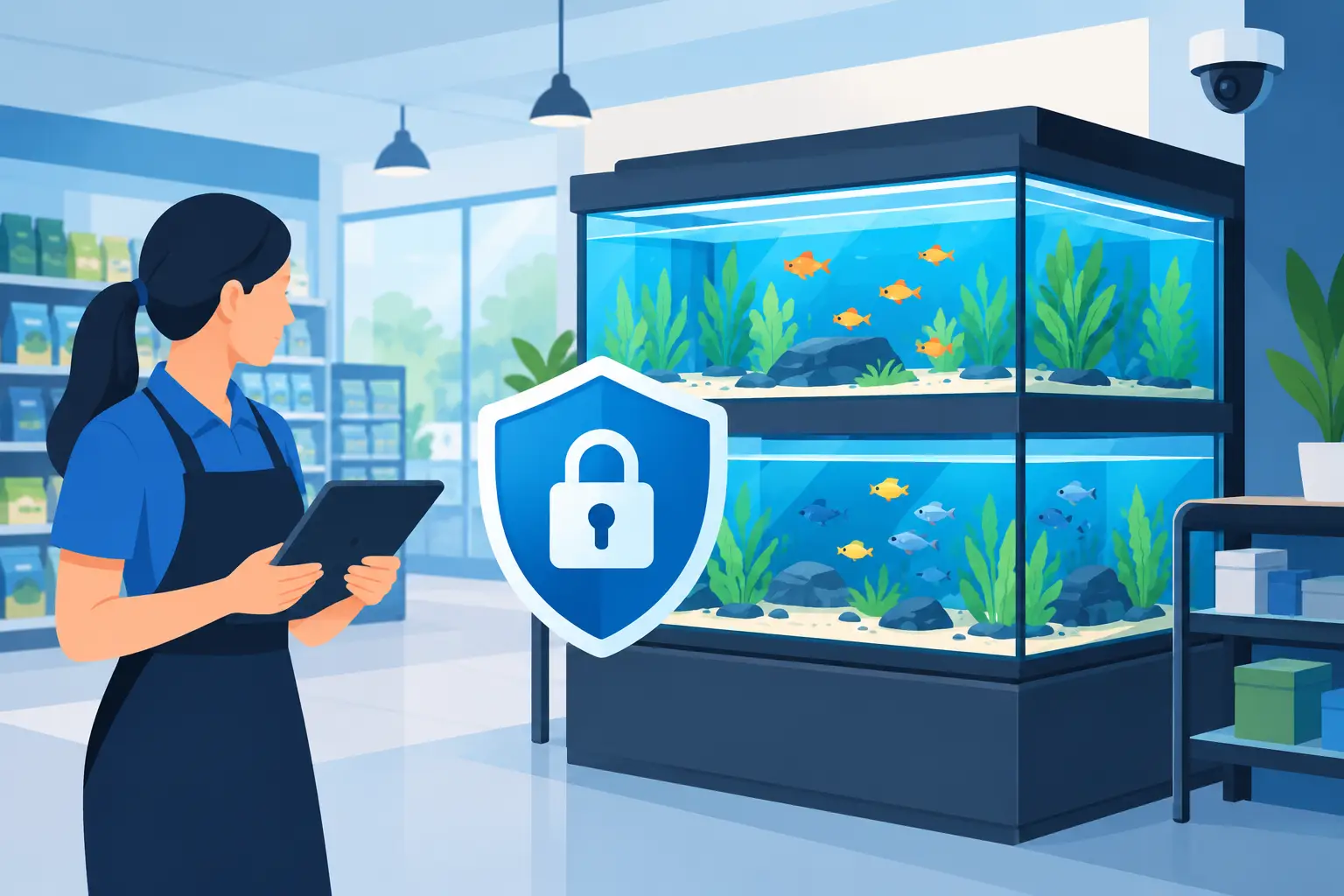
No sensor can protect a tank if a power outage disables the chiller, pumps, lighting, and control equipment without notifying anyone. A power-loss alarm should be part of any serious commercial lobster holding operation. The device should have battery backup and a dependable method for alerting designated staff.
For facilities with substantial live inventory, consider a layered plan: local audible alarm, remote notification, and a documented response procedure. A standby power source may also be appropriate, but backup power only helps if it is maintained and tested. The best alarm system is the one that reaches someone who knows what to do next.
7. Central controller with remote alerts
A central controller brings the most important readings and equipment alarms into one place. It can monitor temperature, conductivity, water level, pump condition, and other points based on the system’s configuration. For multi-tank operations, this gives managers a clearer view than separate devices scattered across the department.
Remote alerts are especially valuable for operators with early-morning receiving, late-night cleaning, or no overnight staff. Still, remote access should not replace a written tank-check routine. Notifications need clear alarm limits, current contact information, and a response plan that identifies who is responsible for checking the system.
Build the Monitoring Package Around the Tank
Not every lobster tank needs every instrument. A compact retail display tank with daily hands-on attention may need dependable temperature monitoring, water-level protection, and a power-loss alarm. A high-volume wholesale operation, multi-tank seafood department, or self-contained purging system may benefit from continuous temperature, salinity, dissolved oxygen, flow, and centralized alarm monitoring.
The key question is not, “What device is most advanced?” Ask, “Which failure would cost us the most, and how soon would we know it happened?” That answer should drive the monitoring plan.
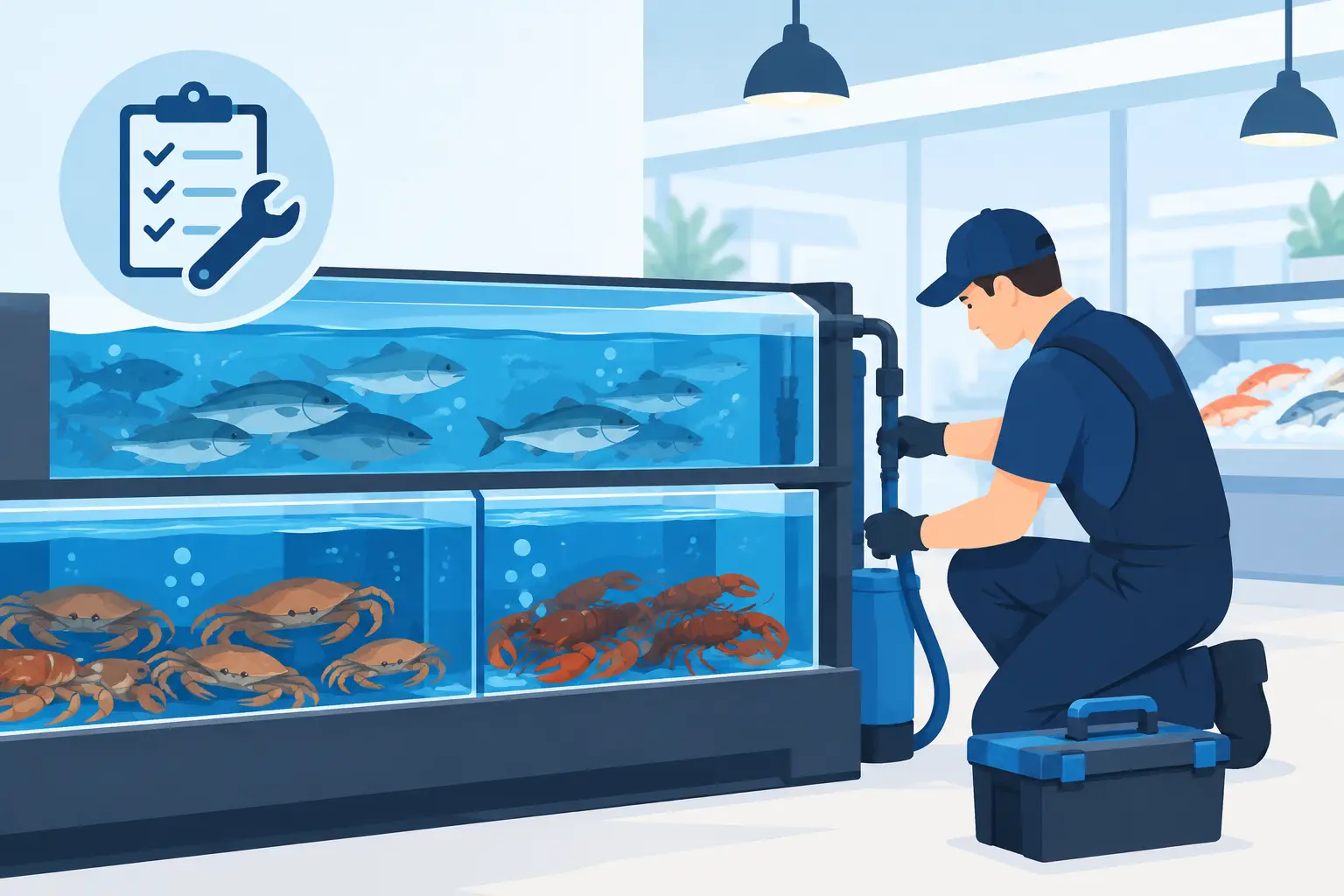
Also consider serviceability before purchasing. Sensors need cleaning. Probes need calibration. Cables and connections need inspection in a wet, corrosive environment. If the device cannot be reached without disrupting tank operations, routine maintenance may get postponed. Equipment that is easy to maintain is more likely to deliver dependable readings over time.
Monitoring Does Not Replace Water Testing
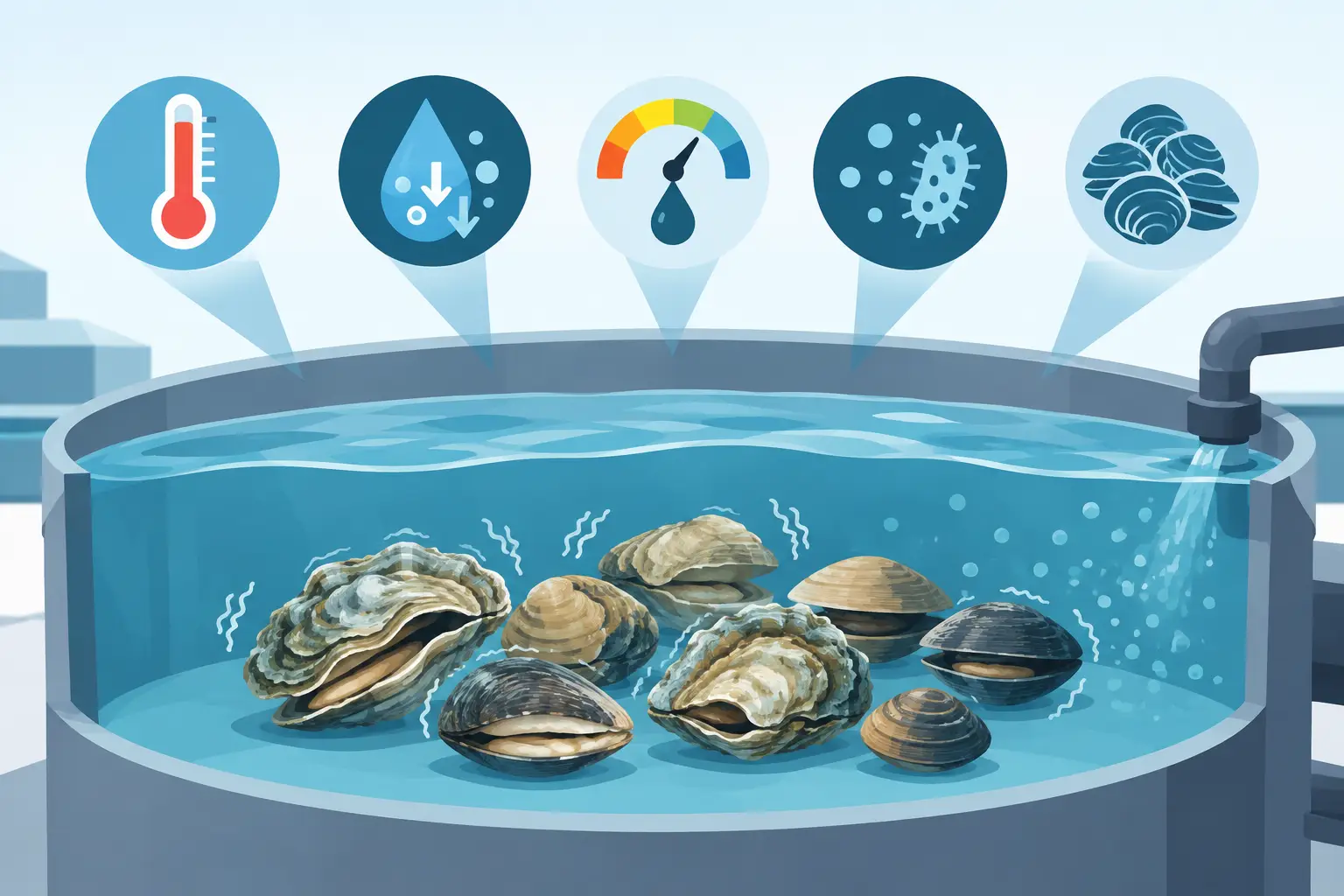
Continuous devices are valuable, but they do not eliminate manual water-quality checks. Regular testing for parameters such as ammonia, nitrite, pH, and other conditions relevant to the operation remains part of responsible lobster care. Those readings help reveal whether biological filtration and ongoing maintenance are keeping pace with the tank’s load.
Use monitoring equipment to catch immediate operational threats and establish trends. Use routine testing, visual inspection, and maintenance records to understand the full health of the system. When a reading changes, train staff to investigate the cause rather than simply resetting the alarm.
Choose a Partner That Understands the Whole System
A monitor is only as useful as the tank, filtration, plumbing, salt program, and support behind it. Commercial seafood operators are better served when monitoring is specified as part of a complete holding system instead of added as an afterthought from multiple vendors.
Lobster Life Systems has worked with commercial and retail live seafood operations since 1989, helping customers align custom tank design, filtration, marine salt, ongoing supplies, and service with the realities of daily seafood sales. The right equipment package should fit your operation, not force your operation to fit a generic package.
Protecting live inventory starts with knowing what the tank is doing when nobody is standing in front of it. Choose monitoring that delivers useful warnings, make sure your team can act on them, and keep the system maintained well before an alarm has a reason to sound.