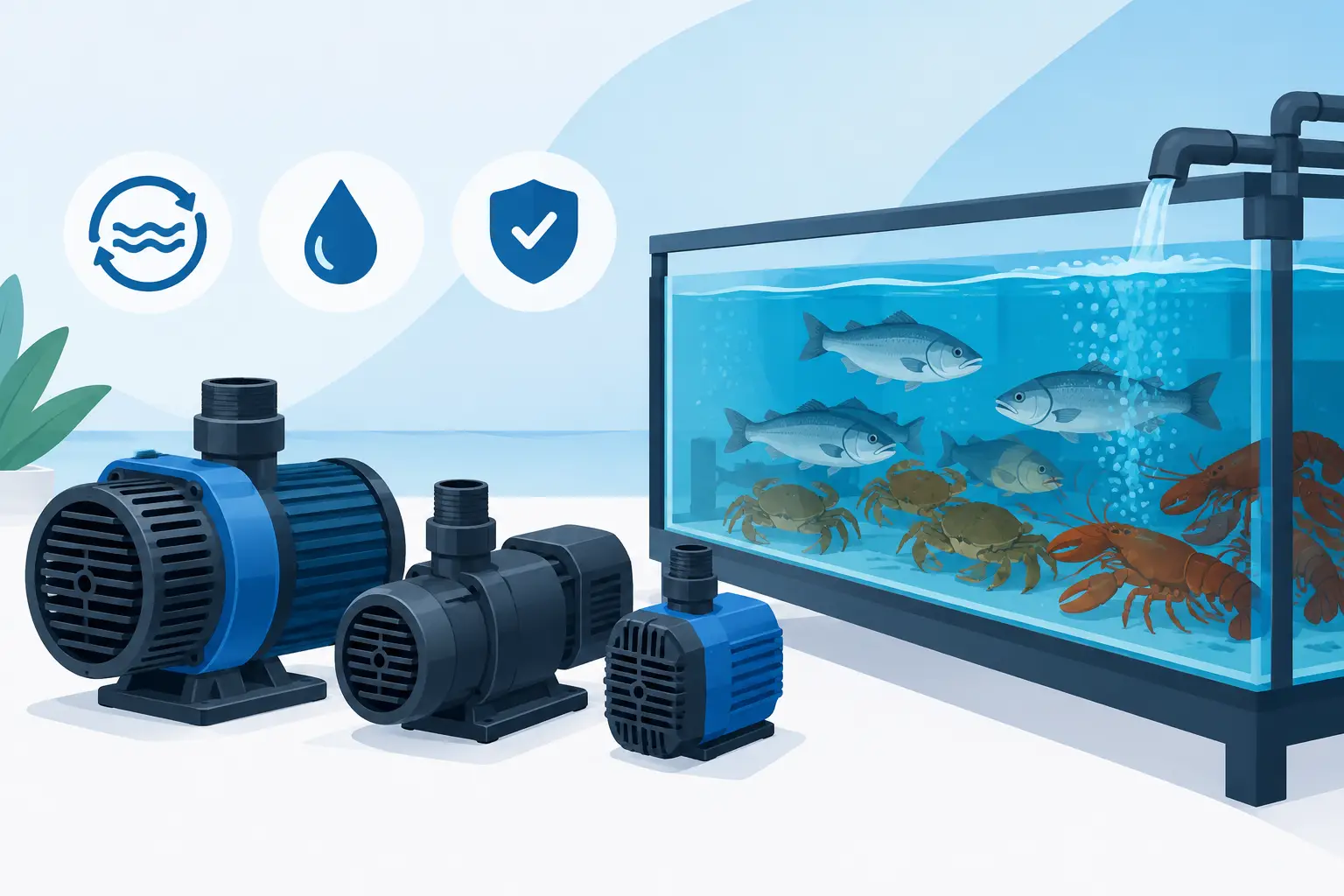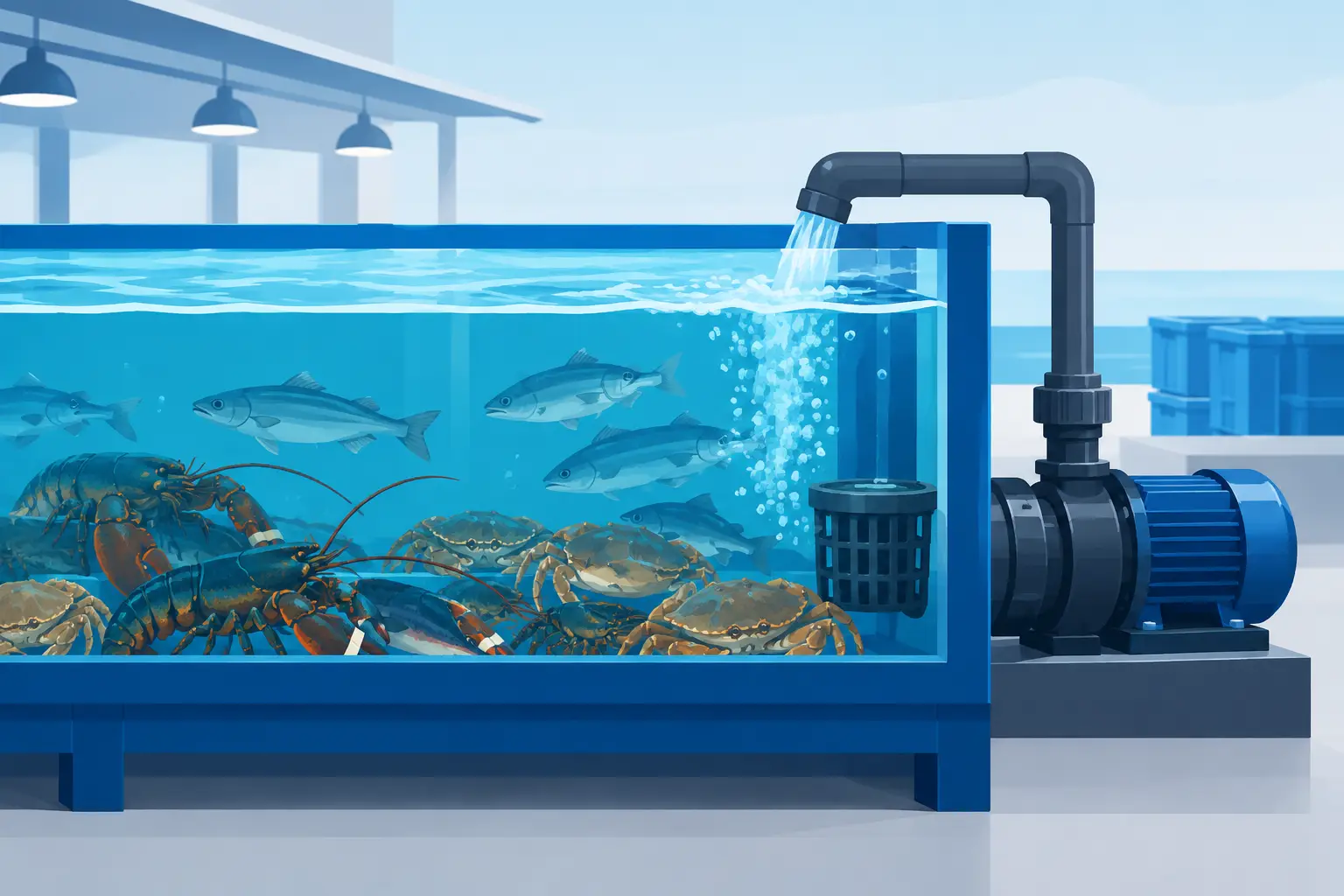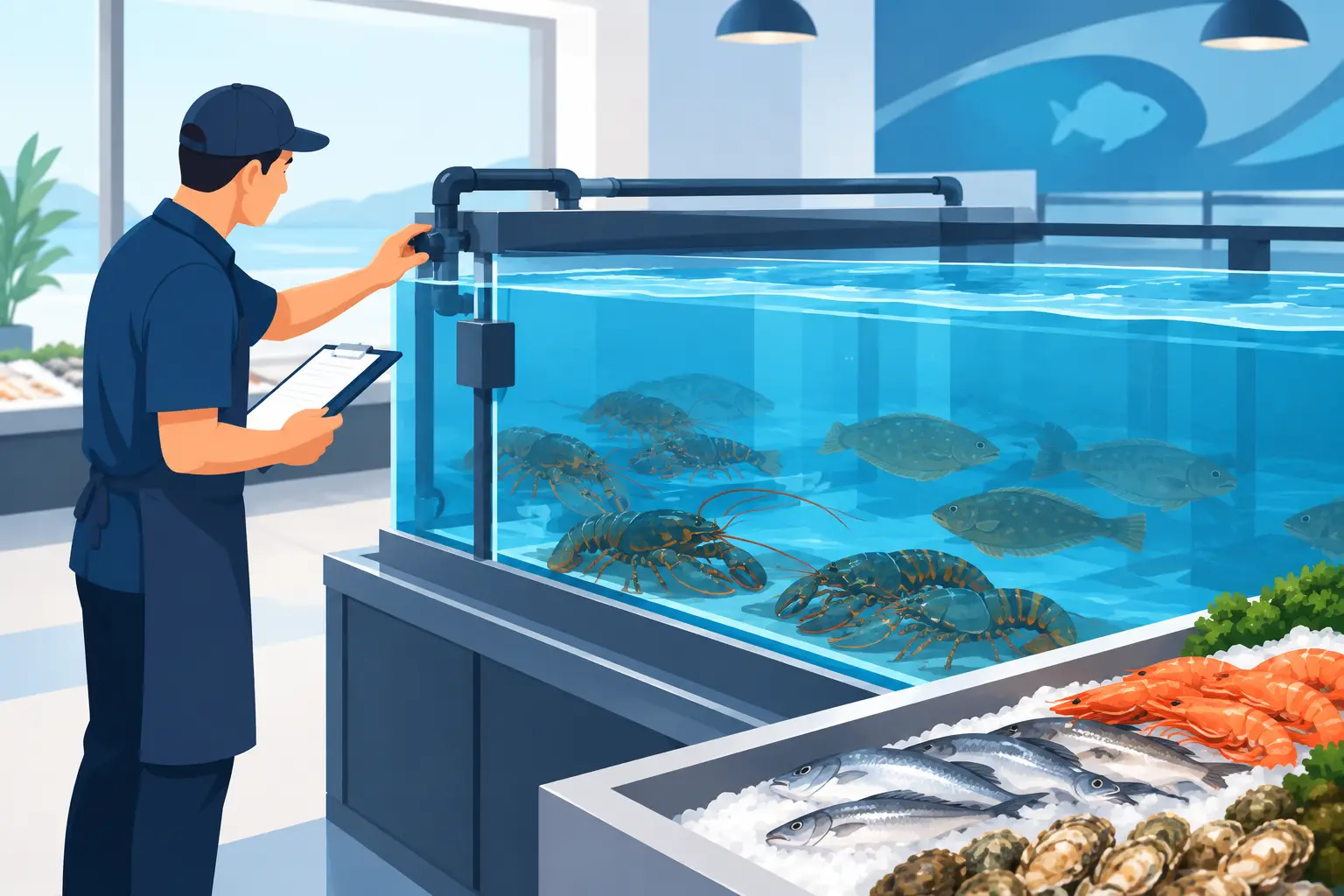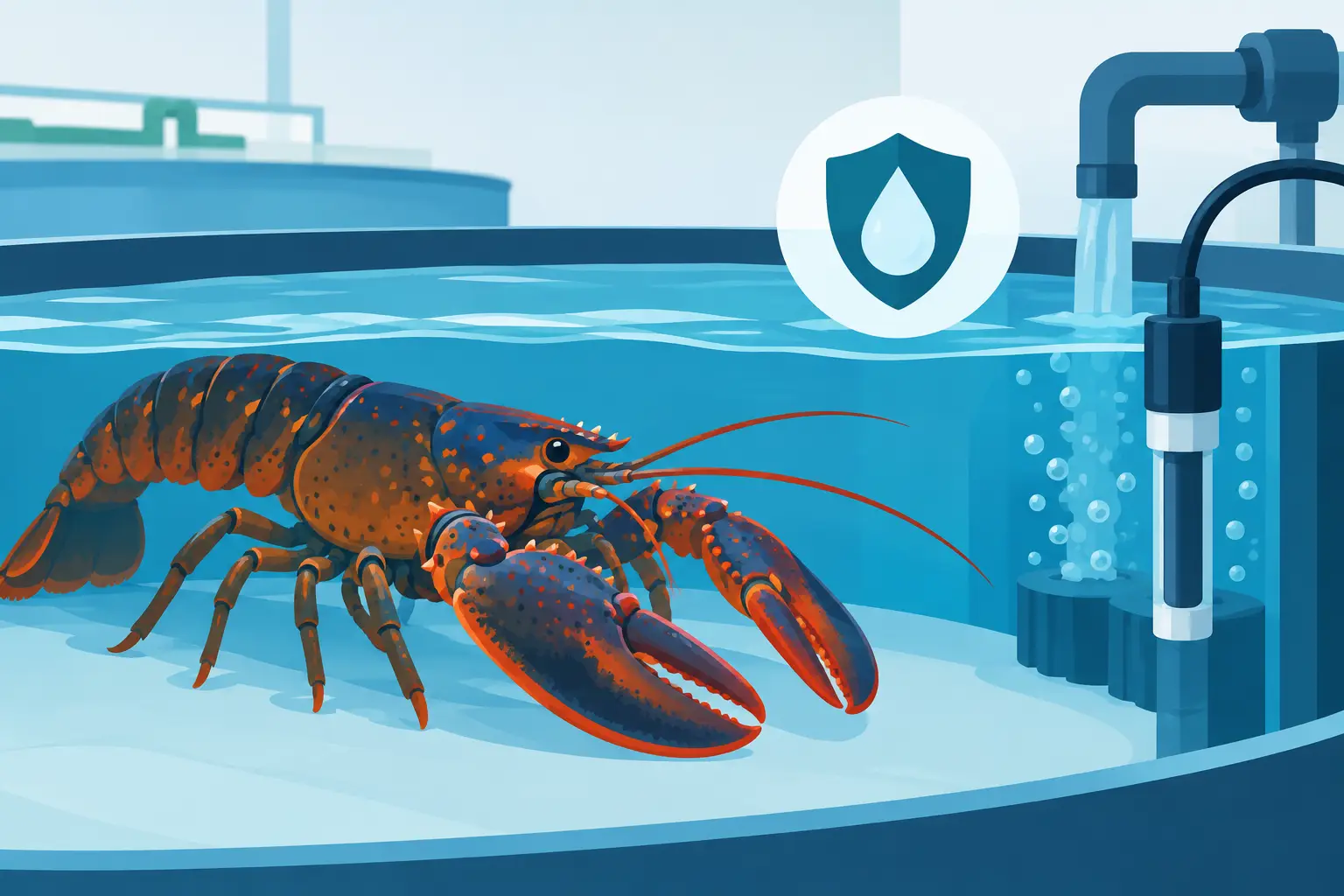

A pump that looks adequate on a specification sheet can still leave a lobster tank with weak circulation, poor oxygen distribution, rising waste levels, and expensive livestock loss. For seafood operators, learning how to select tank pumps means looking beyond horsepower and gallons per hour. The right pump must support the entire live-holding system under real operating conditions, not just move water when the tank is clean and the plumbing is short.
A live seafood system depends on stable water quality every hour it is holding product. Pump selection affects filtration performance, water turnover, temperature consistency, display appearance, and the health of the lobster, crab, shellfish, or fish in the system. It is a purchasing decision with direct consequences at the seafood counter.
Start With the Job the Pump Must Perform
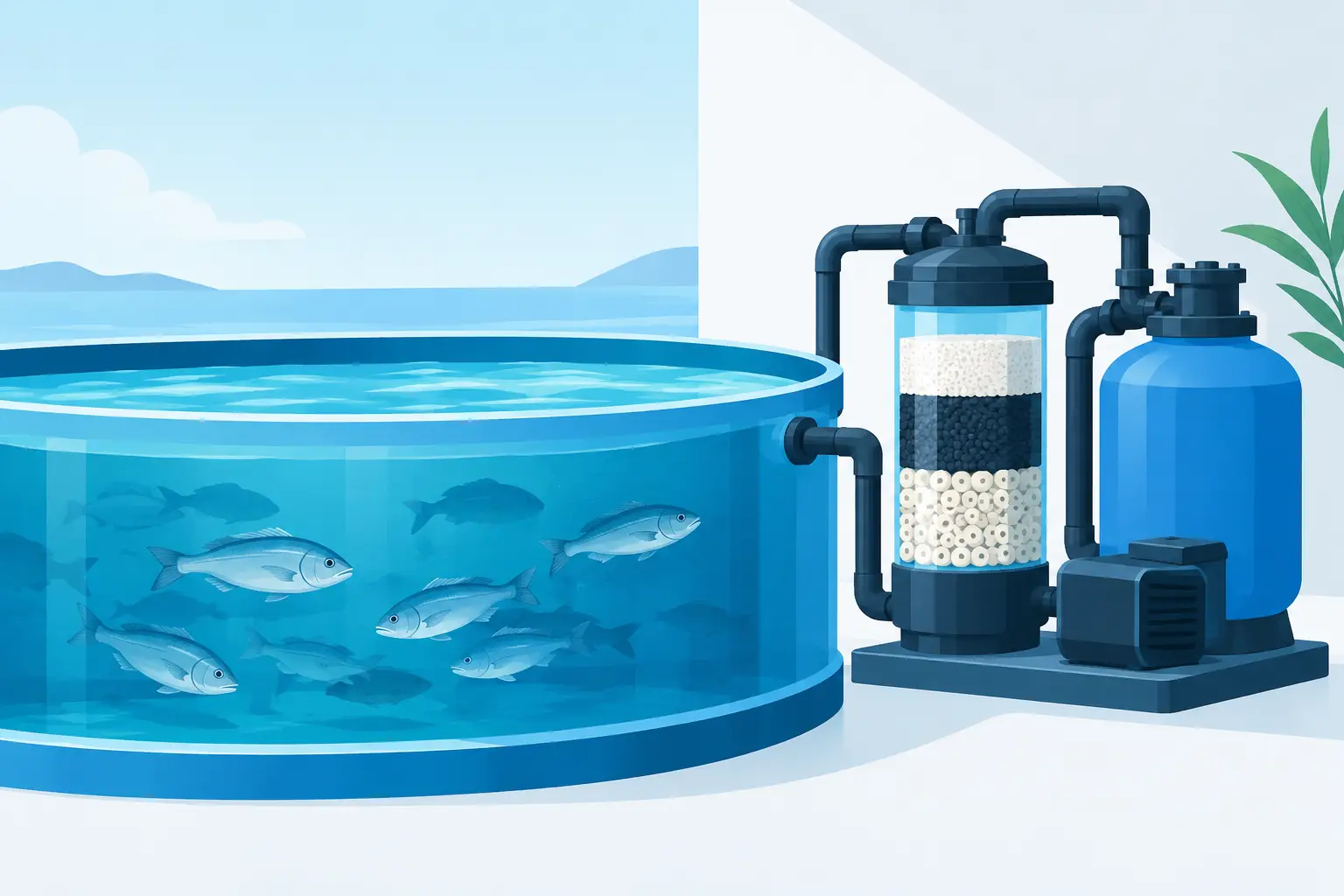
Not every pump in a live seafood system has the same purpose. A circulation pump moves tank water through filtration and back to the display. A transfer pump may fill, drain, or move water between components. A dedicated pump can also serve a chiller, protein skimmer, ultraviolet unit, or purging system. Selecting one pump to do several jobs may reduce initial cost, but it can create a single point of failure and make proper flow control difficult.
Start by identifying the pump’s specific role and whether it must run continuously. Main recirculation pumps are typically duty-cycle equipment. They need to operate around the clock without overheating, losing prime, or requiring frequent attention. A drain or water-change pump has a different workload and can be selected for intermittent use.
For a commercial seafood display, the main question is simple: if this pump stops at 2 a.m., what happens to the water and the inventory before staff arrive? That answer should guide decisions about pump quality, alarm capability, spare equipment, and backup power.
How to Select Tank Pumps by Flow Rate
Flow rate is usually listed in gallons per hour, but the number on the box is only a starting point. A pump rated at 2,000 gallons per hour may deliver much less once it is connected to vertical plumbing, elbows, valves, filters, chillers, and return manifolds.
Begin with the total water volume in the display tank, sump, and any connected filtration vessels. Then determine the turnover rate the system requires. Turnover is the number of times the system’s water volume passes through filtration in an hour. The appropriate rate depends on livestock density, tank design, filtration method, and whether the system is designed for holding, merchandising, purging, or a combination of those functions.
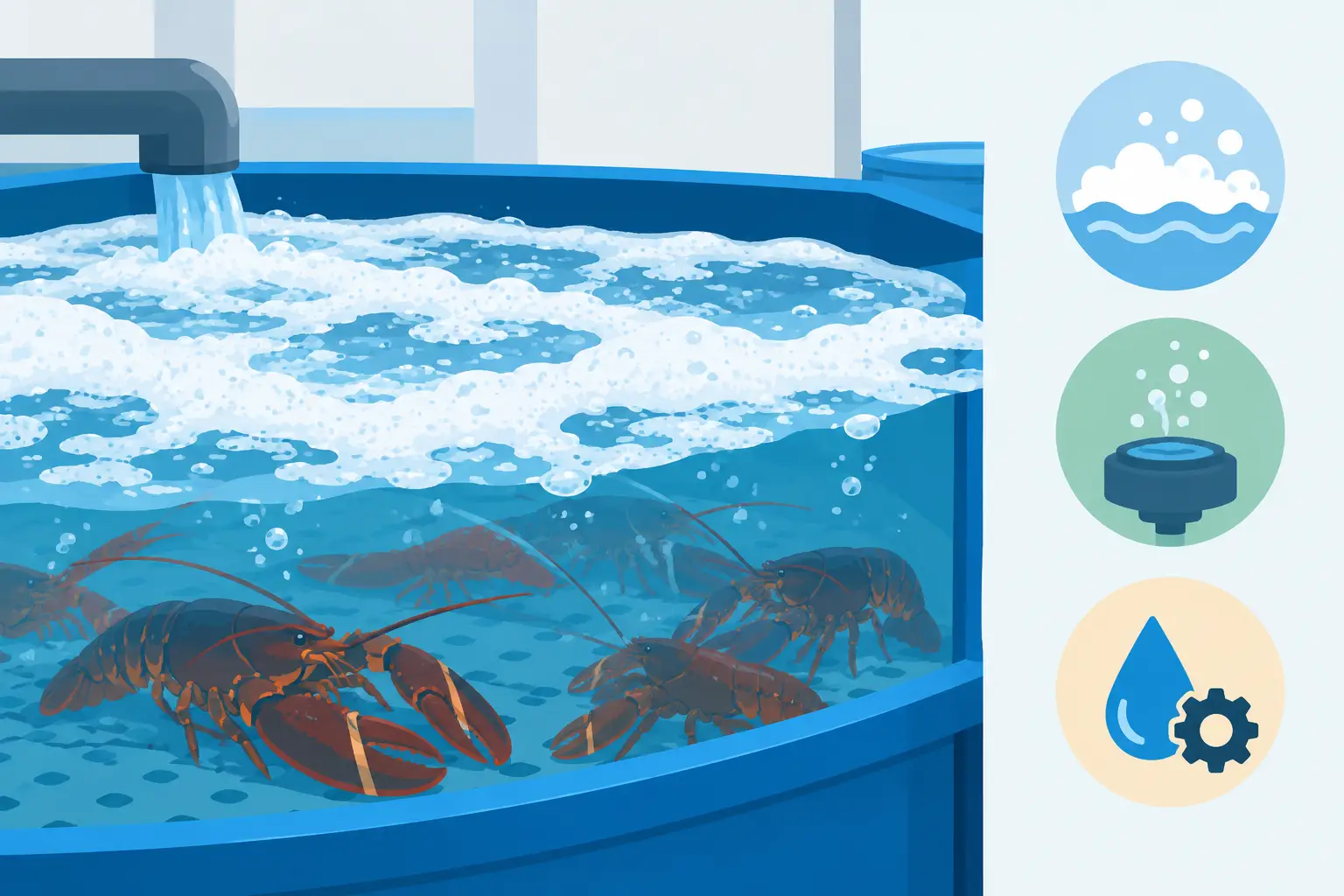
Higher flow is not automatically better. Too little flow can leave dead areas where waste accumulates and can limit the effectiveness of mechanical and biological filtration. Too much flow can stress animals, create excessive turbulence, push debris past filtration stages, and make a display less attractive to customers. Lobsters need stable, well-oxygenated water, not a current strong enough to keep them moving unnecessarily.
A practical calculation is:
Required flow rate = target turnover rate × total operating water volume
Use this calculation to establish a target, then select a pump based on its actual flow at the system’s operating head pressure. A qualified tank provider can help establish the right turnover requirement for a specific seafood program rather than relying on a generic rule.
Account for Total Dynamic Head
Head pressure is where many pump selections go wrong. Total dynamic head is the resistance the pump must overcome to move water through the system. It includes vertical lift, pipe length, fittings, valves, filter resistance, equipment restrictions, and return outlets.
Vertical lift is easy to see. If water must travel from a floor-level sump to a tank several feet above, the pump has to work against gravity. The less obvious losses come from every 90-degree elbow, tee, check valve, undersized pipe, dirty filter, and restrictive piece of equipment in the line. Those losses add up.
Review the pump performance curve, not just its maximum flow rating. The curve shows how flow declines as head pressure increases. Select a pump that delivers the required flow at your calculated head, with reasonable room for normal resistance as filters load and plumbing ages. A pump operating near the edge of its performance range may meet demand when new, then fall short during daily operation.
Pipe sizing matters as much as the pump. An oversized pump forced through undersized plumbing wastes energy, creates heat, and can add noise and vibration. Properly sized plumbing lets the pump operate efficiently and makes flow easier to manage.
Match Pump Materials to Saltwater Service
Saltwater exposes weak components quickly. For marine live-holding systems, pump housings, seals, shafts, fasteners, and impellers must be suited to continuous contact with saltwater. A pump intended for freshwater or light-duty use can corrode, leak, seize, or contaminate the system long before its expected service life.
Look for commercial-grade equipment with materials rated for marine applications. Saltwater-compatible plastics and appropriate corrosion-resistant components are common choices, but material suitability should be confirmed for the pump’s exact use. If the pump will handle water after chemical treatment, cleaning, or high-salinity conditions, those factors also belong in the selection process.
External pumps and submersible pumps each have advantages. External pumps are generally easier to service without placing hands or equipment in the water, and they can reduce heat transfer into the system. They require proper priming, secure plumbing, and leak prevention. Submersible pumps are compact and simple to install, but they add heat to the water and may require more effort to access for cleaning or replacement. The right choice depends on tank layout, available space, temperature control, and service access.
Plan for Maintenance Before Installation
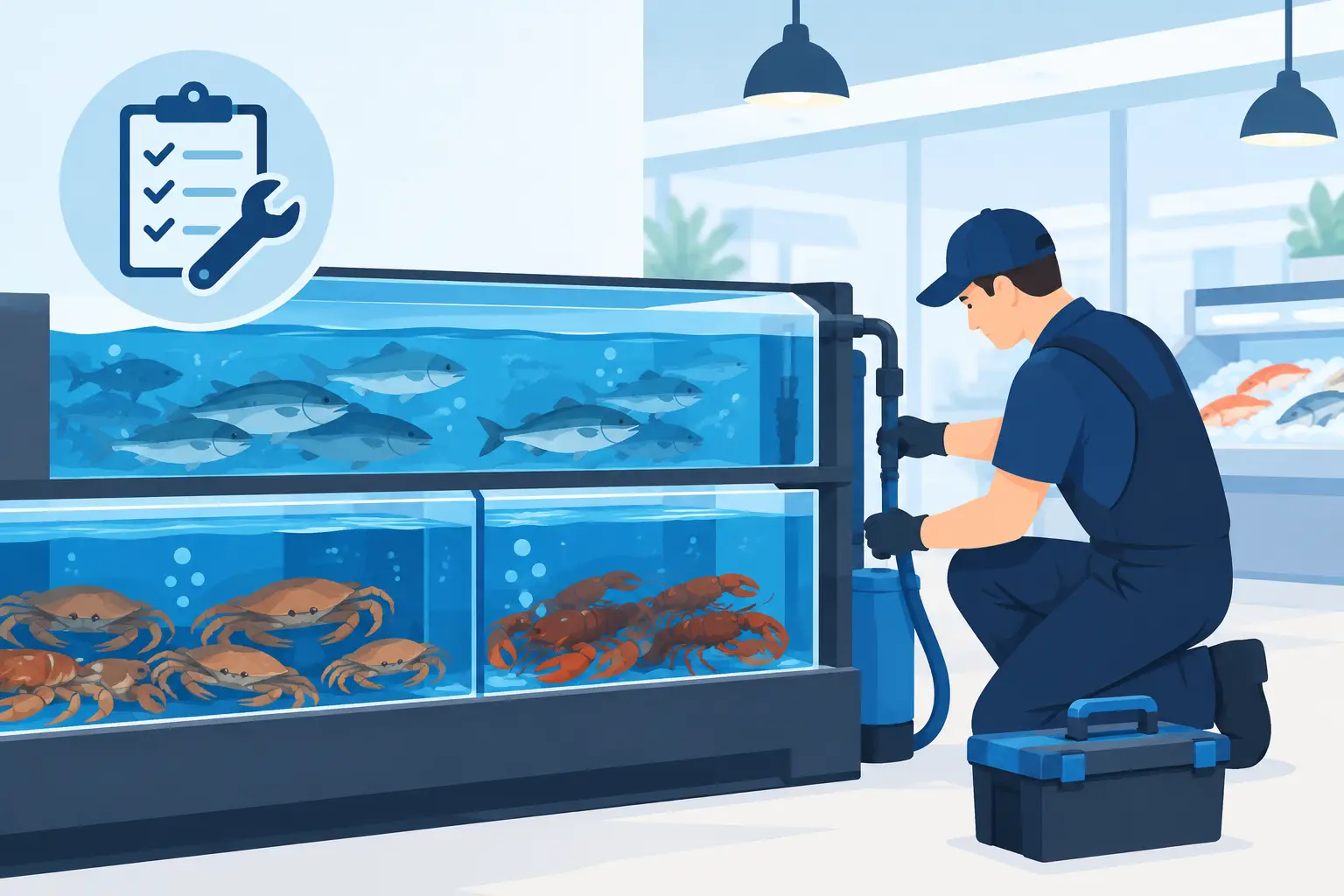
A pump is not maintenance-free because it is out of sight. In a commercial seafood operation, service access should be part of the original design. Staff or technicians need room to inspect unions, close isolation valves, clean strainers, remove the pump, and reinstall it without shutting down the entire system for an extended period.
Install isolation valves on both sides of a serviceable pump where appropriate. Use unions or other service connections that allow removal without cutting plumbing. Include a properly sized strainer when debris could reach the pump, but remember that a clogged strainer reduces flow and changes system performance. Strainers need a regular inspection schedule.
Noise and vibration also deserve attention. A loud pump can undermine a premium seafood display, and constant vibration can work fittings loose over time. Proper mounting, flexible connections where suitable, and correct plumbing support help protect the equipment and keep the retail environment professional.
Build Redundancy Around Inventory Risk
The least expensive pump is rarely the least expensive choice if its failure puts thousands of dollars of live product at risk. Critical systems should have a contingency plan. That may mean a fully installed backup pump, a spare pump kept on site, a generator connection, alarm monitoring, or a combination of those measures.
The level of redundancy should match the value and sensitivity of the inventory. A high-volume supermarket lobster display has different exposure than a small seasonal holding tank, but both need a clear response plan. Staff should know which valves to close, which backup pump fits the connections, who to call, and how to protect water quality until service arrives.
When comparing pump options, consider more than purchase price. Include energy consumption, expected maintenance, parts availability, local or regional service support, and the downtime cost of a failure. A slightly higher initial investment often pays for itself through lower operating costs and fewer emergencies.
Choose a System Partner, Not Just a Pump
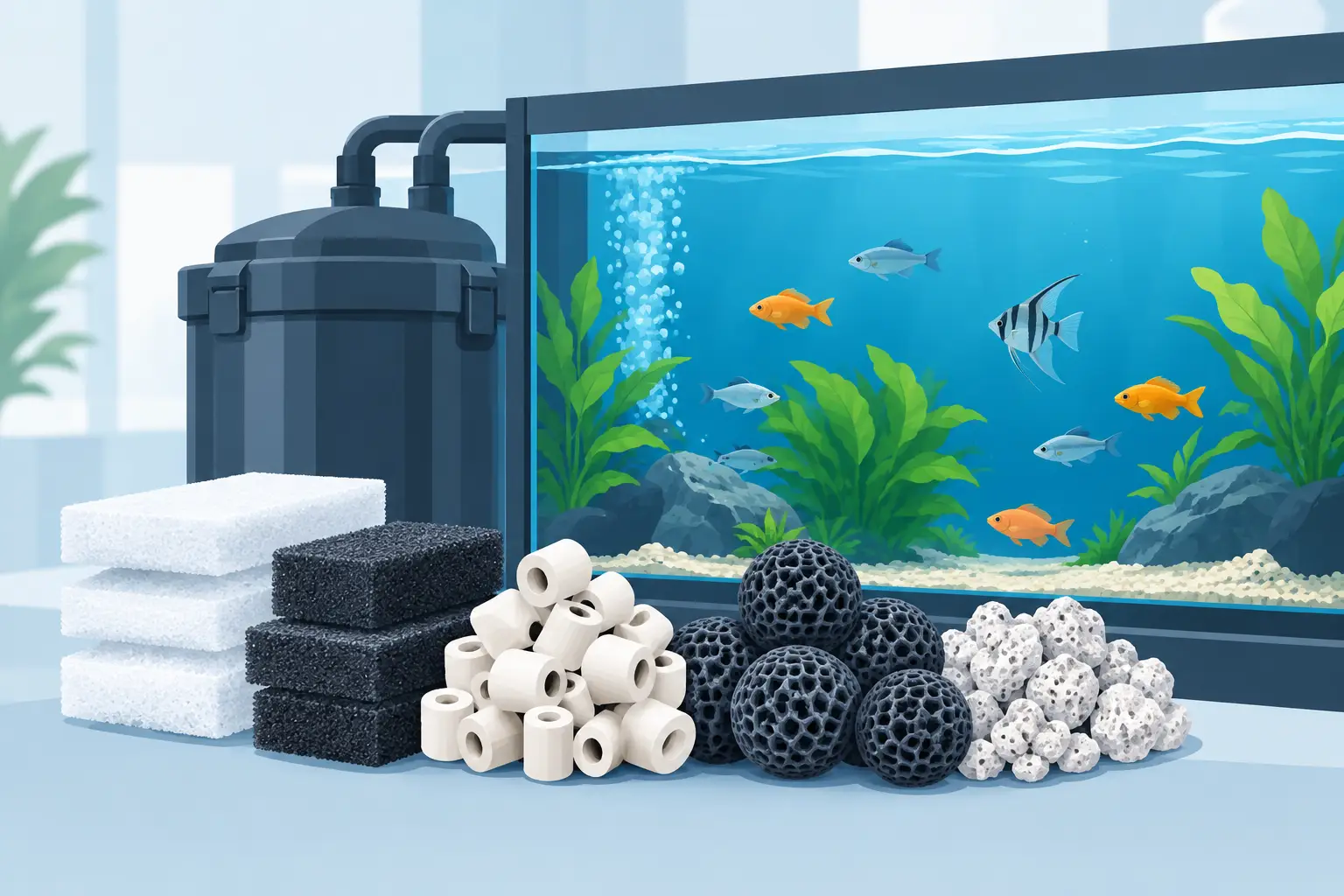
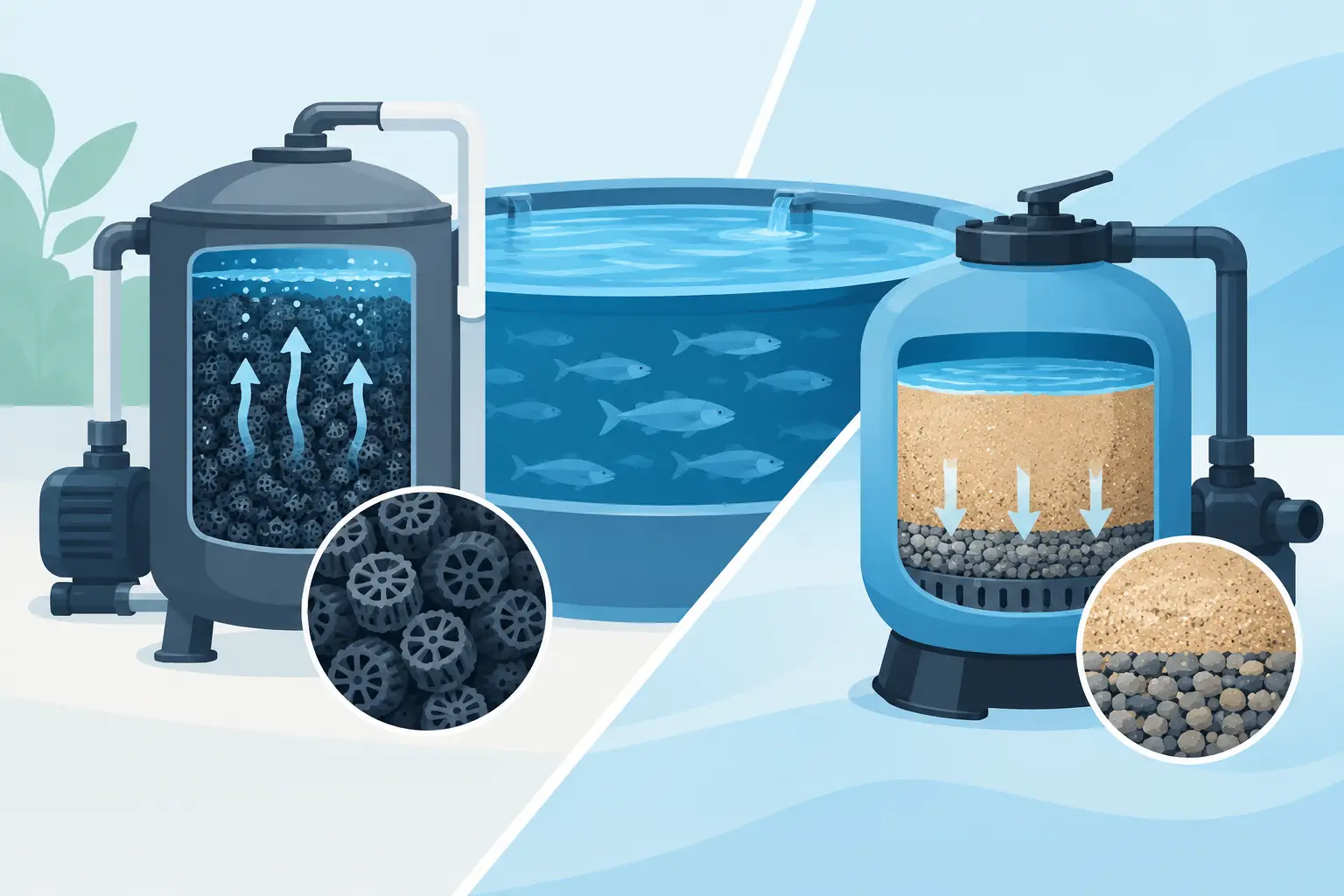
A tank pump does not operate in isolation. Its performance is tied to tank volume, plumbing design, mechanical filtration, biological media, activated carbon, marine salt, temperature management, livestock load, and maintenance practices. A pump that is properly sized for one layout may be wrong for another, even when the tanks appear similar.
That is why commercial seafood operators benefit from working with specialists who understand the complete water path. Lobster Life Systems designs and supports live seafood systems with the pump, filtration, supplies, and service requirements considered together. The goal is not simply to install a pump that runs. It is to maintain the water conditions that protect product quality and keep the display ready to sell.
Before placing an order, verify the target flow at operating head, saltwater material compatibility, continuous-duty rating, plumbing size, service access, and backup plan. A well-selected pump becomes quiet, dependable infrastructure – the kind of equipment your team does not have to think about because your live seafood system is doing its job.