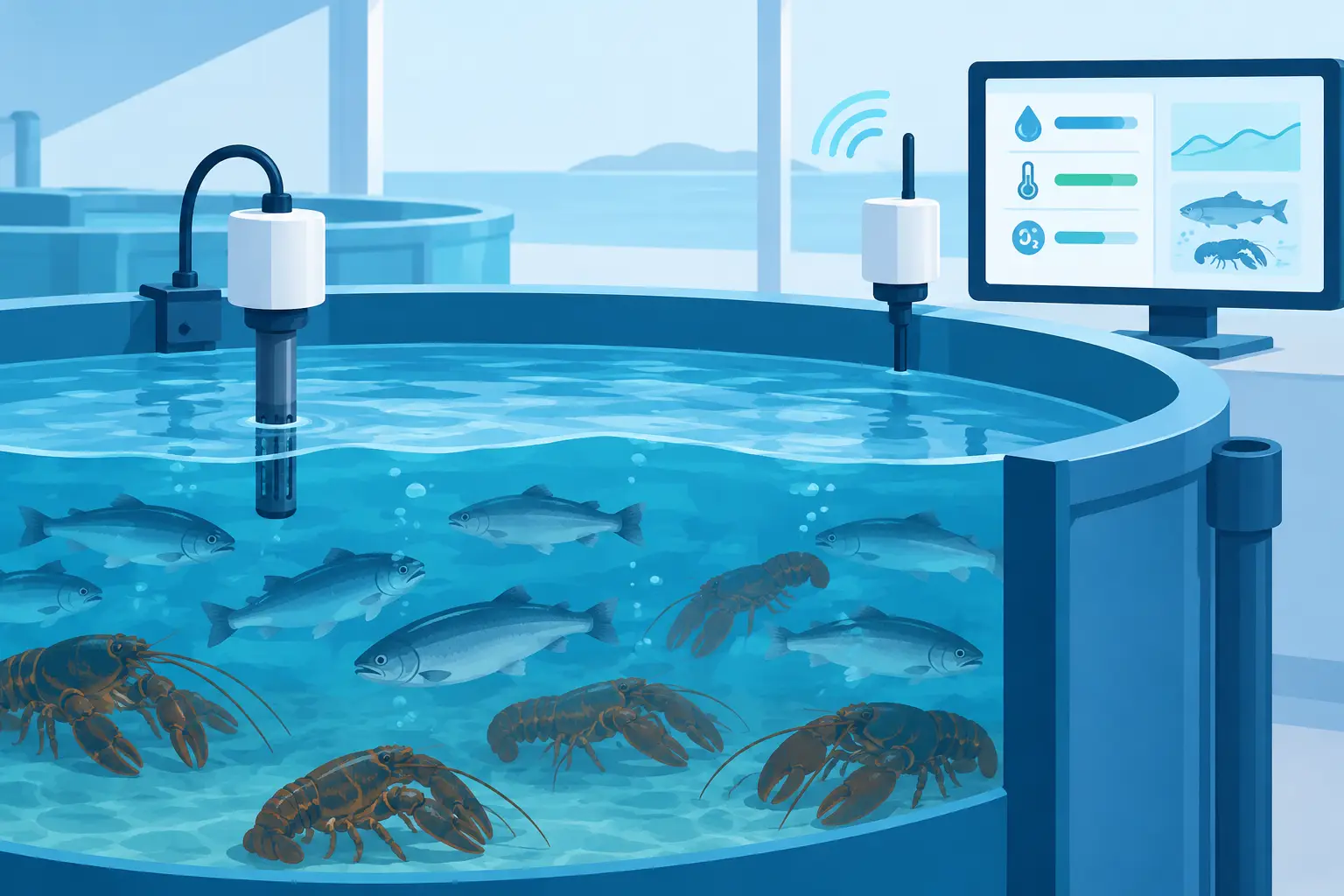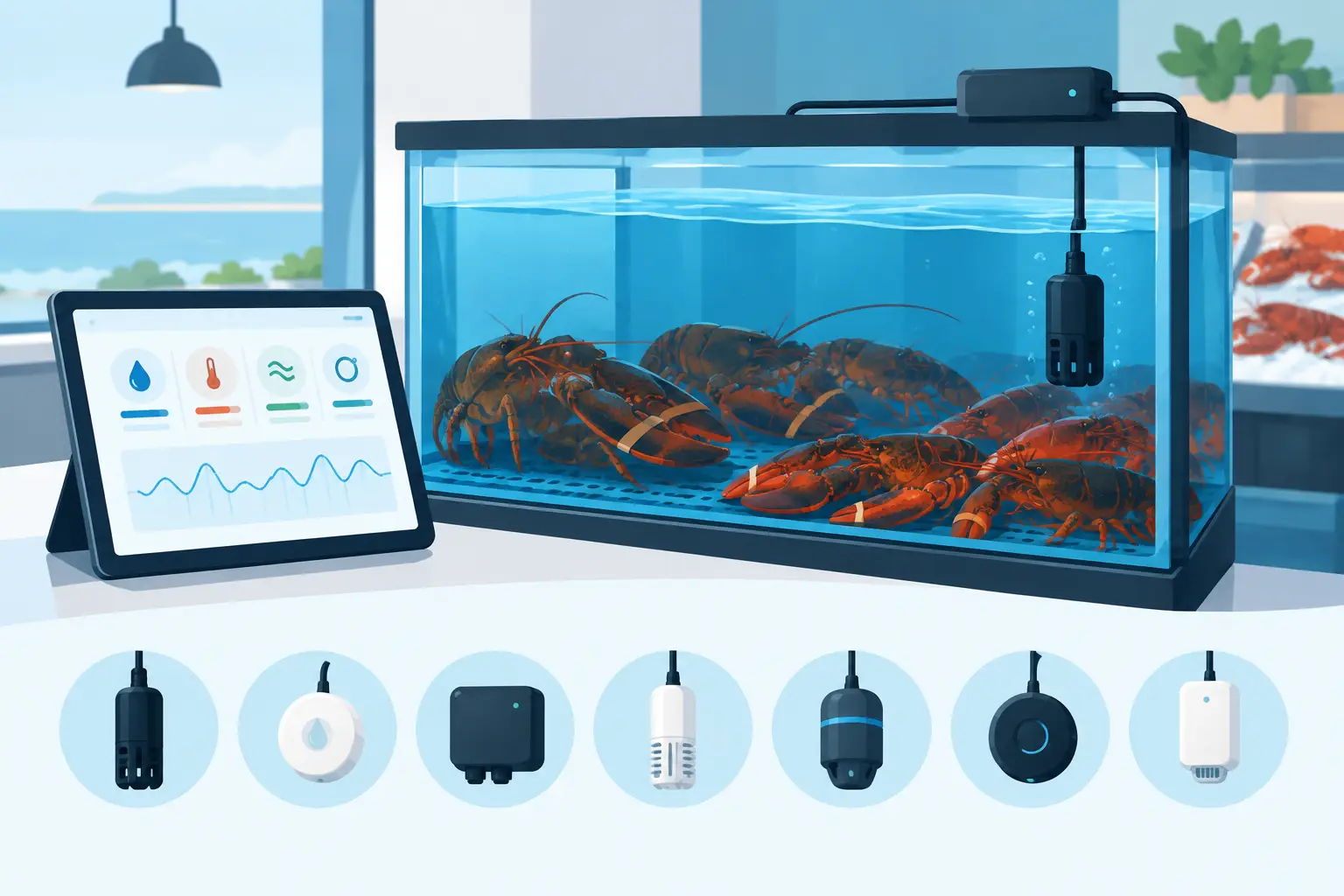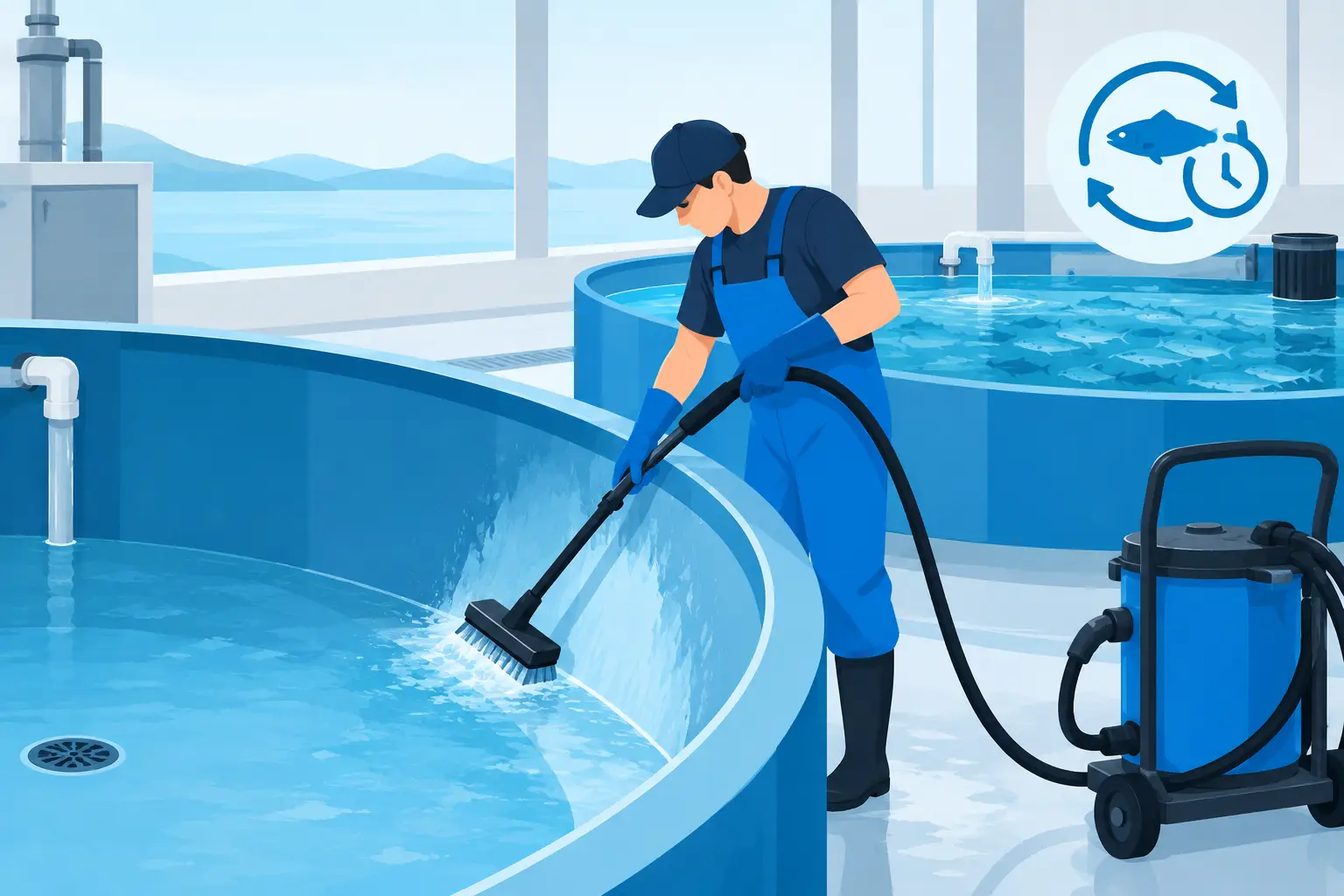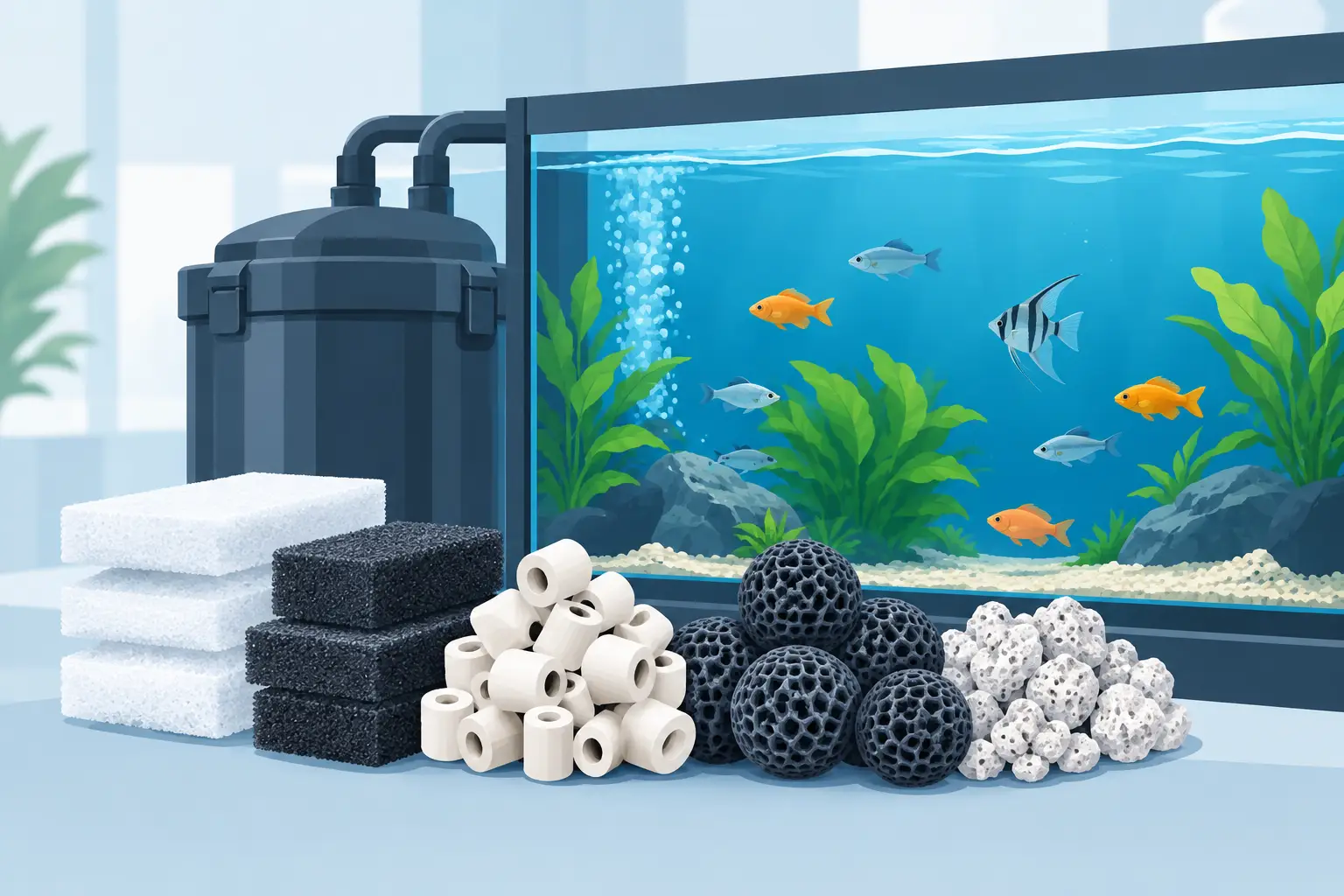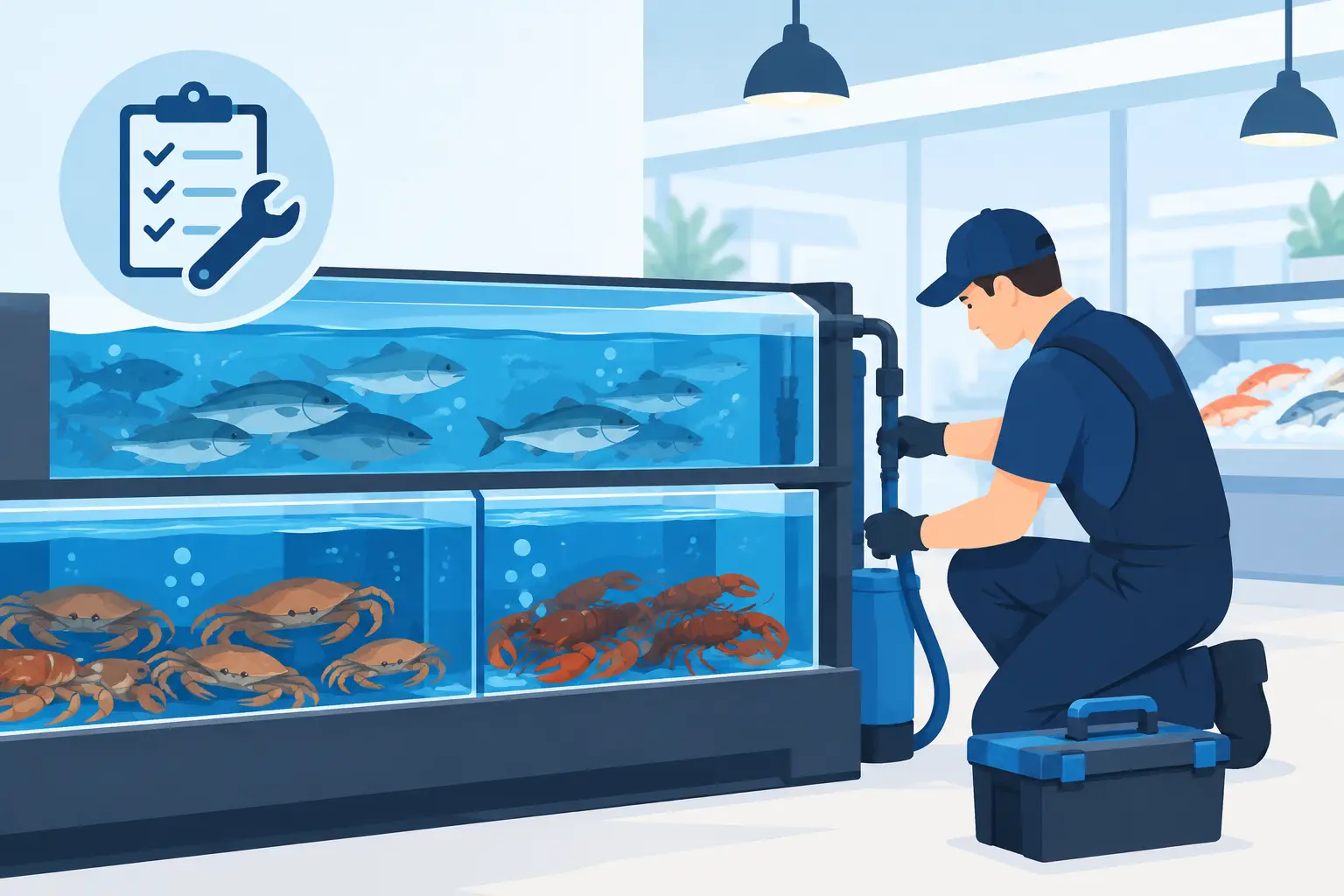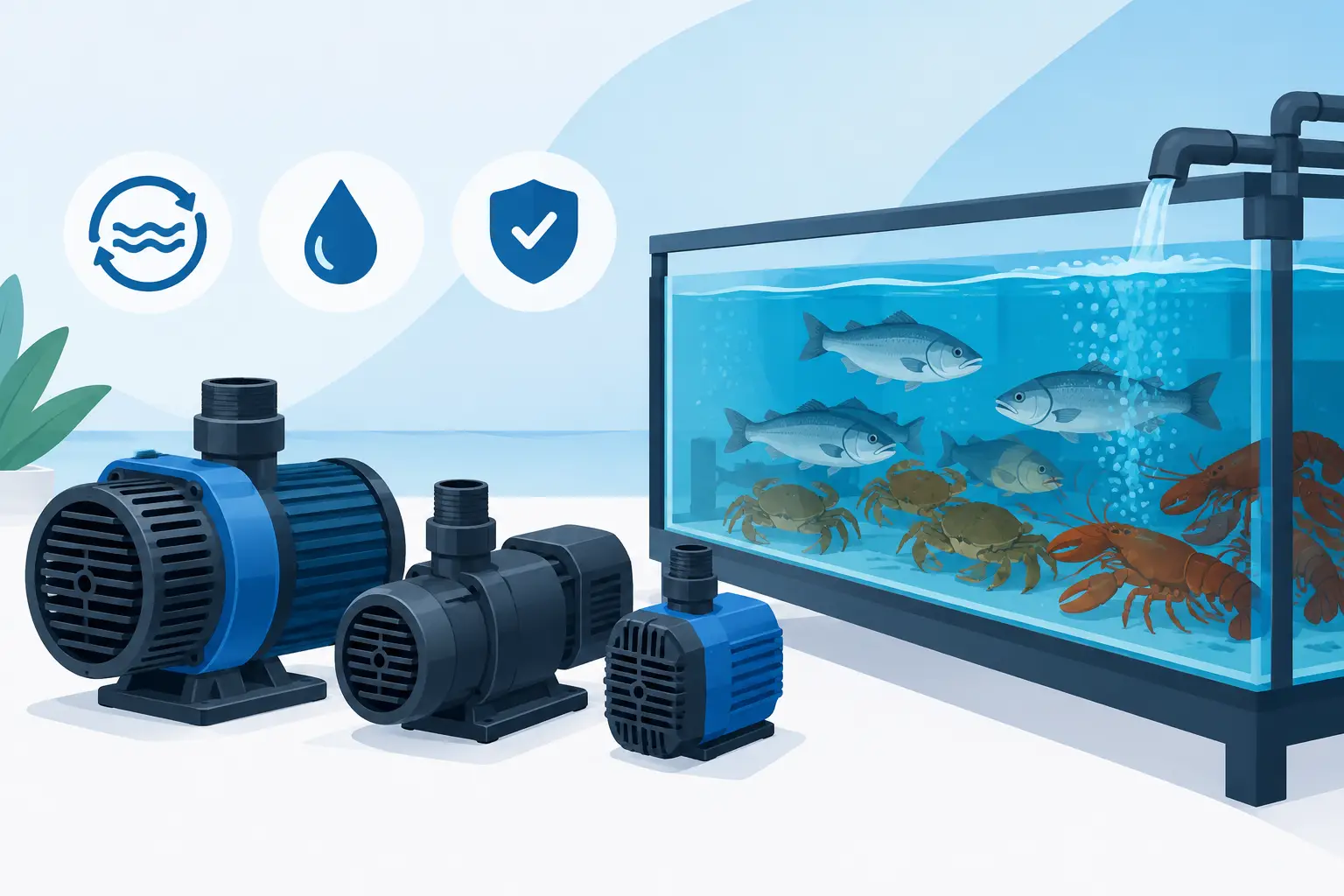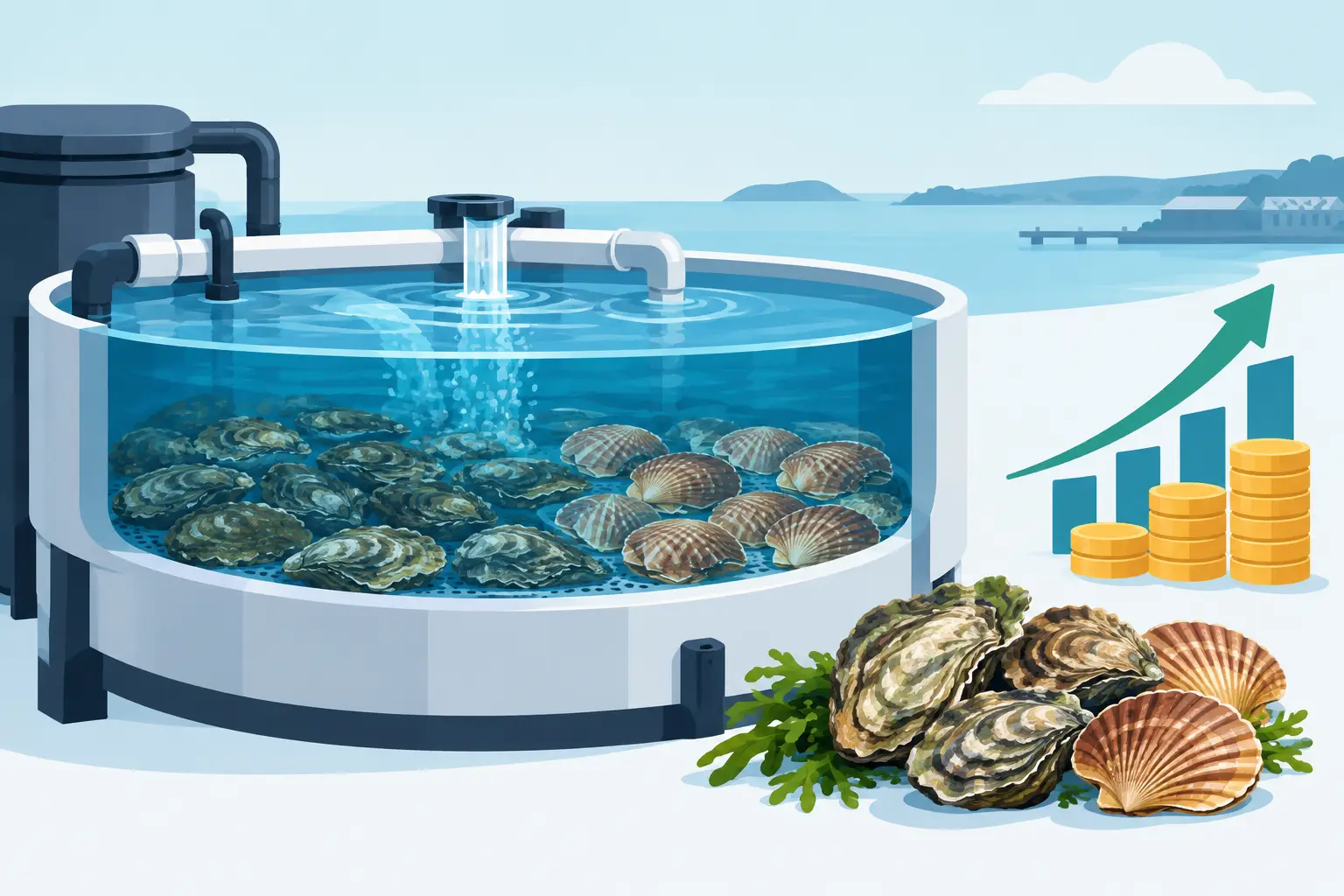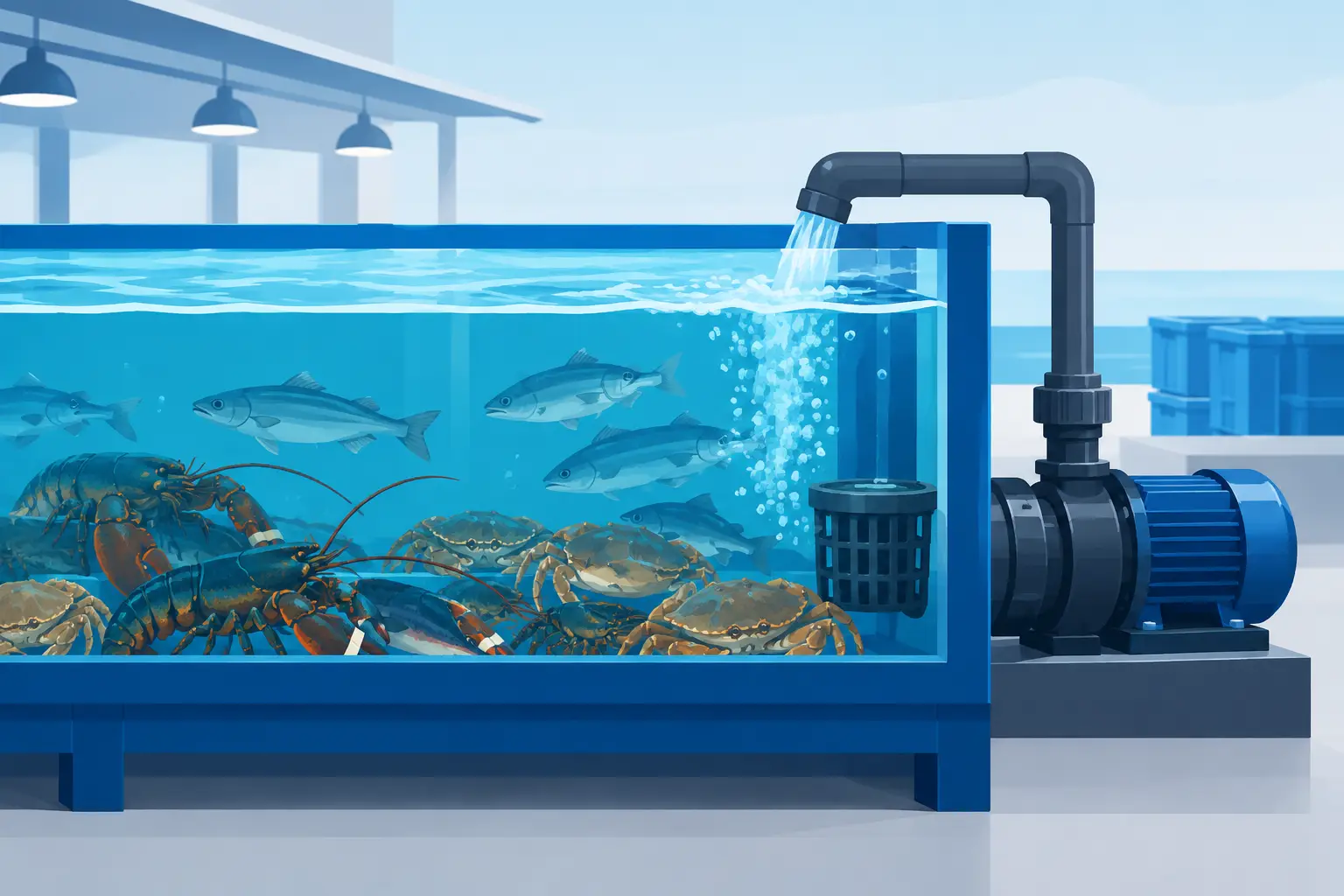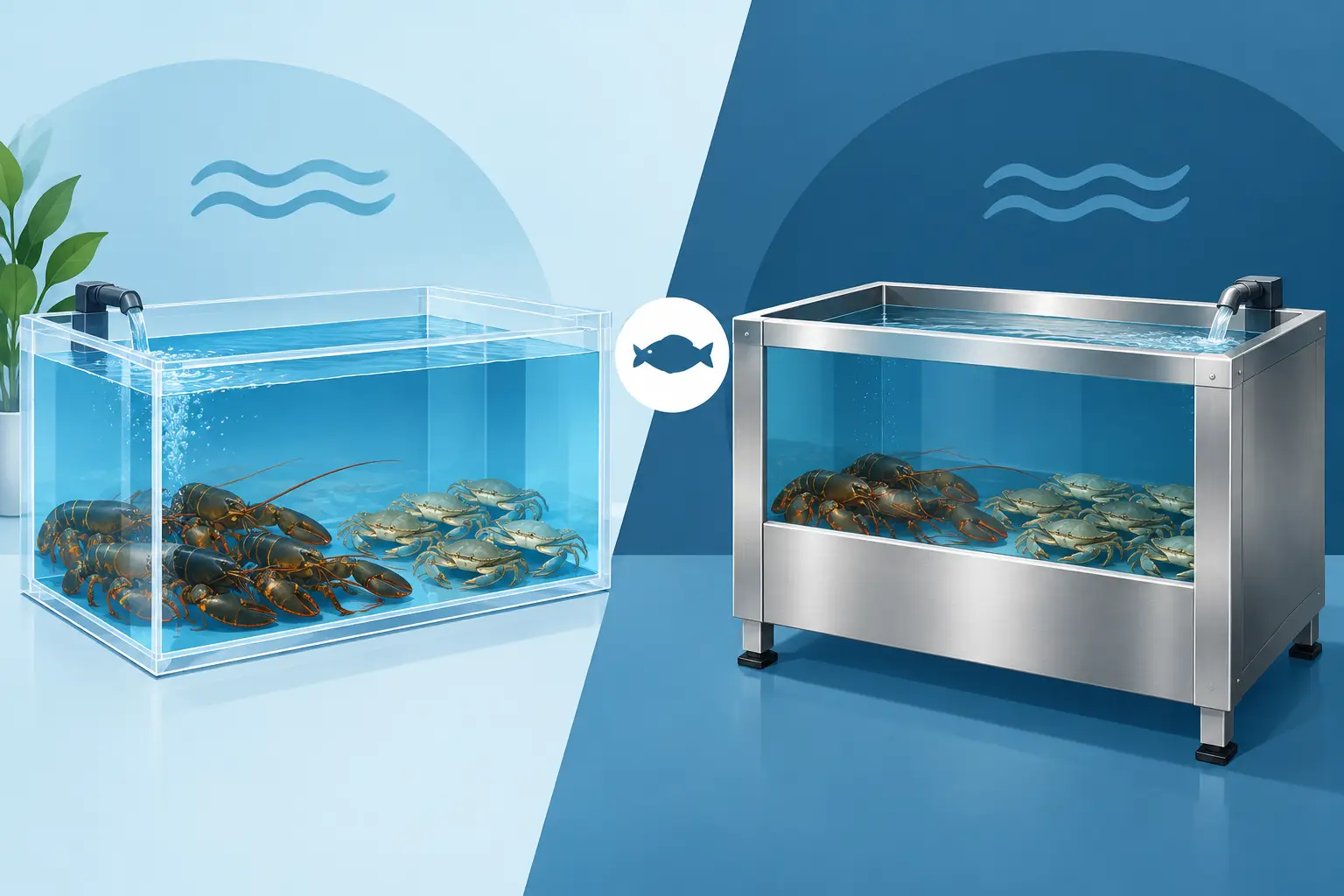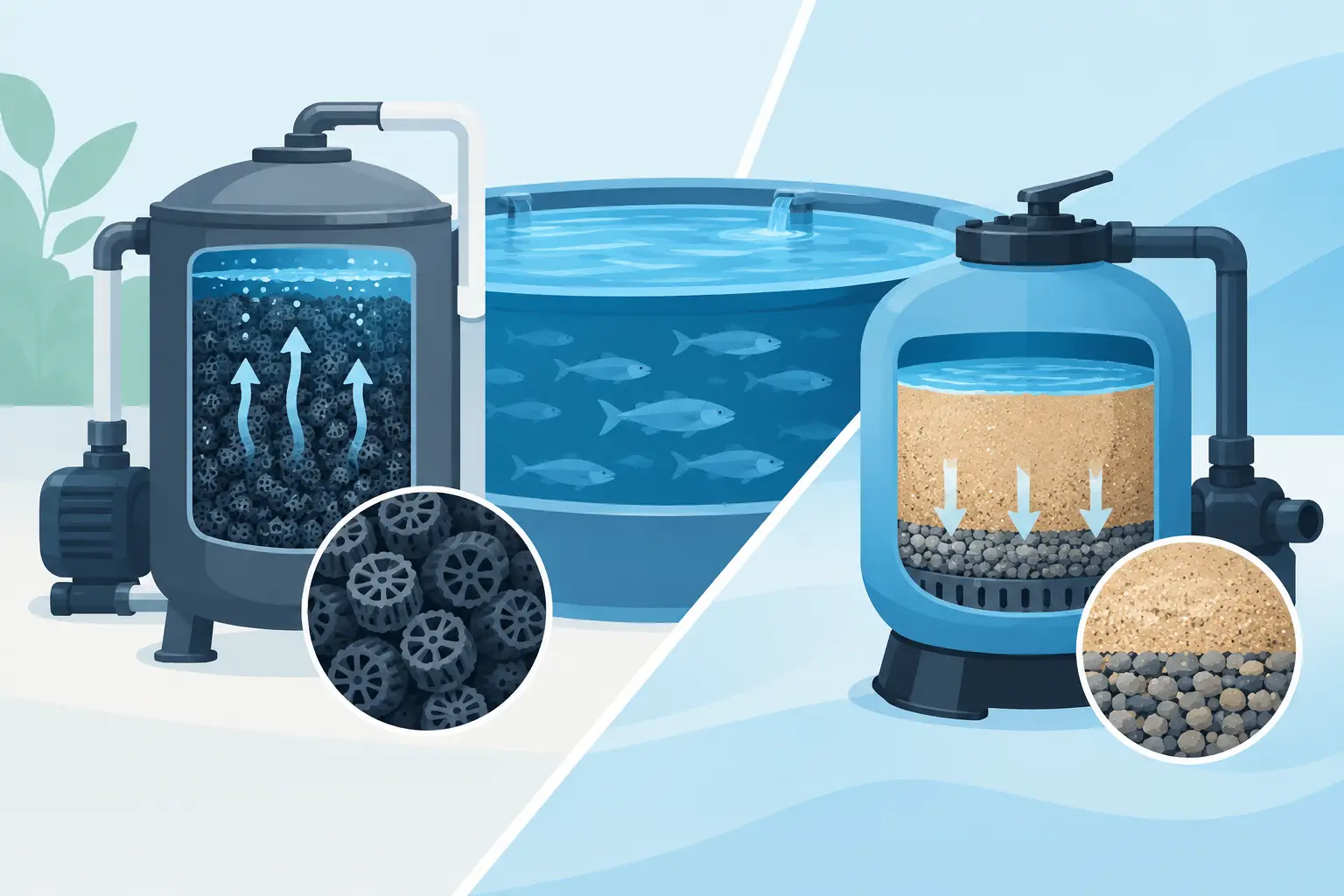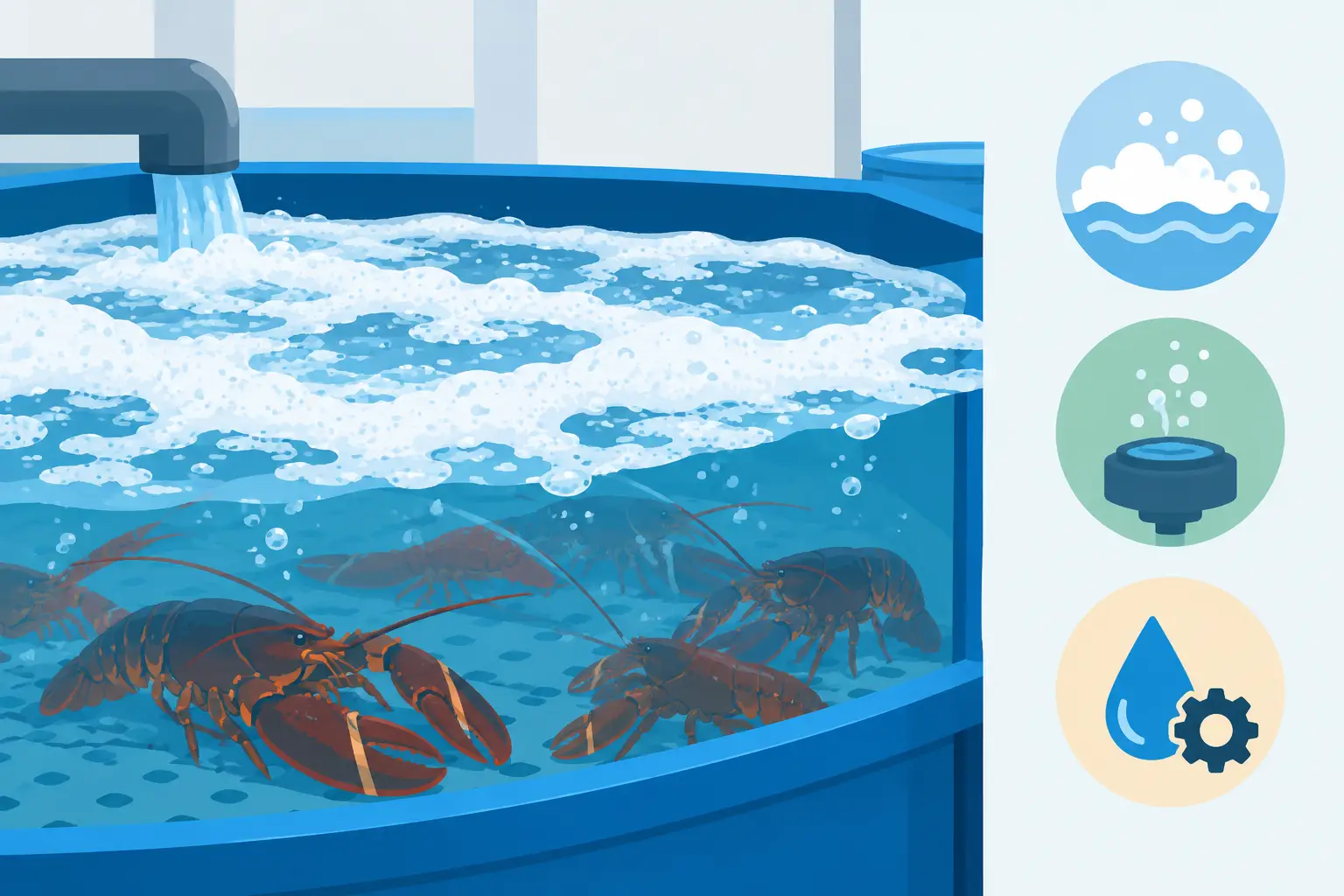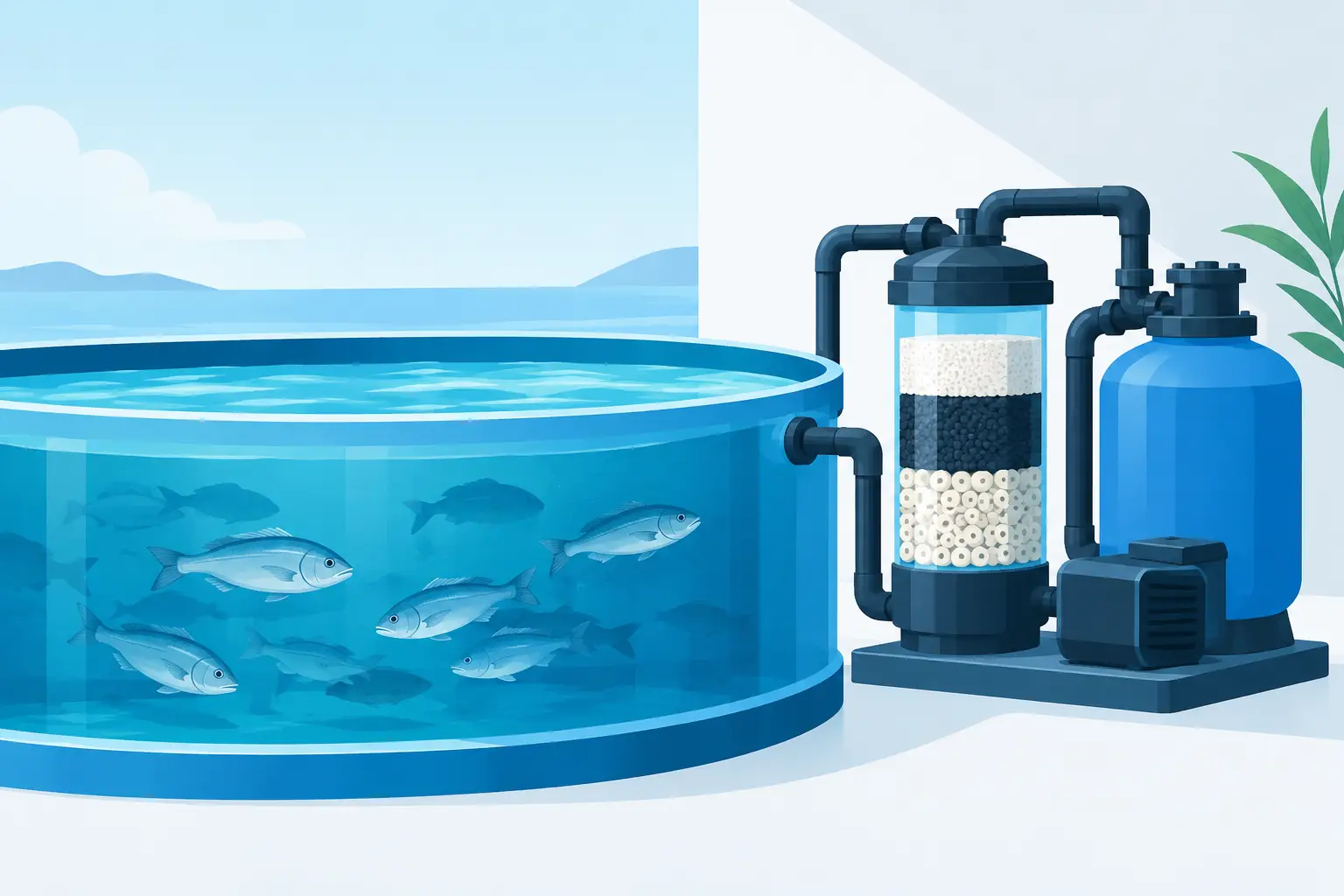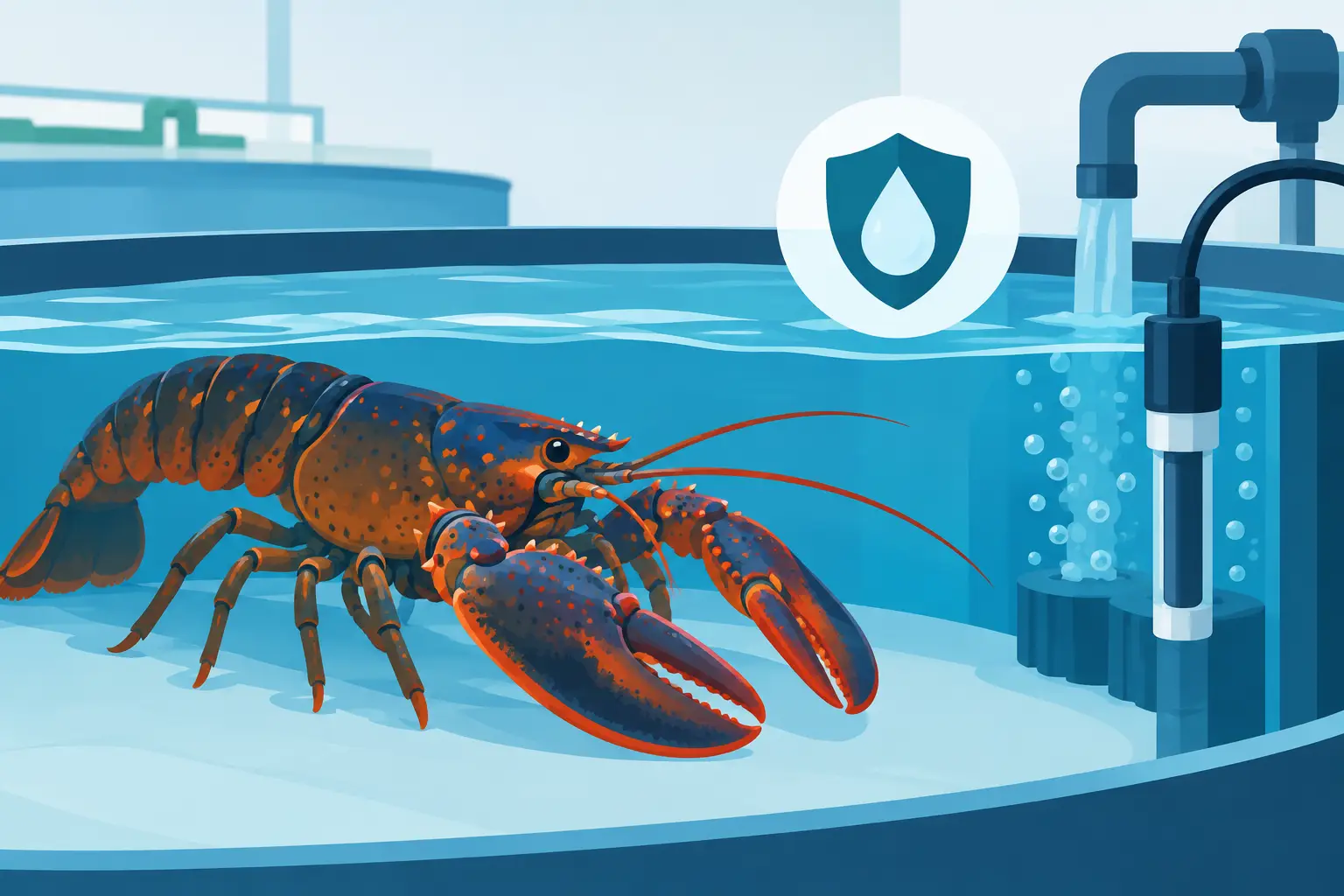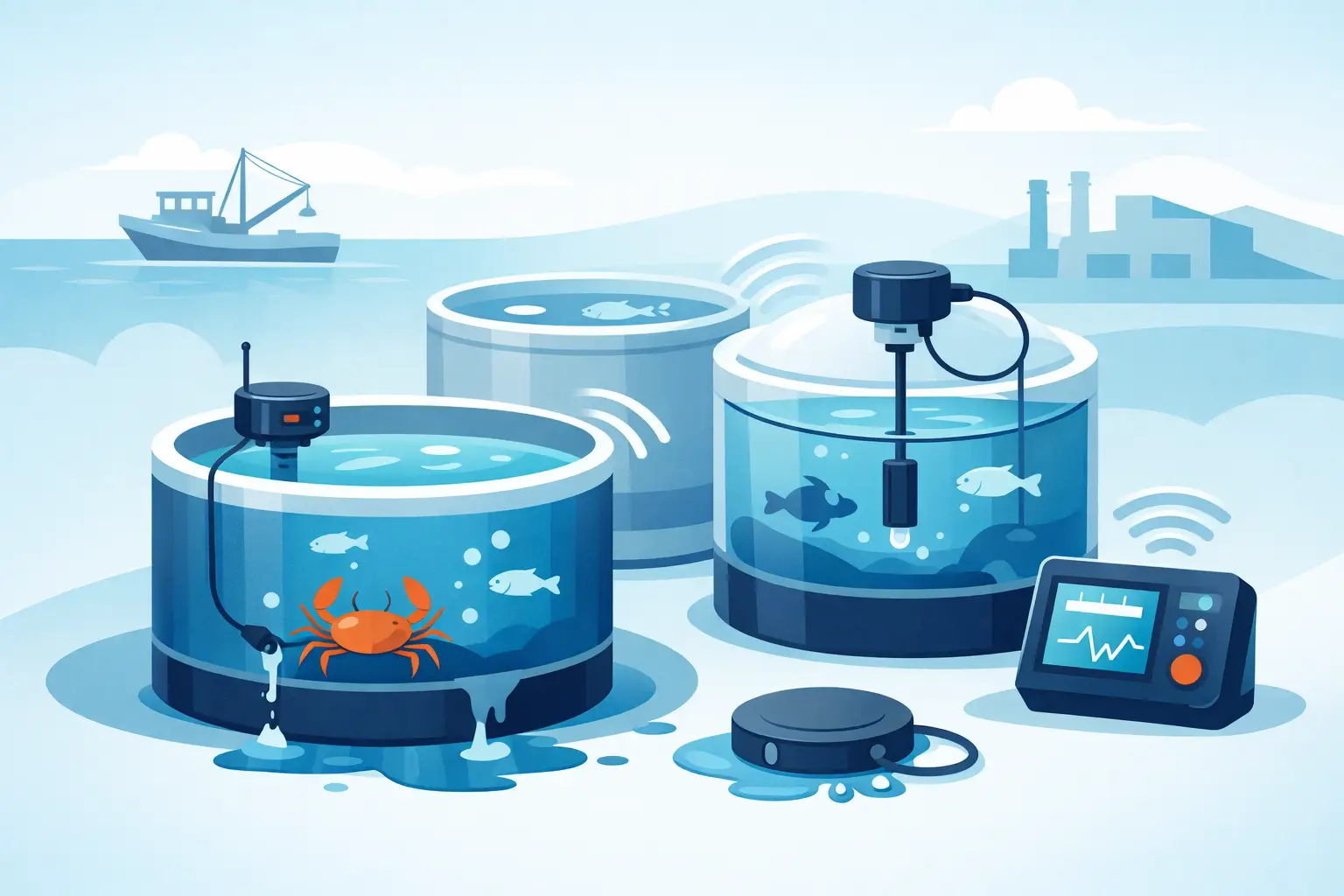
A crowded lobster tank, a high-volume shellfish display, and a live fish system do not fail for the same reason. That is why the best commercial seafood tank filters are not simply the largest filters on the market. They are the right combination of mechanical capture, biological processing, chemical media, water movement, and service access for the species, tank volume, and selling pace of your operation.
For seafood retailers, wholesalers, and restaurant operators, filtration is not a back-room detail. It protects valuable live inventory, keeps water clear for customers, supports animal health, and gives the seafood department a display that looks as good as the product it holds. A filter system that is undersized, hard to service, or poorly matched to the tank can quickly create losses that cost more than the original equipment decision.
What Makes the Best Commercial Seafood Tank Filters Different?
Commercial seafood filtration has to work under conditions that most aquarium filters were never designed to handle. Live lobster, crab, clams, oysters, and fish add waste continuously. Temperatures may need to stay low. Staff need to feed, handle, clean, and sell product without turning water maintenance into an all-day project.
A commercial system also needs to account for peak conditions, not just an average day. A holiday delivery, a weekend rush, or a fully stocked display can put a major load on the tank. The right filtration package has enough capacity to maintain water quality through those periods without forcing staff to constantly react to cloudy water, odor, foam, or stressed animals.
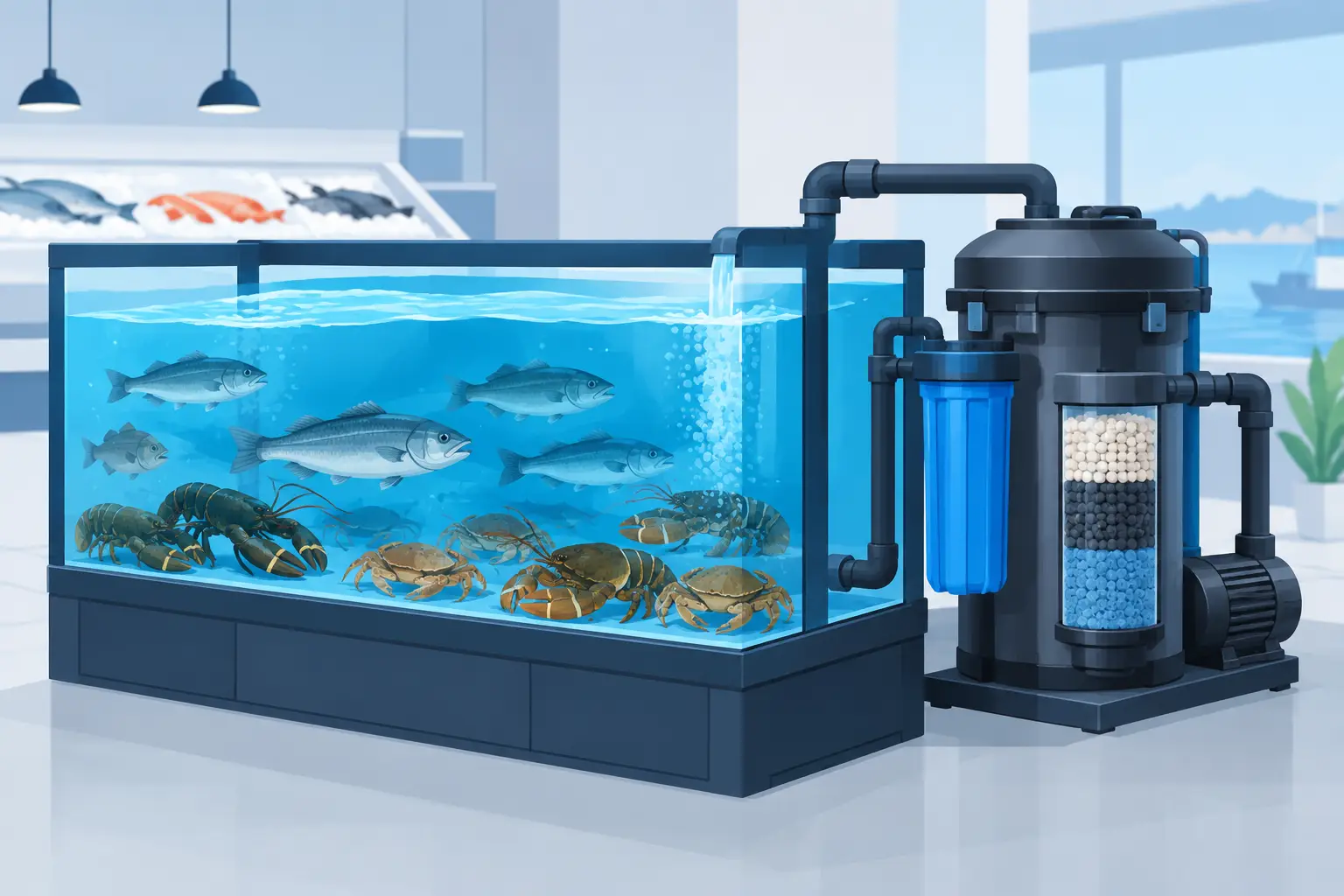
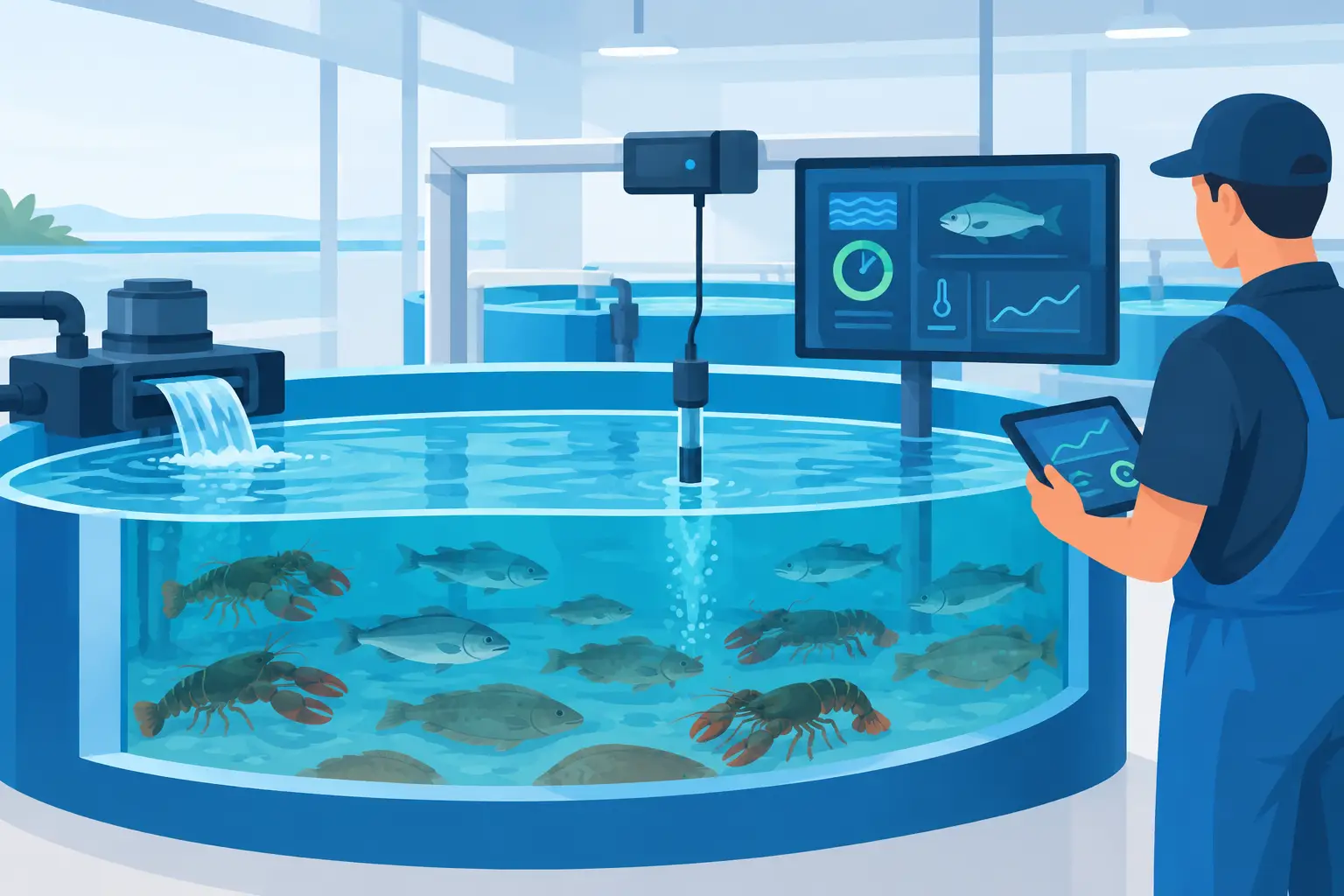
The best systems are built around several filter functions working together. Mechanical filtration removes solids before they break down. Biological filtration supports bacteria that convert toxic ammonia and nitrite into less harmful compounds. Chemical filtration, often using activated carbon, helps manage dissolved organics, odor, discoloration, and certain contaminants. Proper circulation moves water through each stage consistently.
No single cartridge or media bed can replace that complete approach.
Start With the Species and Selling Model
Before comparing equipment, determine what the tank must support. A lobster holding system has different needs from a mixed shellfish display, while a live fish tank may demand another approach altogether. Stock density, water temperature, feeding practices, turnover rate, and how long animals remain in the tank all affect the filtration requirement.
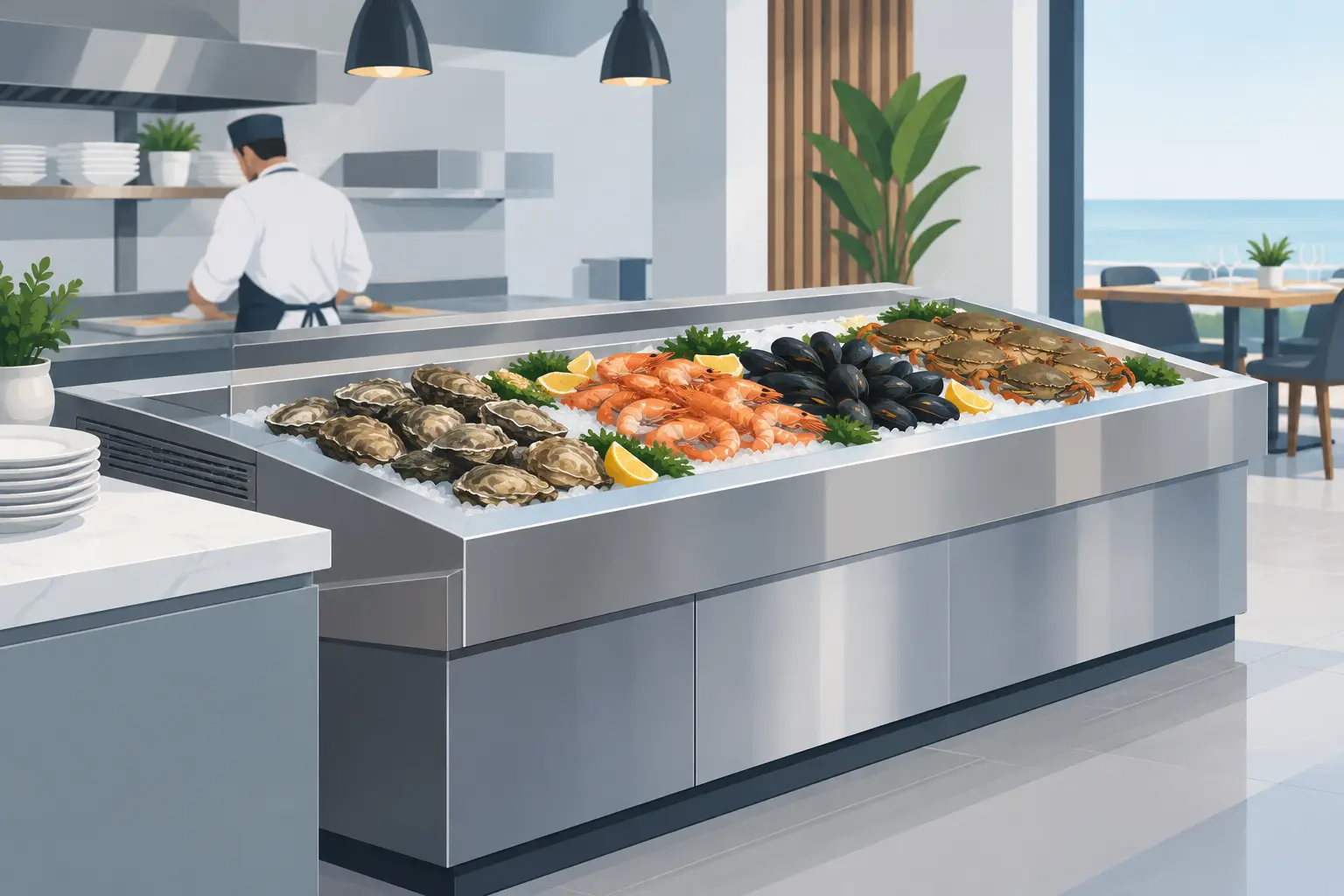
A high-turnover lobster tank at a busy supermarket may need filtration that prioritizes dependable solids removal, stable cold saltwater conditions, and straightforward daily service. A wholesale holding operation may need more capacity and redundancy because its inventory levels can change rapidly. A restaurant with a smaller live display may have less total volume but still needs commercial-grade reliability because there is little room for a service interruption during business hours.
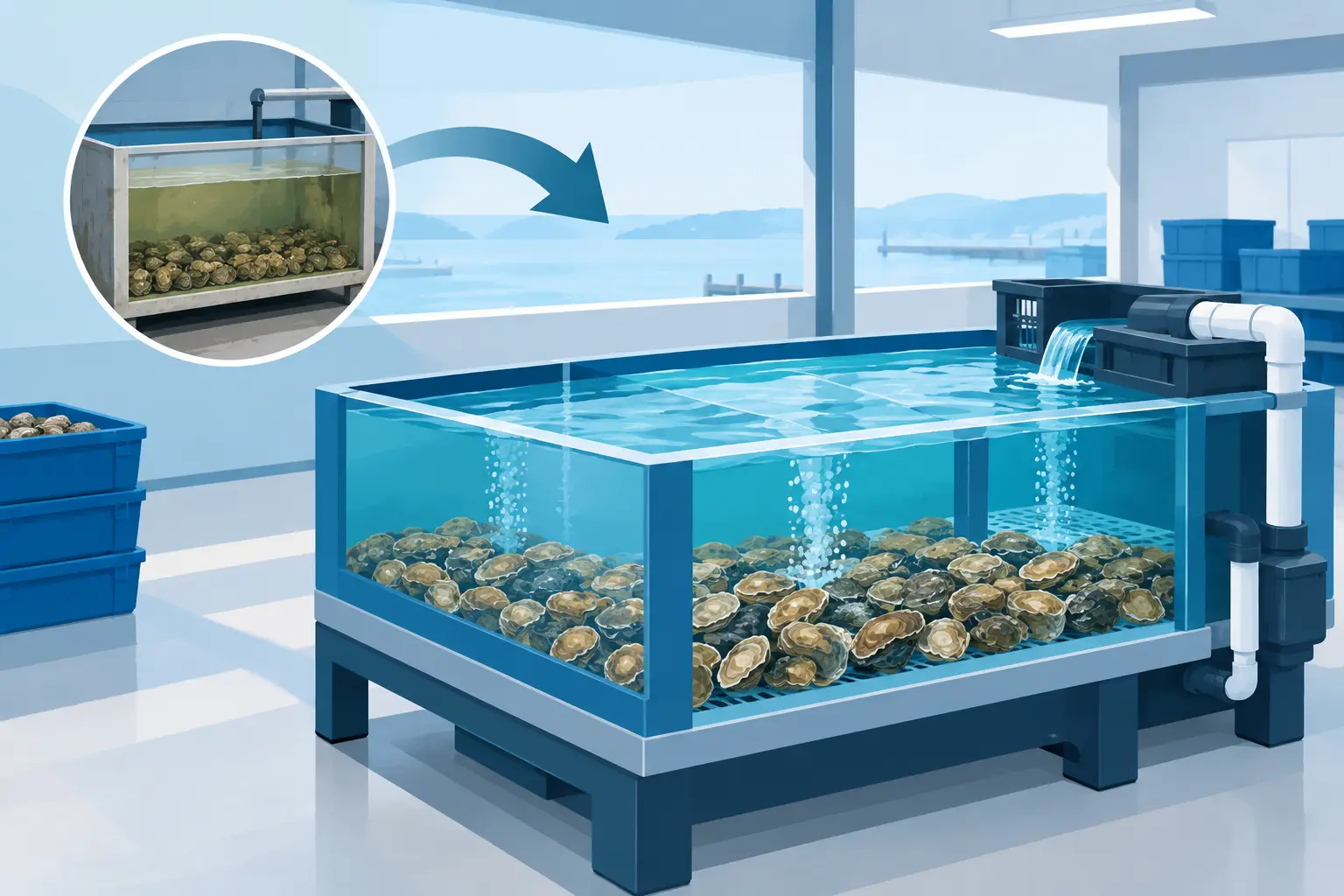
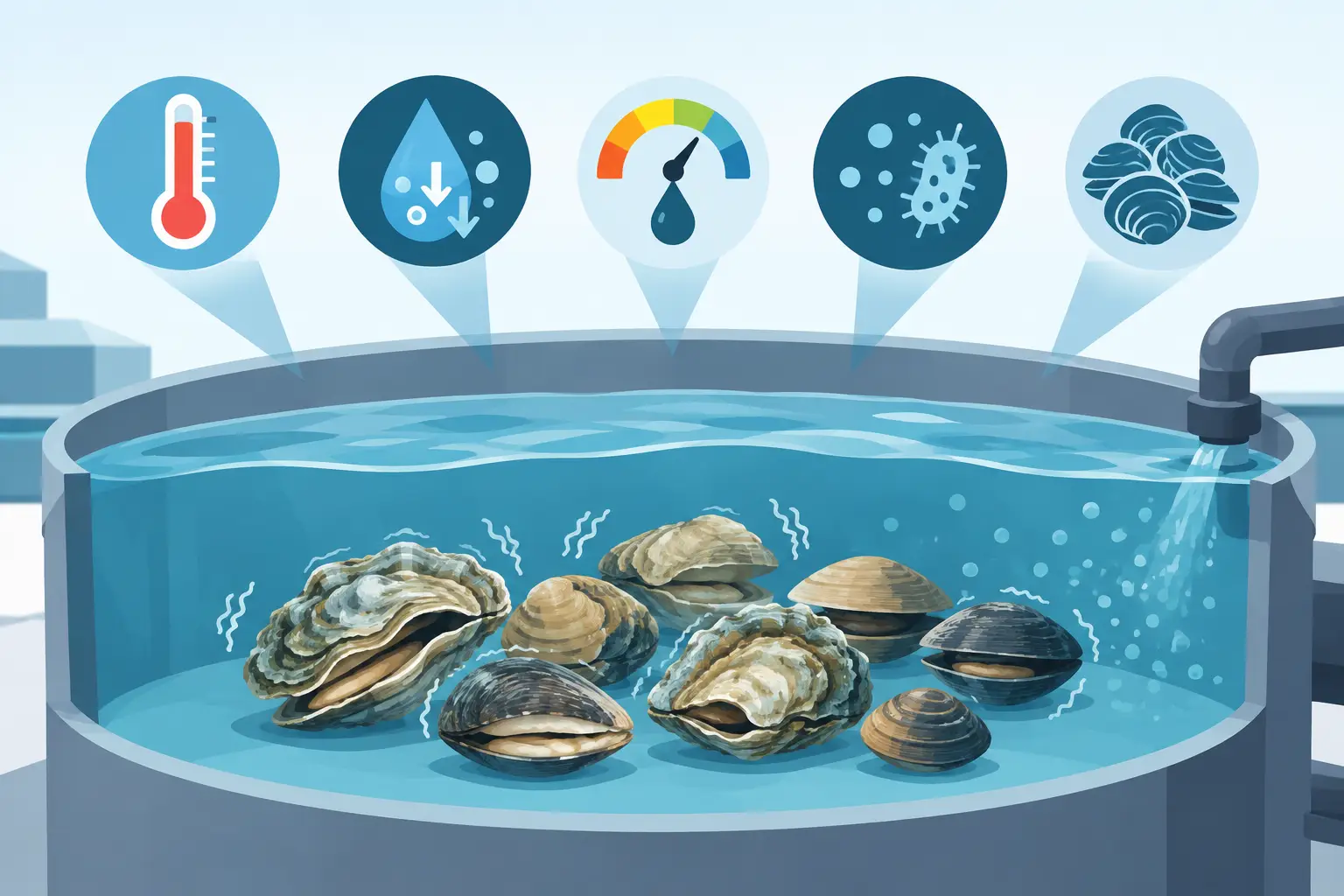
Purging requirements deserve separate consideration. Holding an animal alive and properly purging it are not identical jobs. When lobster quality and clean product presentation are central to the operation, a purpose-built purging system can provide better control than trying to adapt a generic recirculating filter setup.
Match Filter Capacity to Real Bioload
Filter capacity should be based on the tank’s real operating load, not just the number printed on a pump box. Consider the maximum pounds of live seafood you expect to hold, the type of species, how frequently inventory turns, and whether the system will be fully stocked at certain times of year.
Oversizing has practical benefits. It provides a margin when a shipment arrives early, sales slow temporarily, or water quality changes after heavy handling. It can also reduce how often media needs attention. The trade-off is higher initial cost and, in some cases, more space required for equipment. For commercial operators, that margin is often cheaper than replacing lost inventory.
The Filter Stages That Matter Most
Mechanical filtration: remove waste before it becomes a problem
Mechanical filtration is the first line of defense against shell debris, food particles, sediment, and other suspended solids. If these materials remain in the system, they decompose, raise the organic load, and create more work for the biological filter.
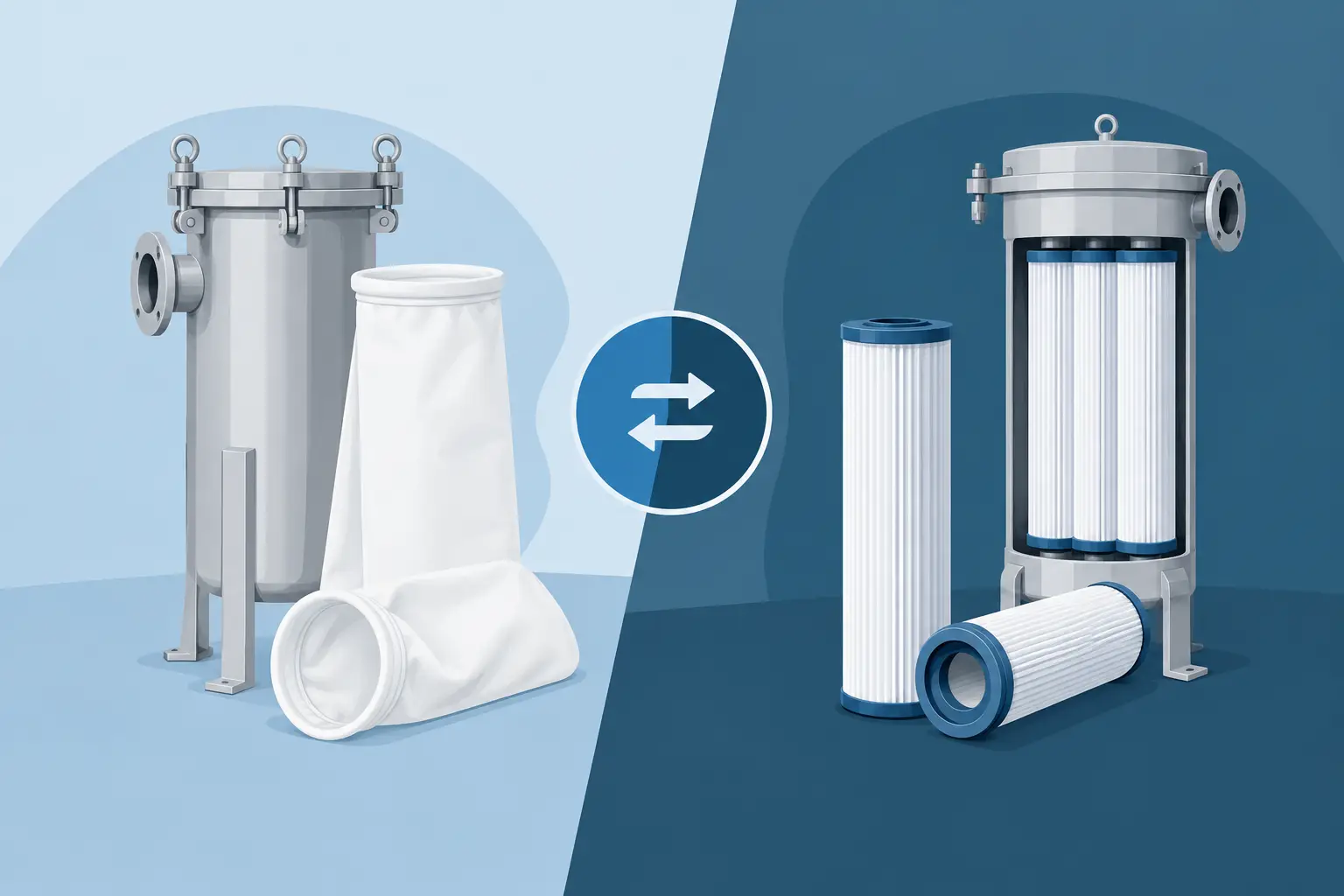
Commercial systems may use filter pads, cartridge-style elements, screens, bag filters, or other serviceable media. The right choice depends on the water flow and the staff’s ability to clean or replace media on schedule. Fine media can produce clearer water, but it may clog faster. Coarser media lasts longer but lets smaller particles reach later stages. Many effective systems use staged mechanical filtration rather than relying on one element to do every job.
Biological filtration: protect against ammonia and nitrite
Biological media gives beneficial bacteria a protected surface on which to grow. Those bacteria process ammonia produced by seafood waste and convert it through the nitrogen cycle. This stage is essential because clear water is not necessarily safe water. A tank can look clean while ammonia or nitrite is creating stress for live inventory.
Biological filtration needs stable flow, oxygenated water, and time to establish. It should not be treated like disposable mechanical media. Replacing all biological media or aggressively cleaning it with untreated water can disrupt the bacteria population and create a water-quality setback.
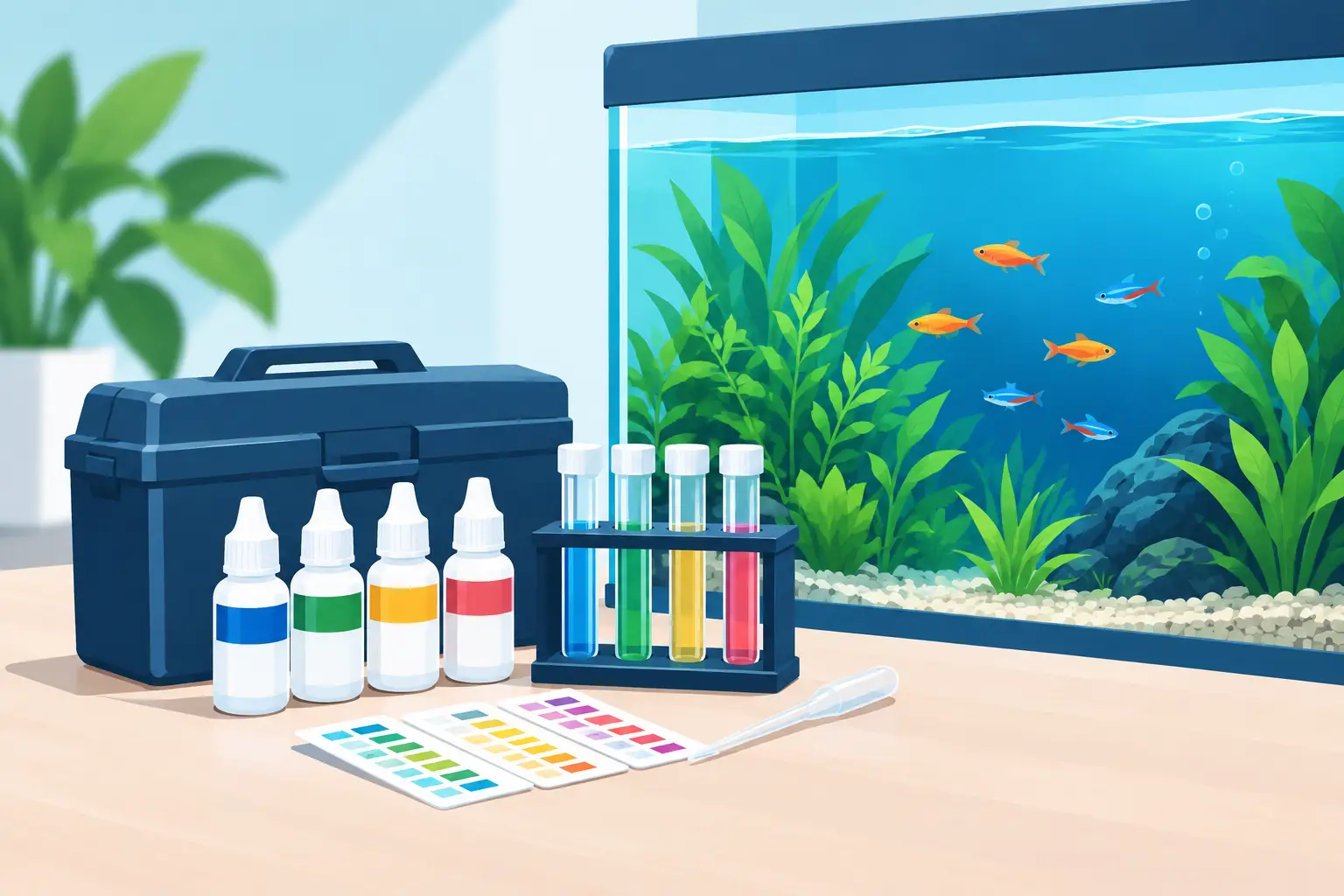
For new installations, commissioning matters. The filter must be properly started and monitored before the system carries a full commercial load. For established operations, routine testing is the only way to confirm that the biological stage is keeping up with changing inventory levels.
Activated carbon and chemical media: improve water appearance and odor
Activated carbon is valuable in commercial seafood systems because it adsorbs many dissolved organic compounds that mechanical media cannot capture. It can help improve water clarity, reduce odor, and maintain a cleaner-looking display for customers.
Carbon is not a substitute for regular cleaning, correct salinity, or adequate biological capacity. It has a finite service life and should be replaced on a planned schedule. If it is left in service too long, performance drops and operators may assume the tank has a larger problem when the real issue is exhausted media.
Other chemical media may be useful in specific situations, but they should be selected based on water testing and system design. Adding products without identifying the cause of a water-quality issue can mask a problem rather than solve it.
Flow, Turnover, and Redundancy Are Part of Filtration
A high-quality filter does little good if water bypasses it, circulation leaves dead spots in the tank, or the pump cannot maintain flow as media collects solids. Turnover rate must be adequate to move the full tank volume through the filtration system consistently while avoiding excessive turbulence that can stress animals.
Plumbing layout matters just as much. Intake placement, returns, overflow protection, drain access, and the location of filter housings all affect day-to-day performance. The best commercial seafood tank filters are designed as part of the complete life-support system, not added after the tank has already been fabricated.
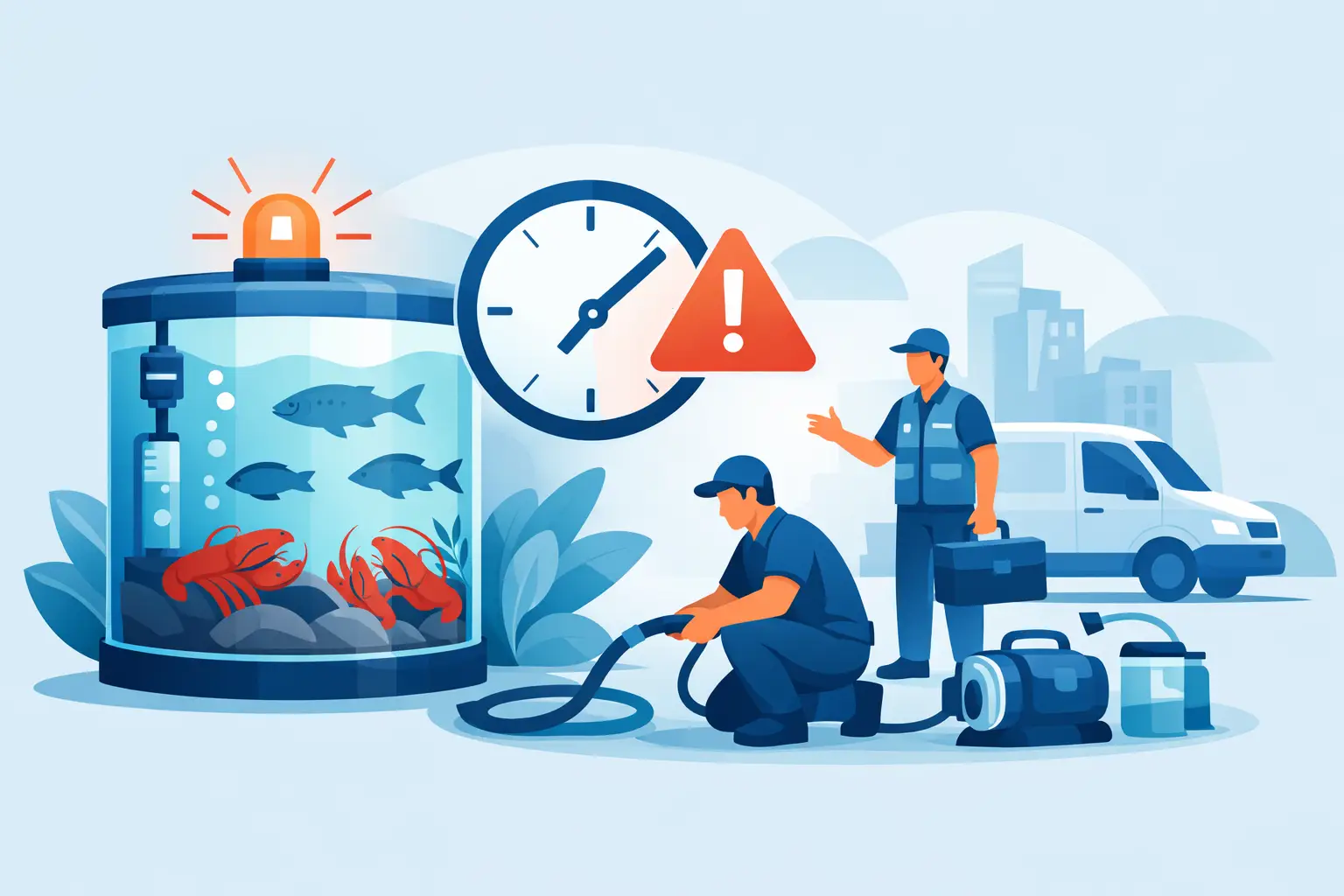
Redundancy is also worth considering for larger or high-value installations. Backup pumps, spare media, accessible replacement parts, and a clear response plan can prevent a small equipment issue from becoming an inventory emergency. The appropriate level of redundancy depends on the operation, but a tank holding thousands of dollars in live product should never depend on a single hard-to-replace component.
Serviceability Determines Whether a Filter Performs Long Term
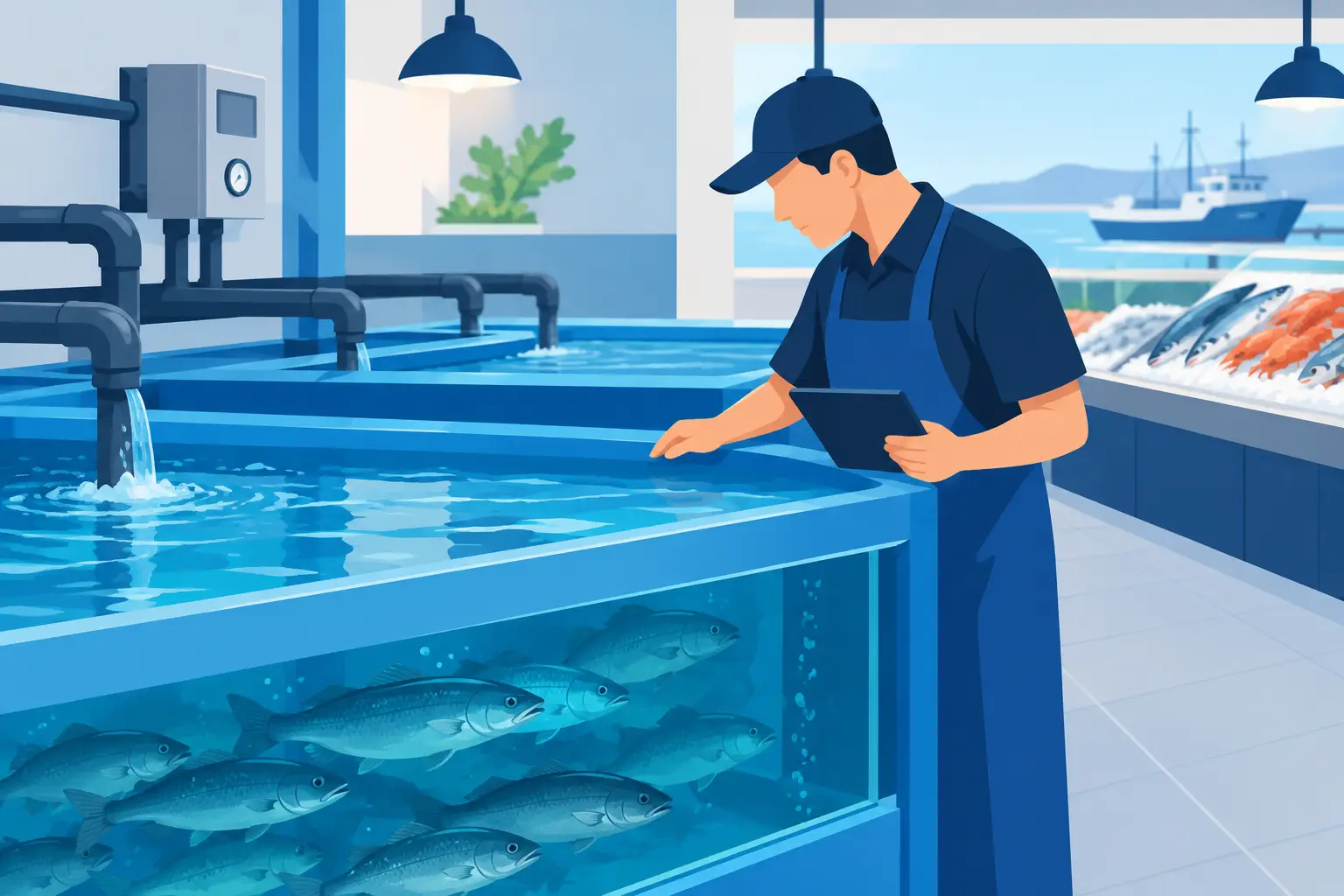
A system can look impressive on installation day and become a liability six months later if staff cannot service it easily. Filter housings should be reachable. Drain points should make sense. Media changes should not require dismantling half the system. Components should be selected with commercial availability in mind.
This is where a full-service provider makes a real difference. Lobster Life Systems designs commercial live seafood systems with the understanding that operators need more than a tank and a box of replacement filters. They need compatible salt, filtration media, parts, technical guidance, and support when conditions change or equipment needs attention.
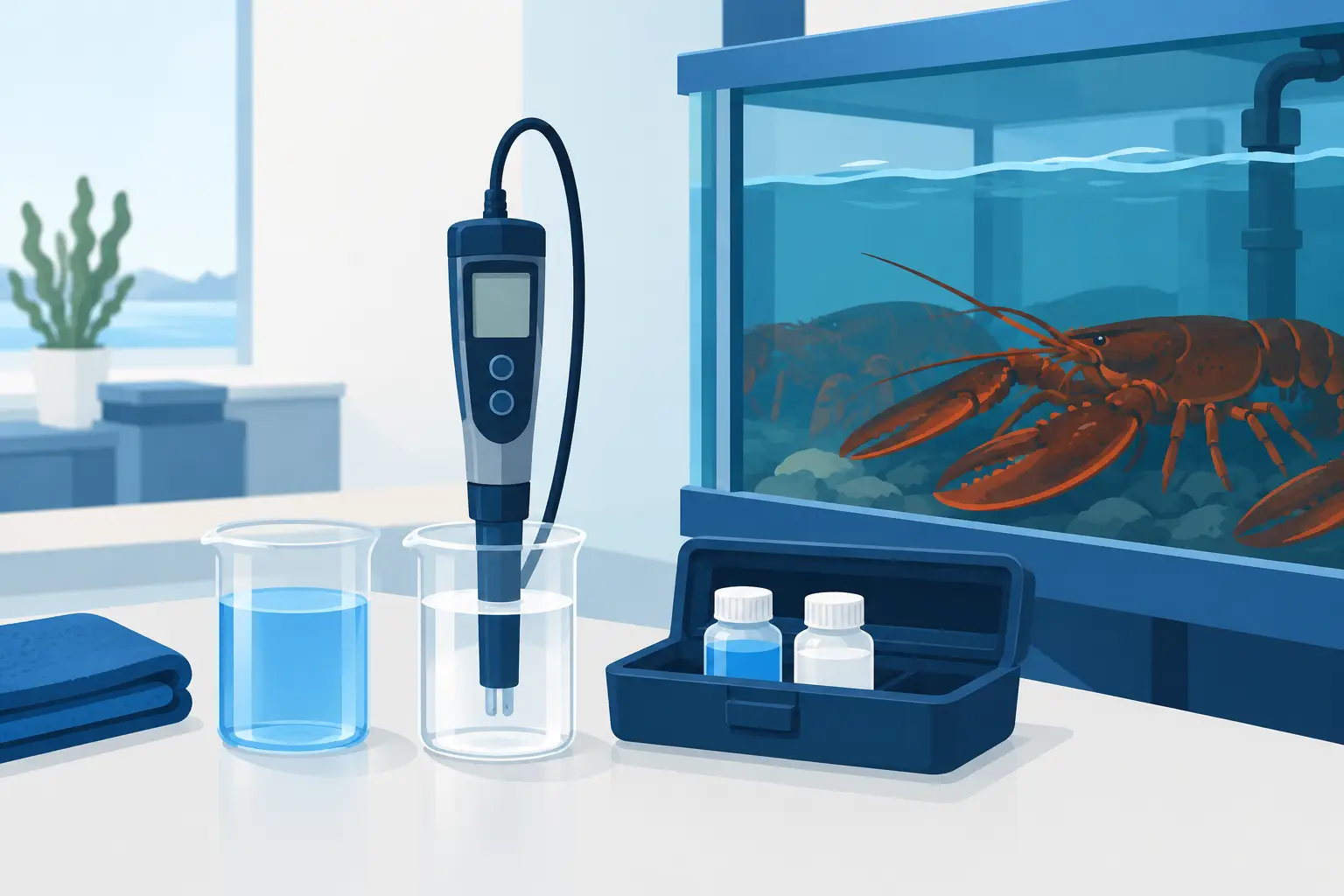
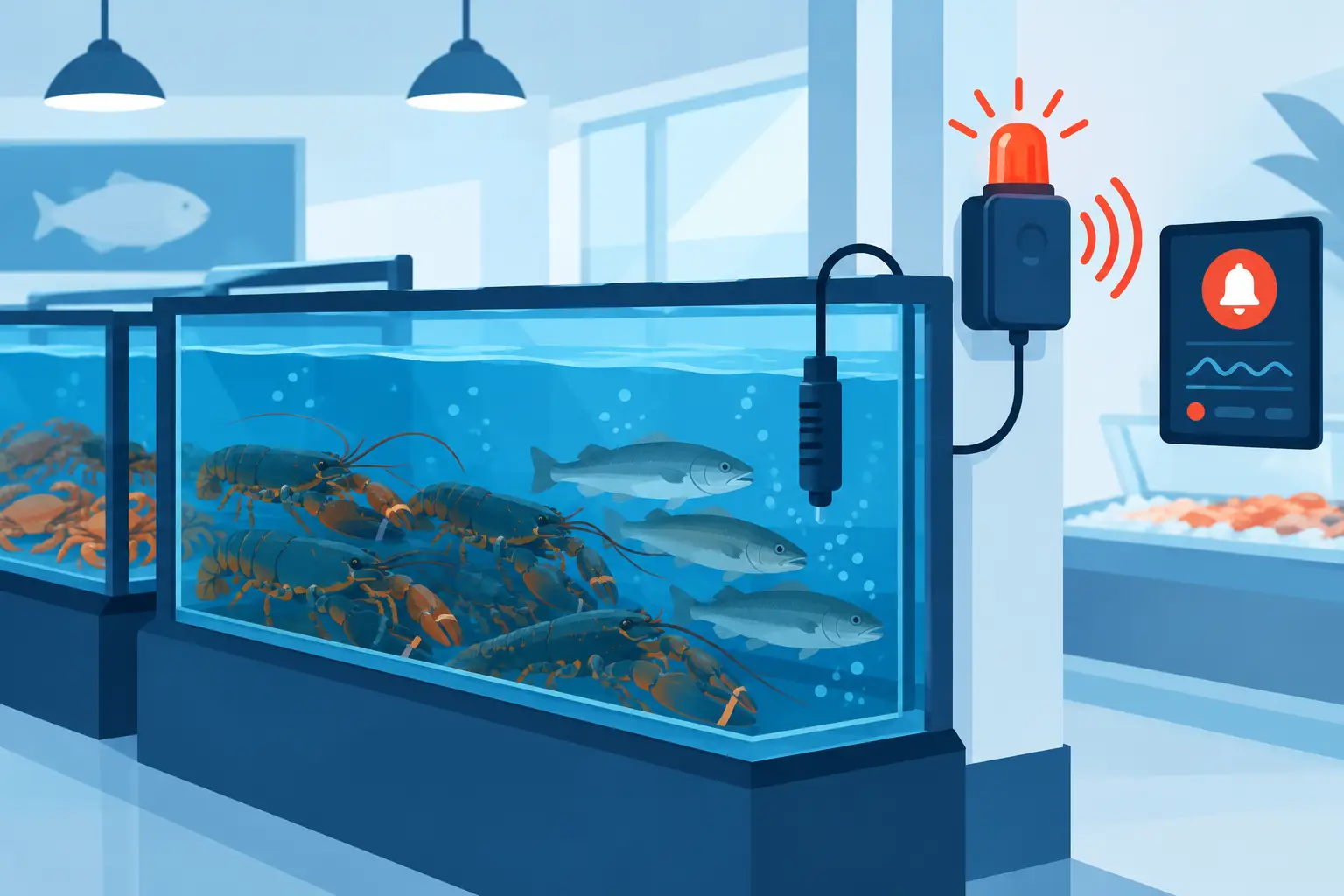
Maintenance intervals should be based on actual use, not guesswork. A department manager should know what needs daily inspection, what needs weekly cleaning, and what requires scheduled replacement. Watch water clarity, odor, temperature, salinity, flow, ammonia, nitrite, and animal behavior. A change in any one of these can be an early warning that prevents a larger loss.
Choose a System, Not Just a Filter
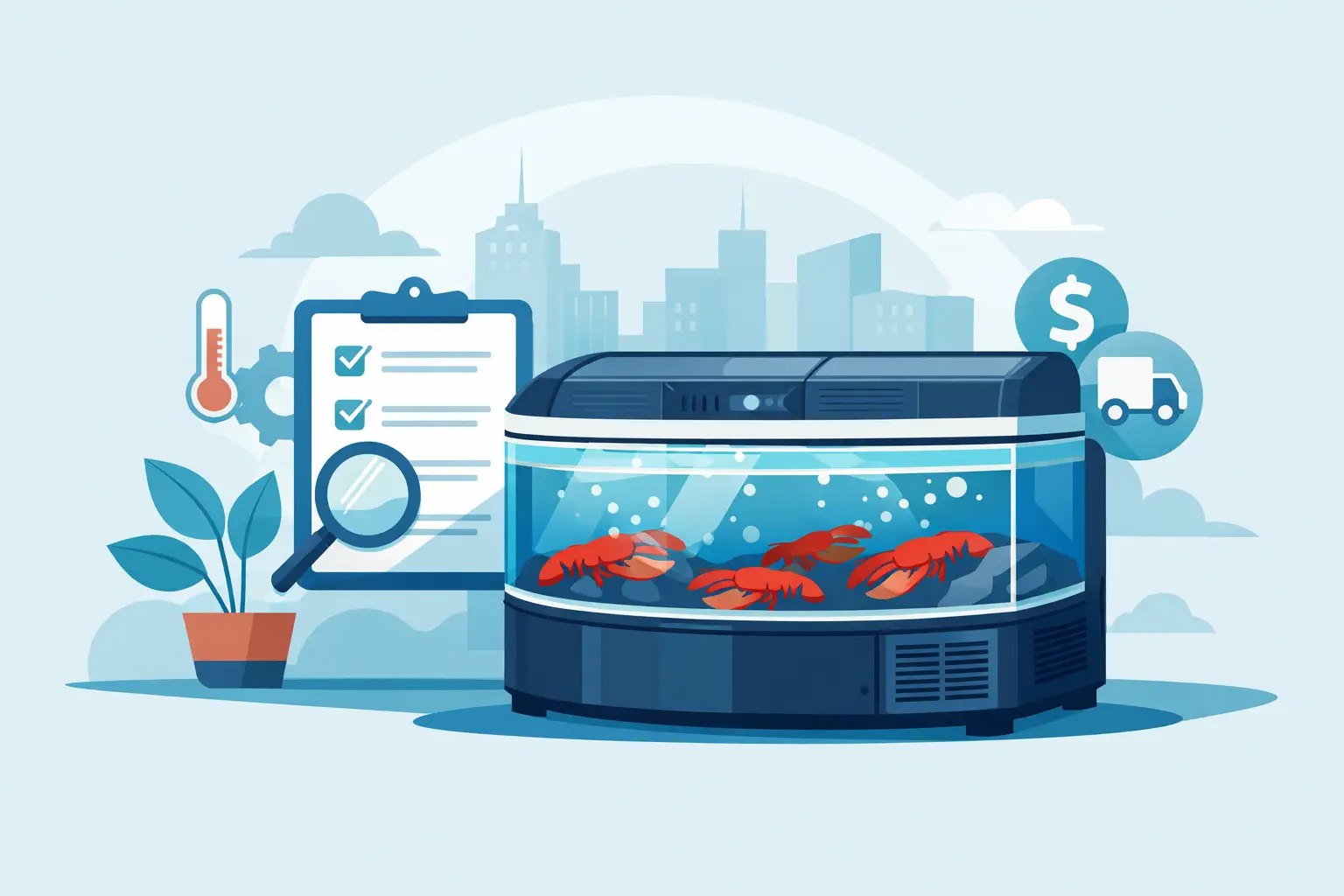
The lowest-priced filter is rarely the lowest-cost choice when live seafood is involved. A commercial filtration decision should account for equipment capacity, service time, replacement media, power use, floor space, installation requirements, and the availability of experienced support. It should also fit the way your team actually works during deliveries, cleaning, busy selling periods, and after-hours checks.
If you are replacing an existing system, document the recurring problems first. Is the water cloudy after shipments? Are cartridges clogging too quickly? Is odor affecting the customer experience? Are animals staying in the tank longer than the original system was designed to support? Those answers point to the correct upgrade more reliably than shopping by filter size alone.
The right filtration system becomes almost invisible when it is doing its job: water stays clean, live inventory remains in good condition, staff can focus on customers, and the display supports the reputation of the seafood department. That is the standard worth building around.