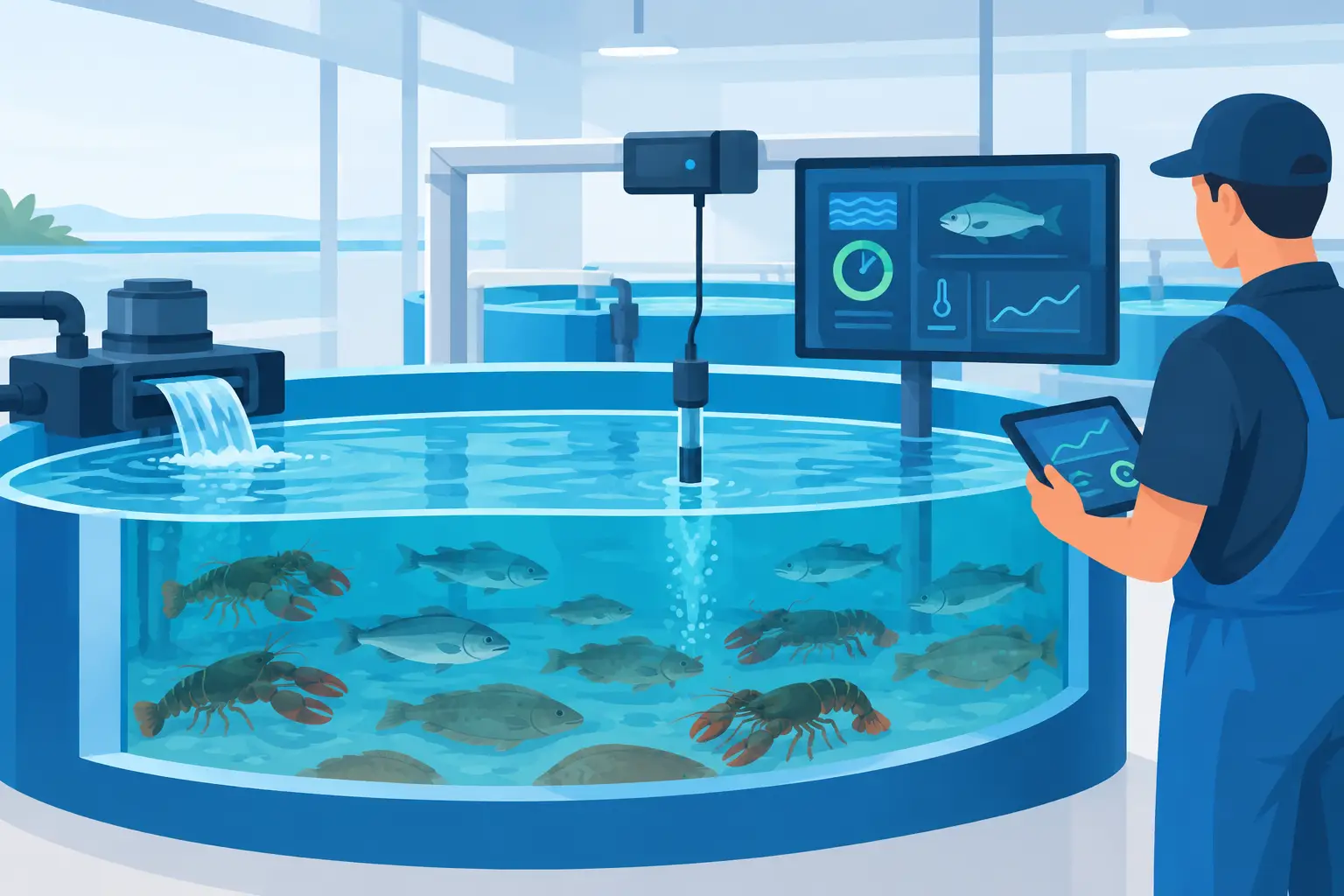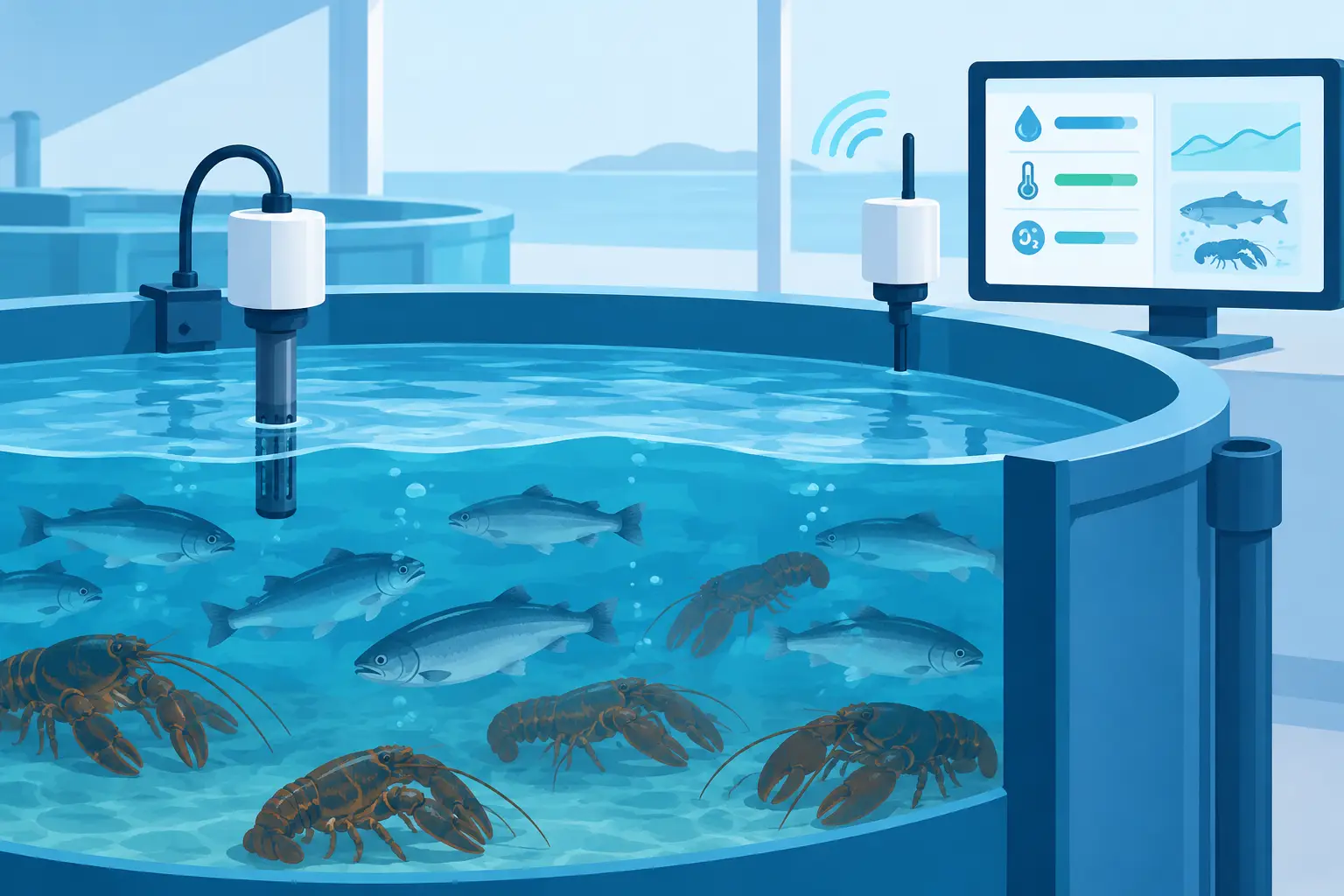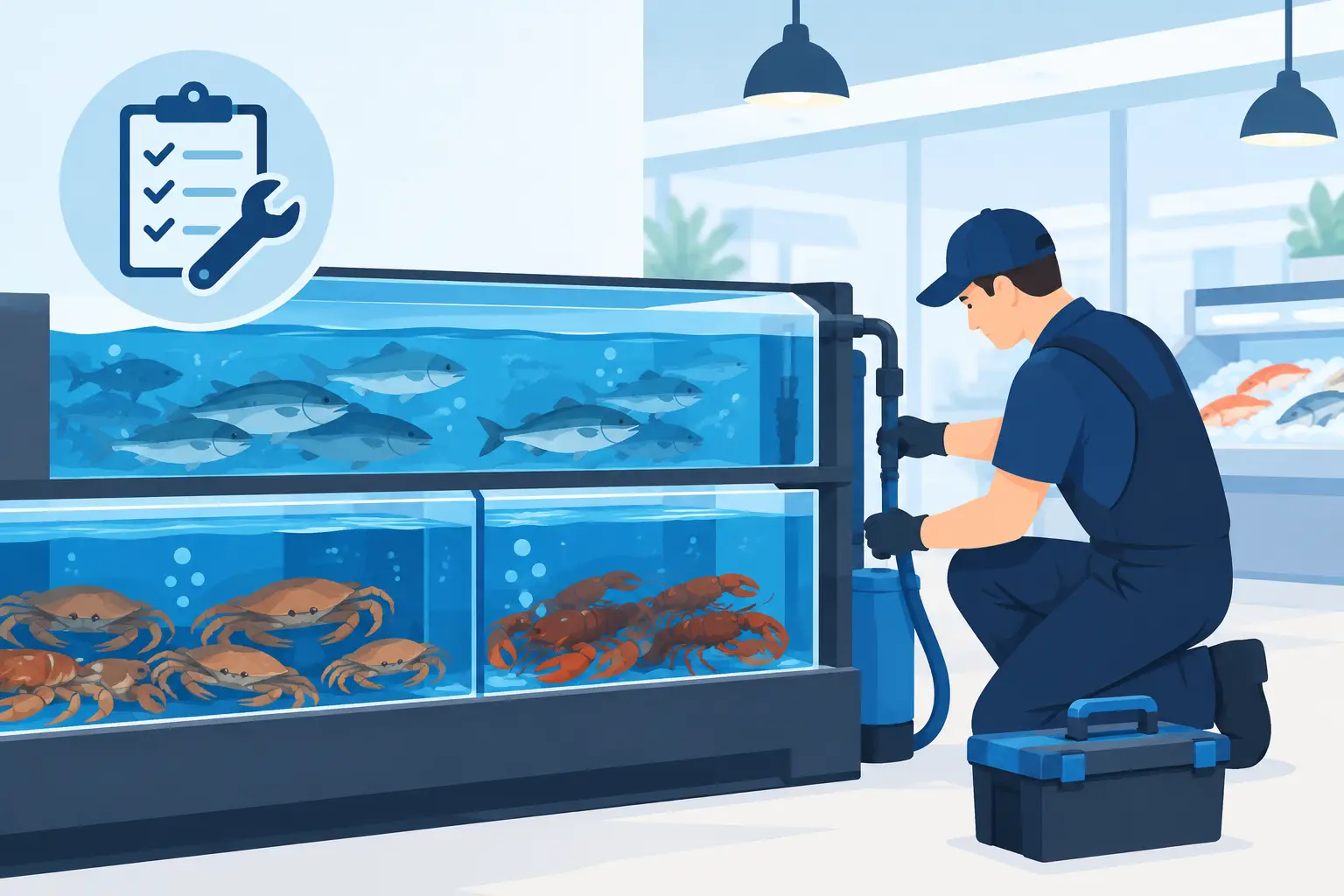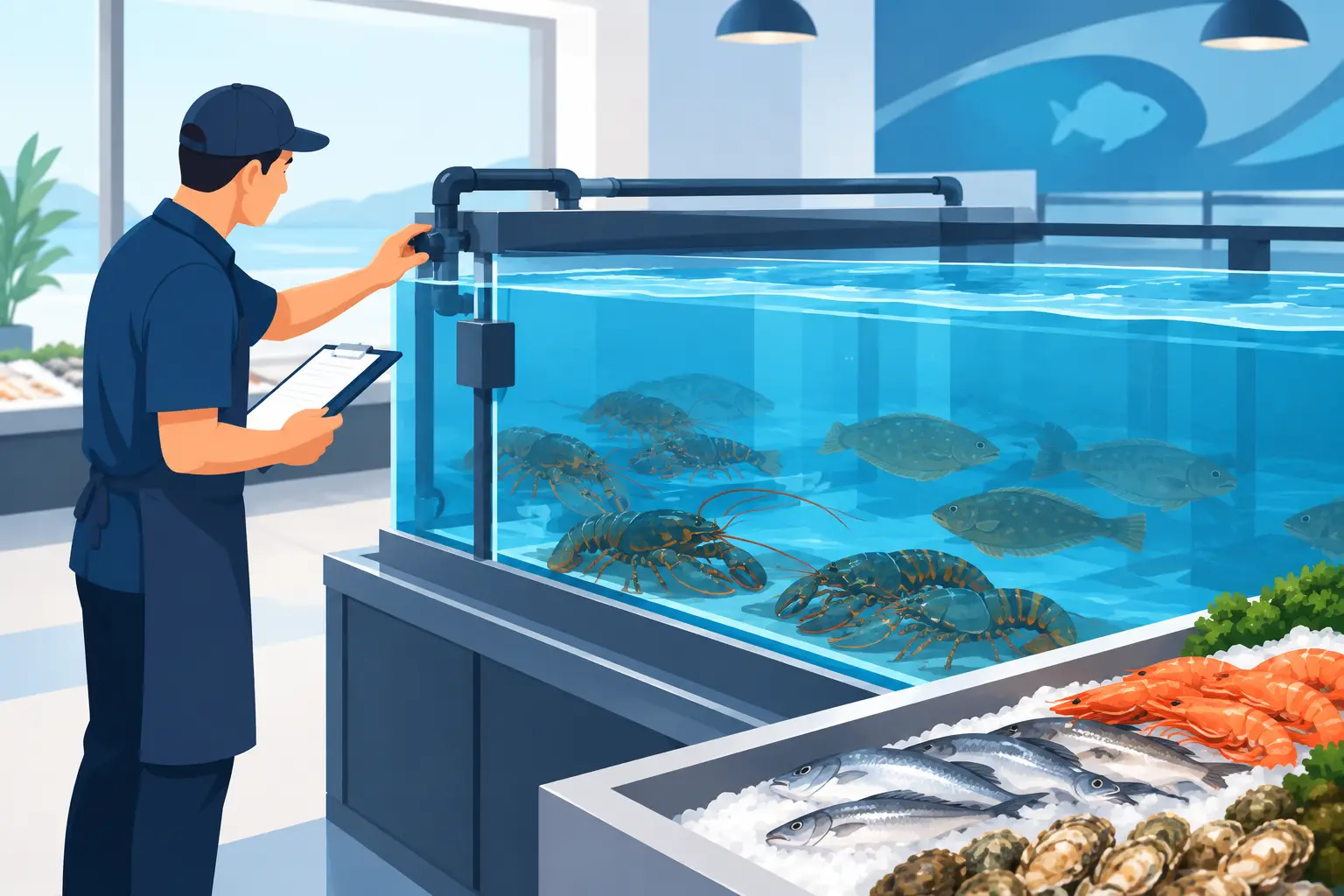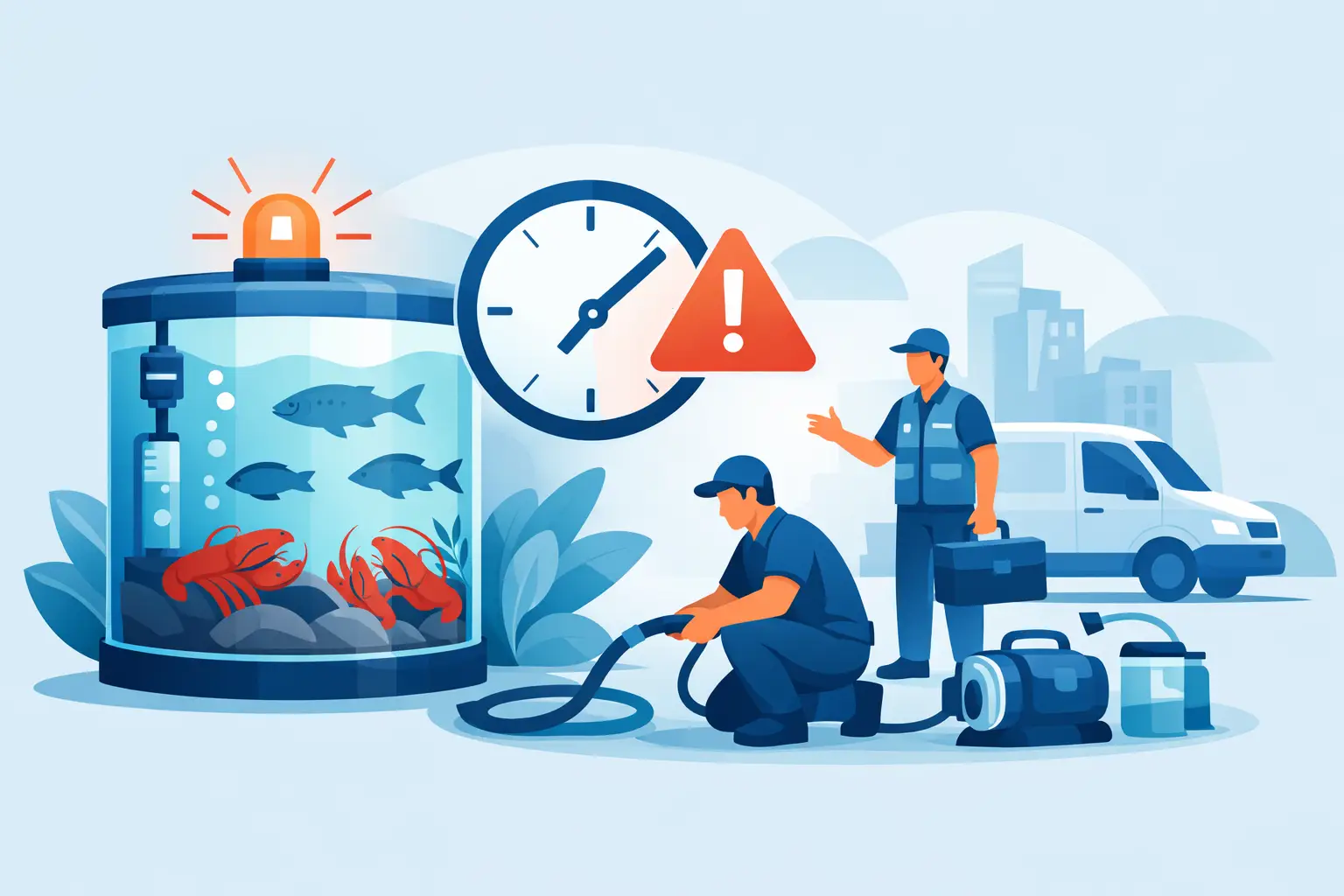

A lobster tank can look fine at opening and still be headed for a costly problem by the afternoon. Water clarity, odor, foam, animal behavior, and mortality are often late signals of a filtration system that cannot keep up. Proper seafood filtration sizing starts with the real biological load in the system, not tank gallons alone.
For supermarkets, wholesalers, restaurants, and independent seafood markets, filtration is not a background utility. It protects saleable inventory, supports a clean presentation, and gives staff a system they can operate with confidence. A correctly sized system handles normal demand without strain and has enough reserve for delivery days, holiday volume, and the inevitable surprise.
Why Tank Volume Is Only the Starting Point
Tank water volume matters because it establishes the amount of water being treated, heated or cooled, and circulated. It does not tell the full story of how much waste the filtration system must process. Two 300-gallon tanks can require very different filtration capacity when one holds a light, short-term display load and the other holds densely stocked lobsters through a busy weekend.
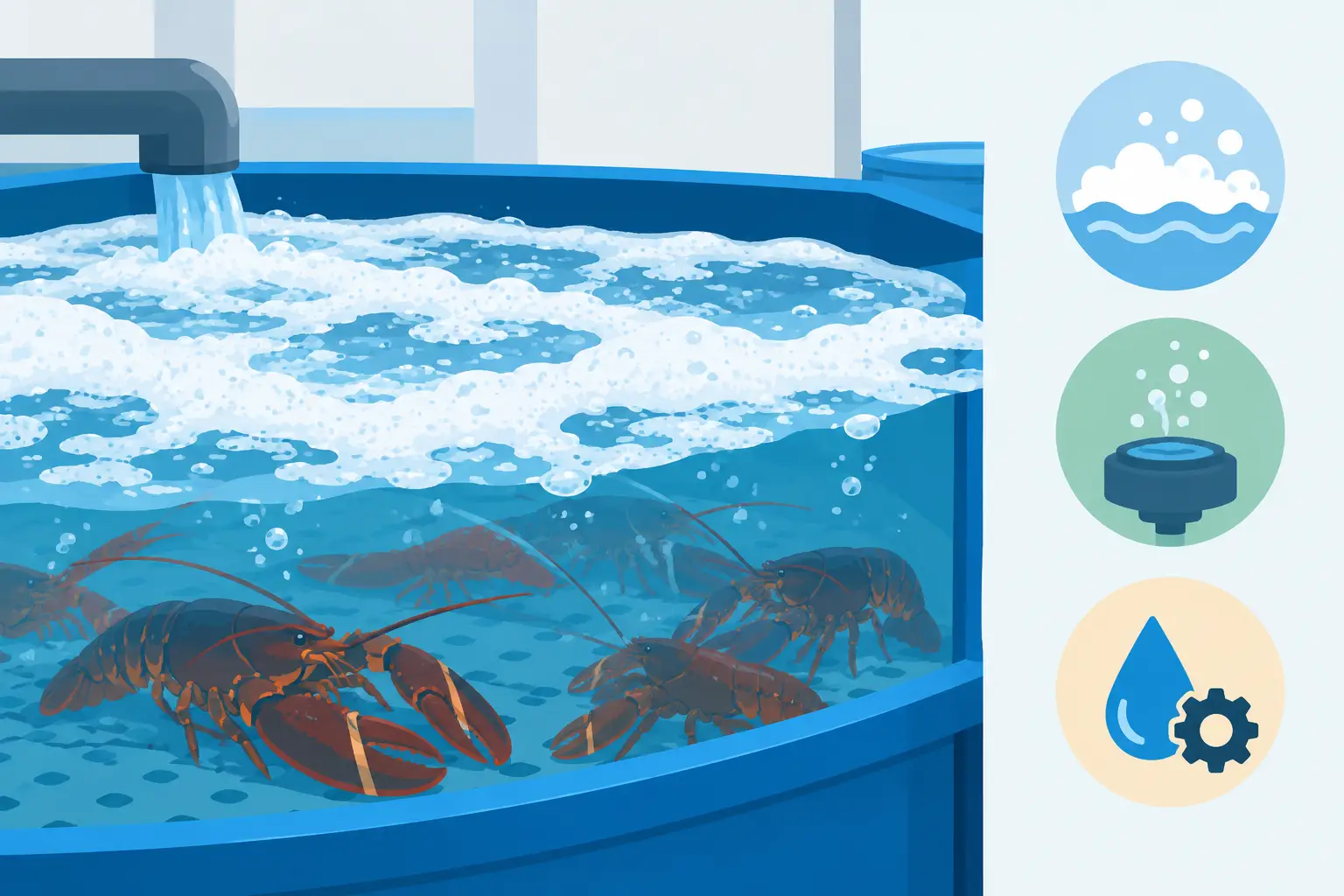
Live seafood creates waste continuously. Ammonia enters the water through respiration and waste, uneaten feed or organic debris adds to the load, and dissolved proteins contribute to foam and odor. In saltwater systems, poor water quality can move from a maintenance concern to an inventory-loss event quickly.
The right sizing decision accounts for tank volume, species, average and maximum holding weight, holding duration, water temperature, feeding practices, system configuration, and expected turnover. A system sized only for average conditions may run acceptably until it faces its most important test: peak inventory.
Seafood Filtration Sizing Begins With the Actual Load
A practical sizing review starts by defining what the tank is expected to do. Is it a front-of-house lobster display that turns inventory daily? Is it a back-room holding system for wholesale distribution? Does it hold lobsters only, or mixed shellfish and finfish? The answers change the required filtration package.
Stocking Density and Peak Weight
Use maximum planned live weight, not the lightest load the tank sees during the week. A department that commonly receives a large delivery before a holiday needs filtration designed for that delivery pattern. Planning around a low weekday stocking level creates a predictable bottleneck when sales volume matters most.
Holding time is equally important. Fast turnover reduces the duration of the biological load, but it does not eliminate the need for capacity. Longer holding periods demand more stable biological treatment and greater attention to solids removal, carbon replacement, salinity, and dissolved oxygen.
Species Behavior Changes the Design
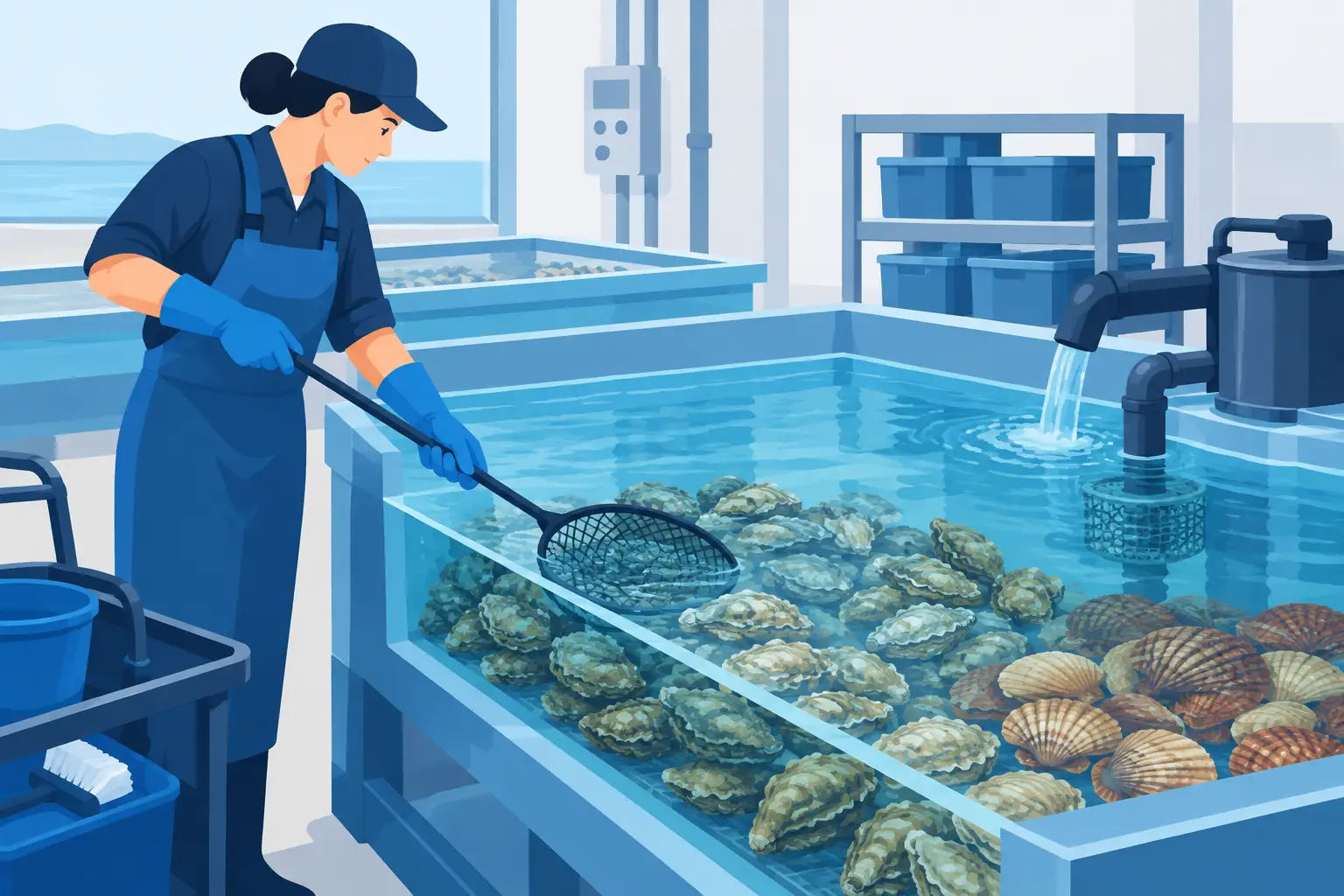
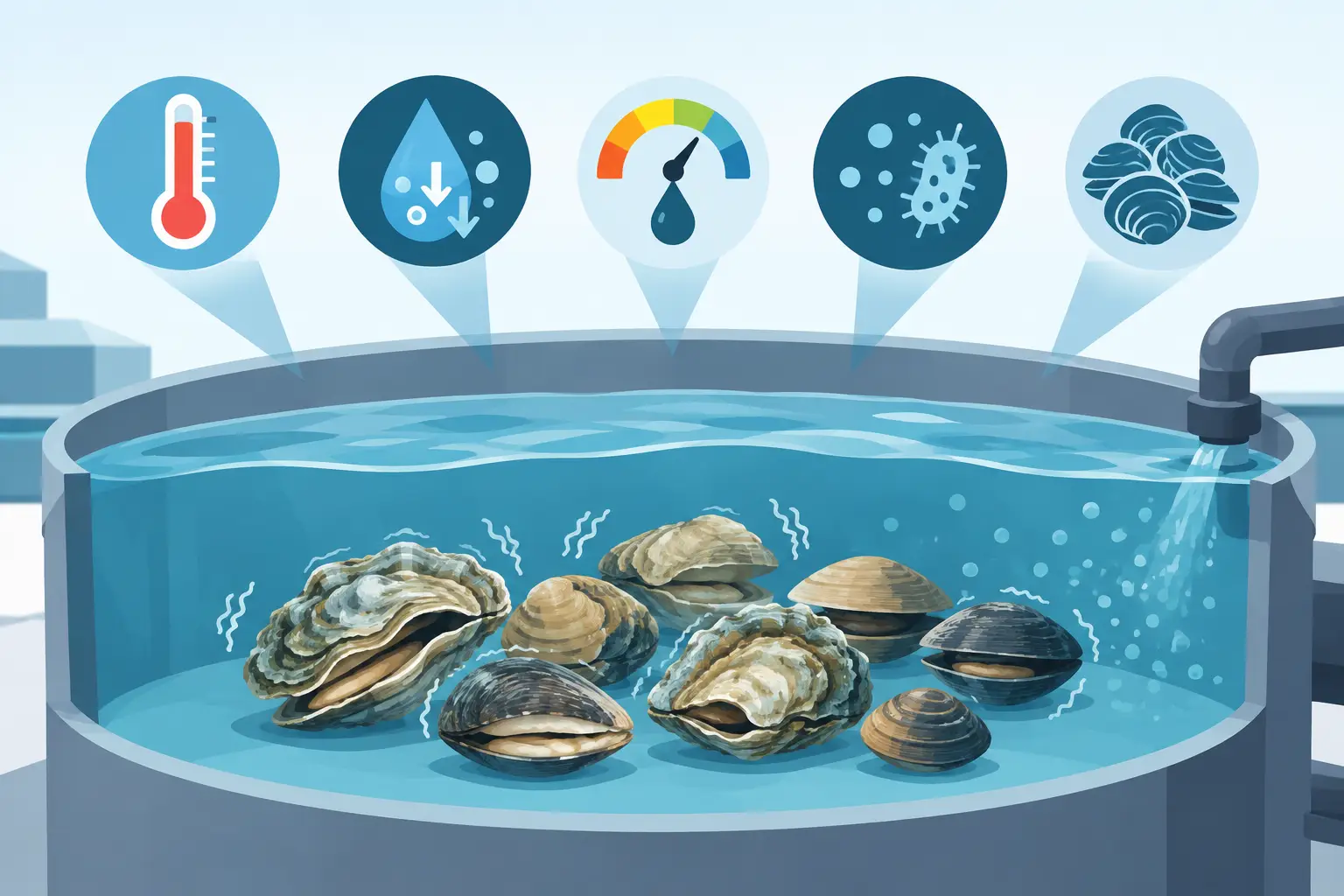
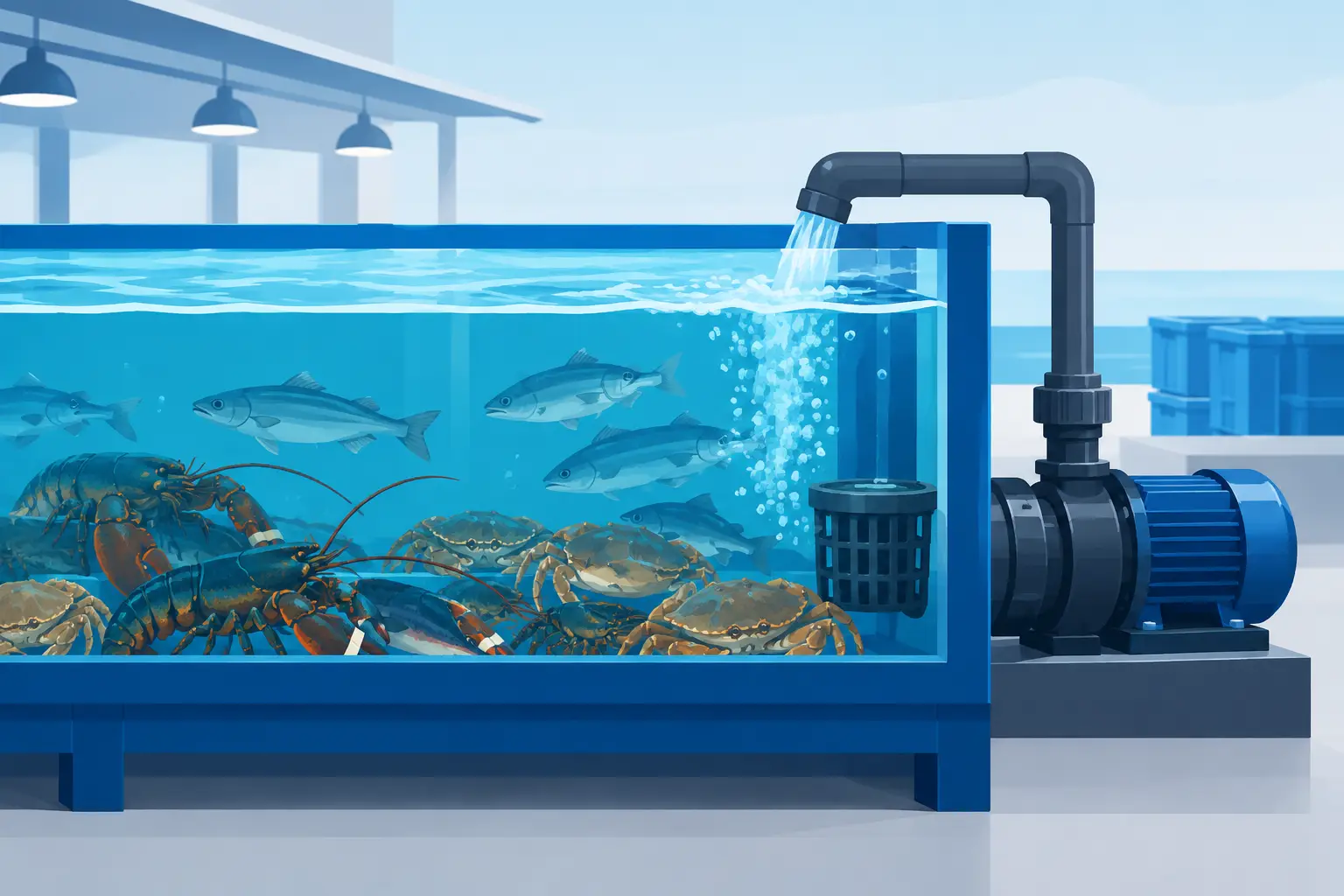
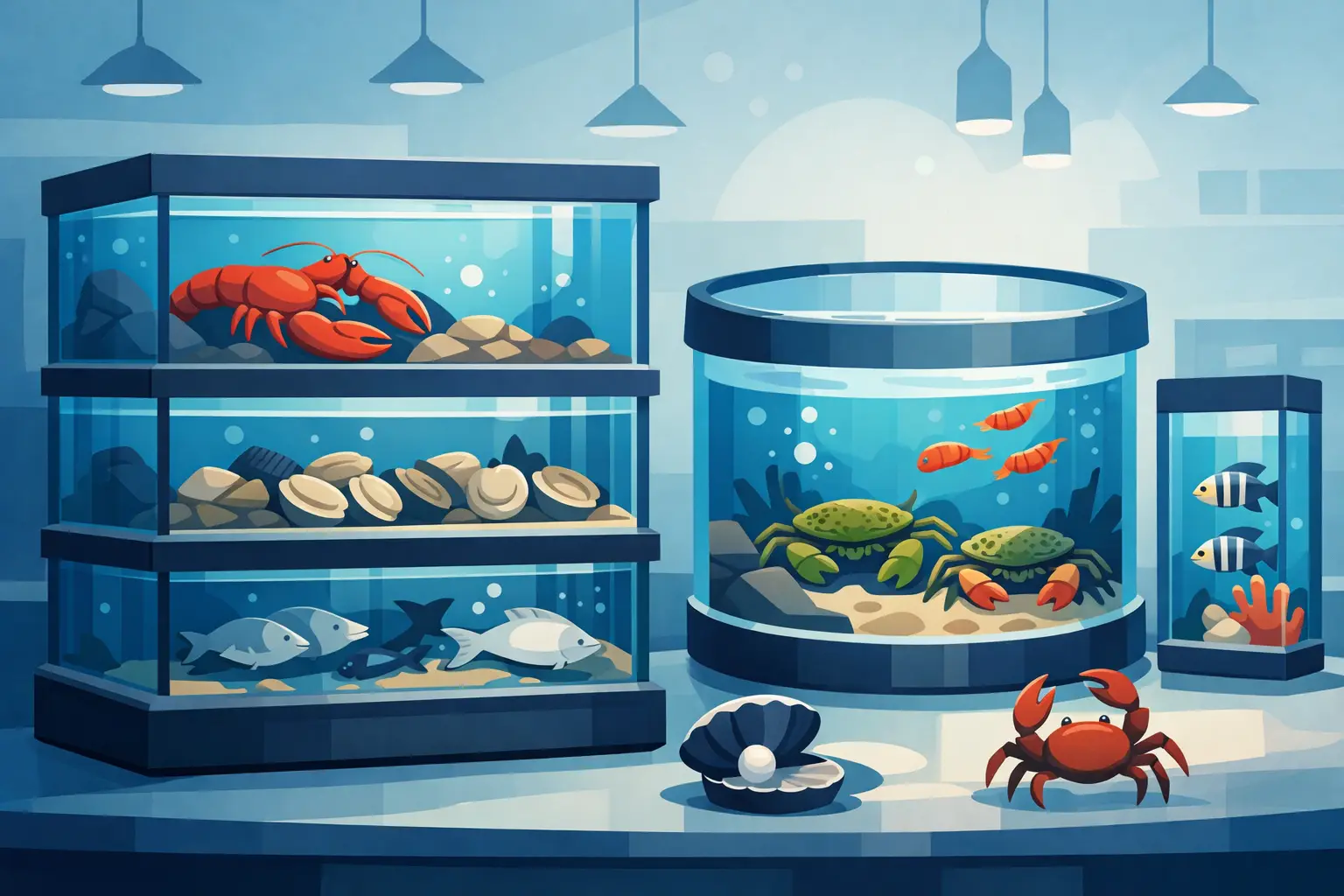
Lobsters, clams, oysters, crabs, and finfish do not place the same demands on a system. Their oxygen needs, waste profile, temperature requirements, and tolerance for water-quality changes differ. A filtration design suited to a lobster display should not be assumed suitable for every live seafood application without reviewing the operating conditions.
This is particularly important for operators adding a new live offering to an existing department. A tank may have the physical room for more animals while the filtration and aeration capacity are already near their limit. The result can be a system that appears adequately sized on paper but performs poorly in service.
Turnover Rate Is Not Just a Pump Number
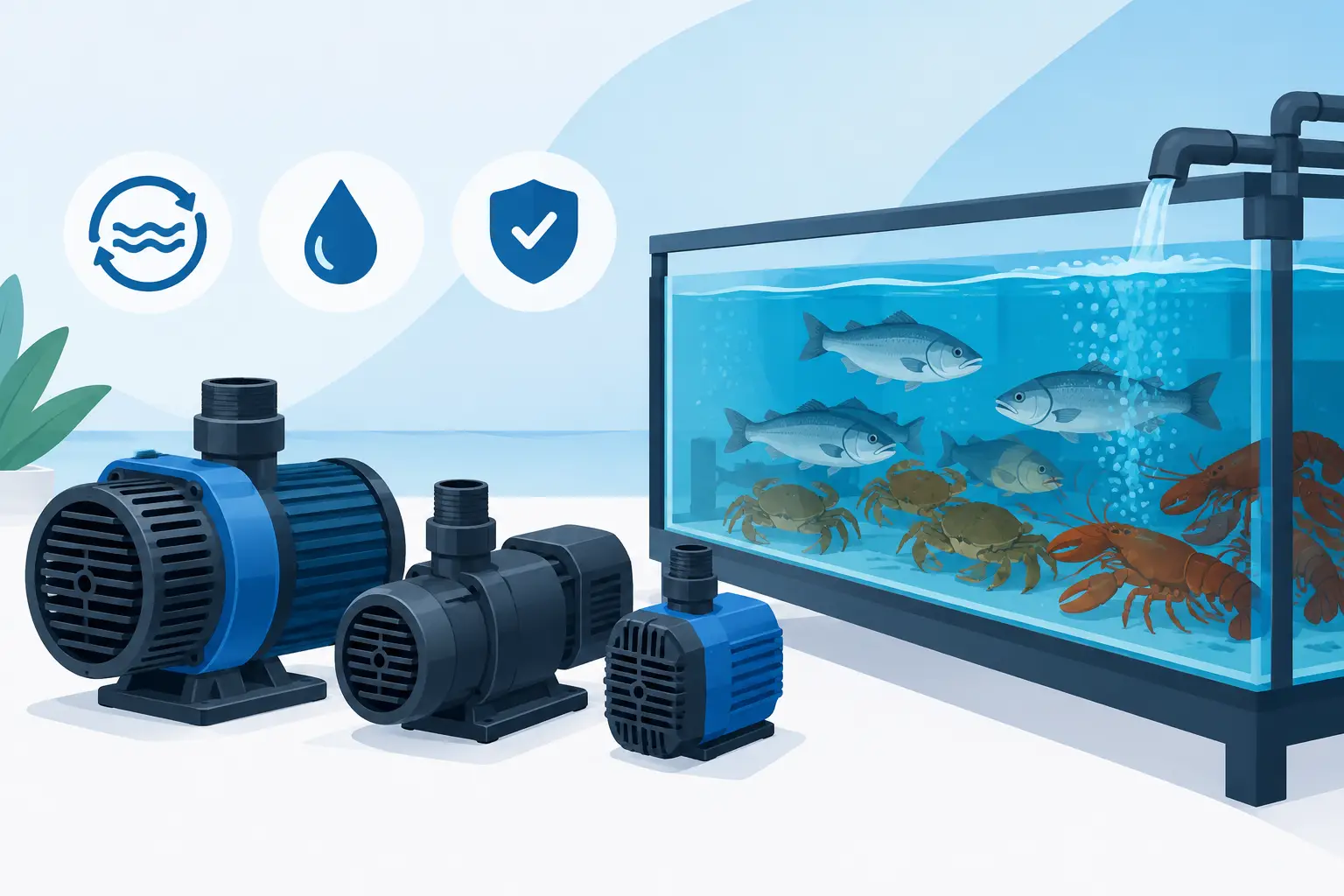
Water must circulate through filtration often enough to capture solids, expose dissolved waste to biological media, and maintain consistent water conditions throughout the tank. But more flow is not automatically better. Excessive flow can create stressful currents, bypass treatment media, increase noise, or make mechanical filters clog faster.
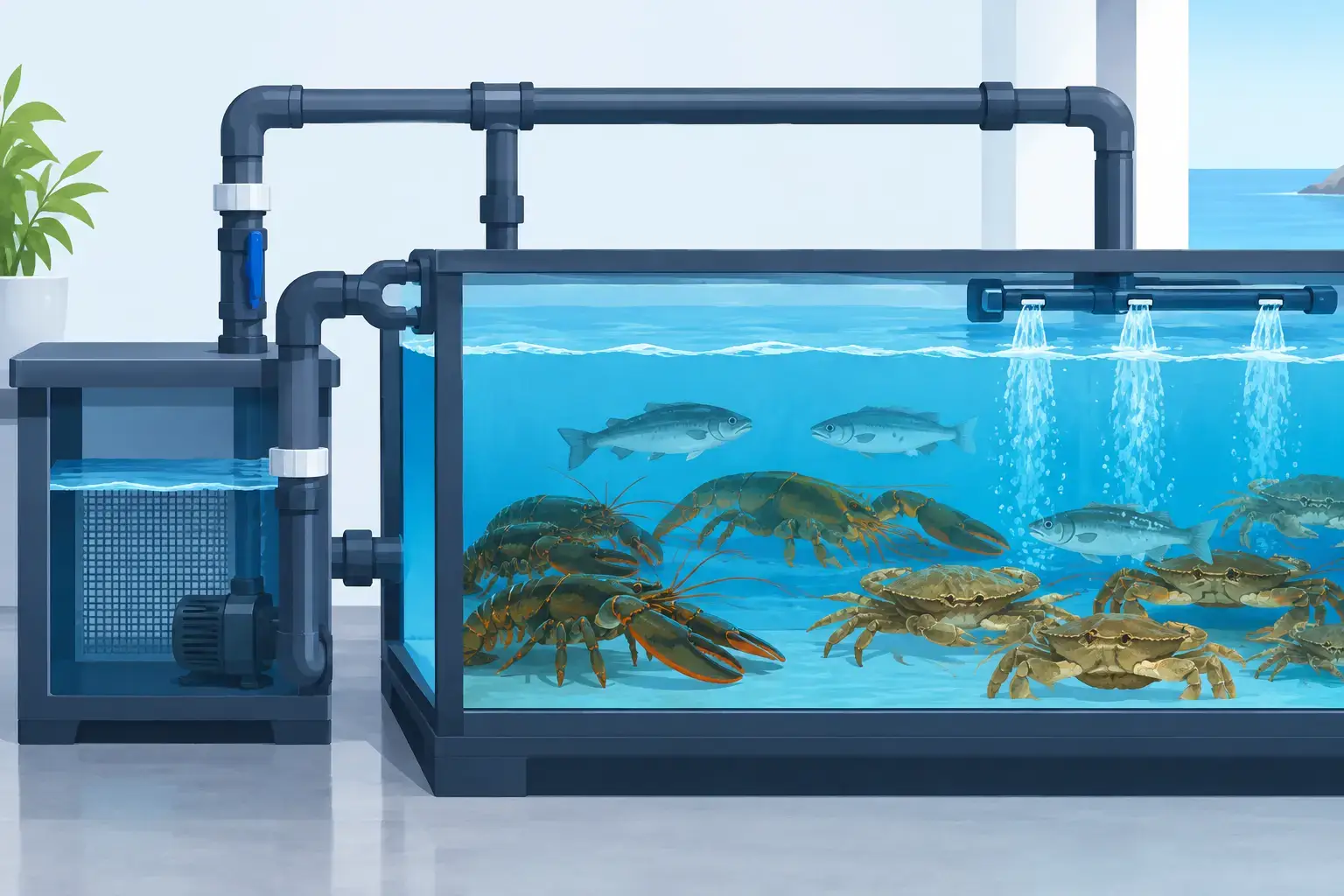
The goal is balanced flow: enough circulation to keep water quality uniform and treatment effective, without creating conditions that work against the livestock or the equipment. Pump capacity also has to be measured at the actual operating head, including plumbing length, fittings, elevation changes, chillers, ultraviolet equipment, and filter resistance. A pump’s advertised maximum flow is not its real-world flow once it is installed.
Size Each Stage of Filtration for Its Job
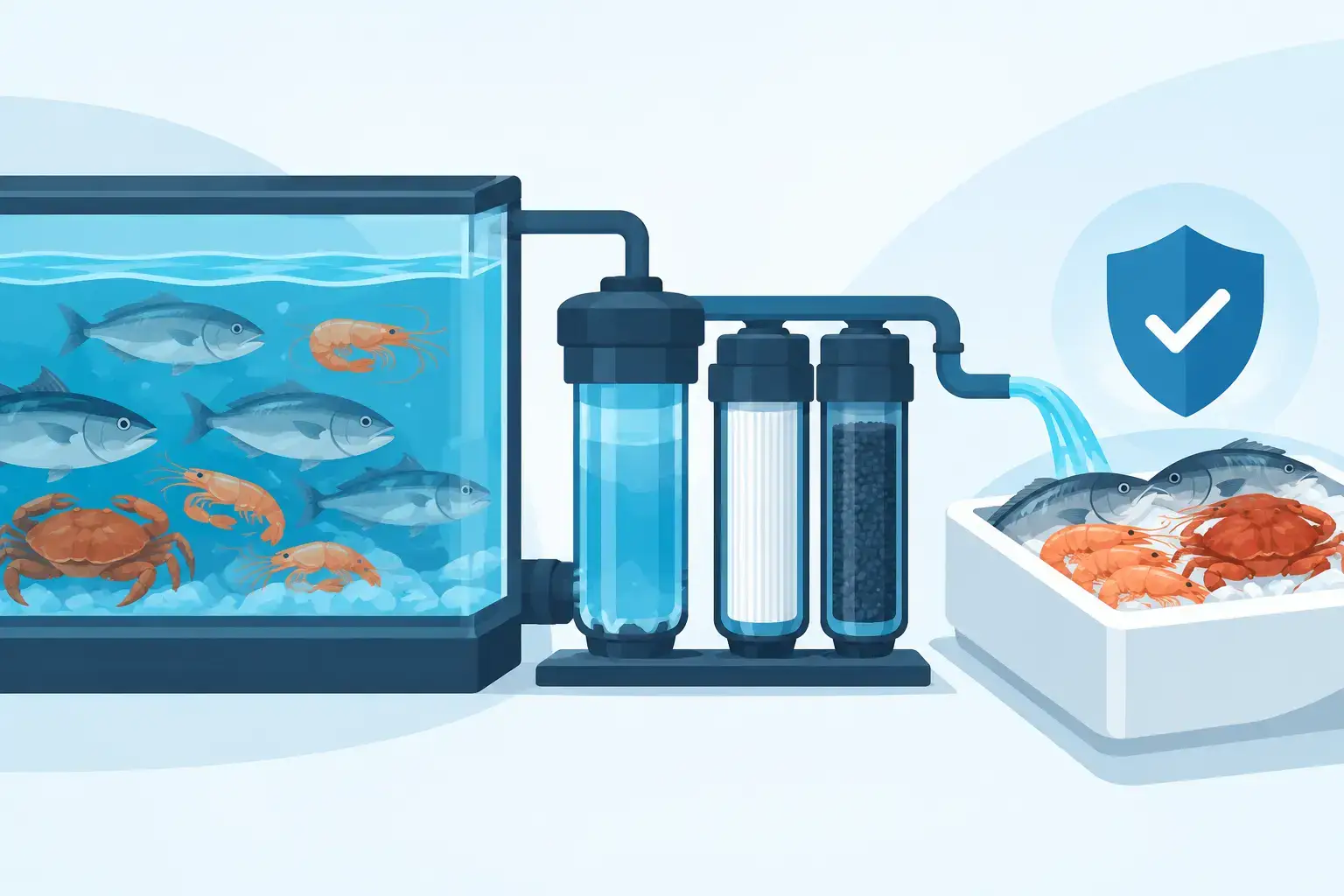
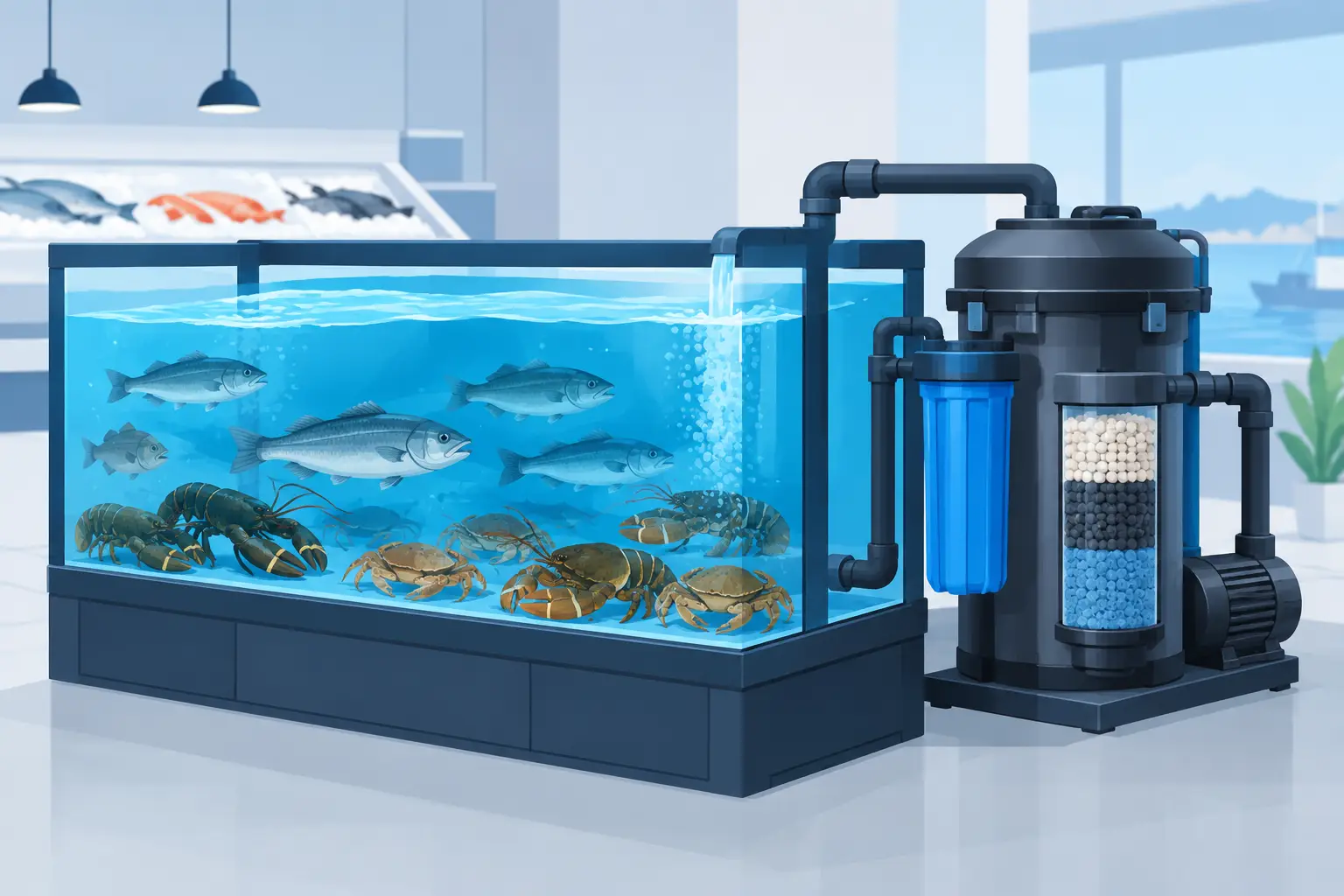
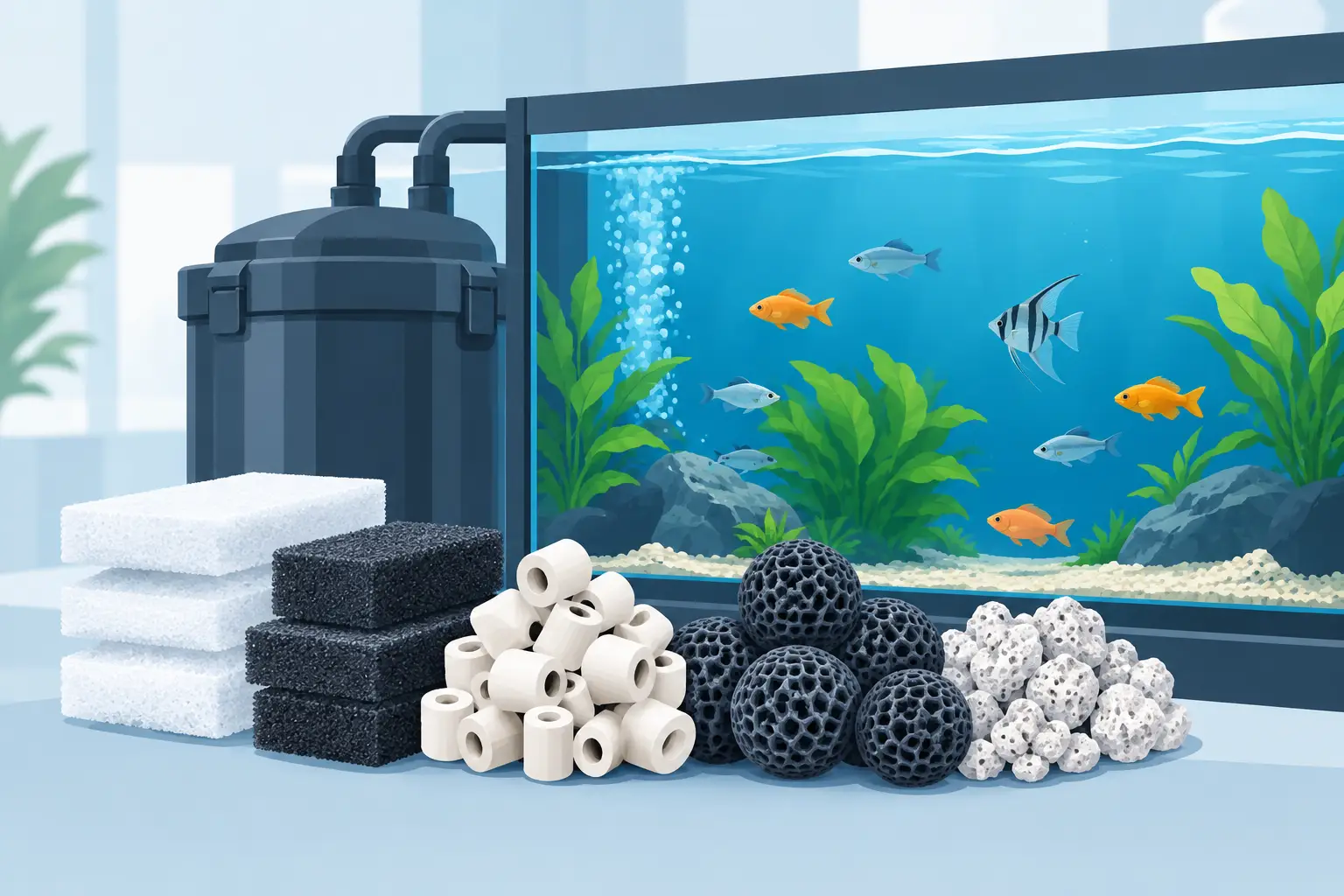
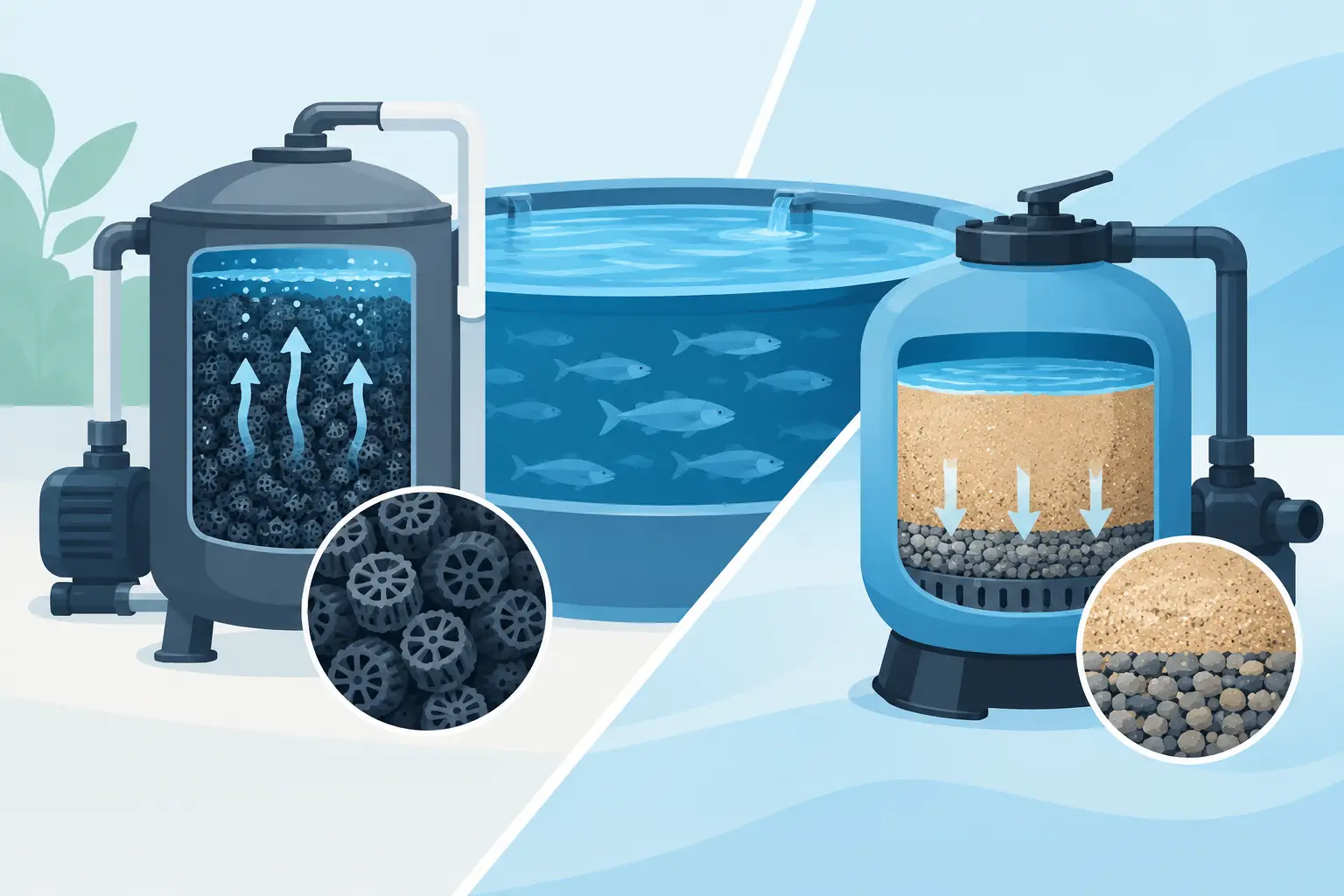
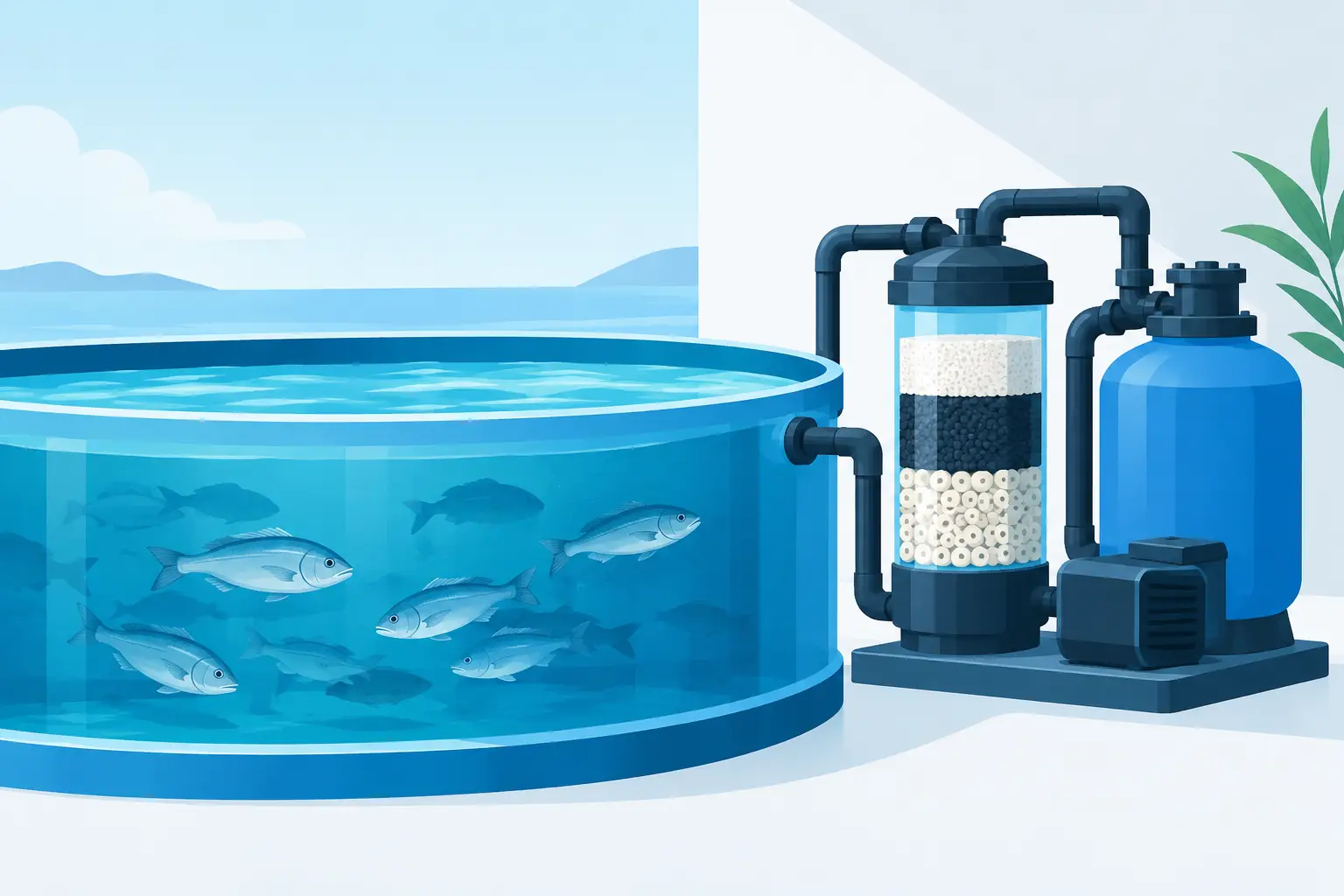
Commercial systems work best when filtration is treated as a process rather than a single component. Mechanical, biological, chemical, and disinfection stages each address a different water-quality issue. If one stage is undersized or poorly maintained, the rest of the system has to work harder.
Mechanical Filtration Protects the Rest of the System
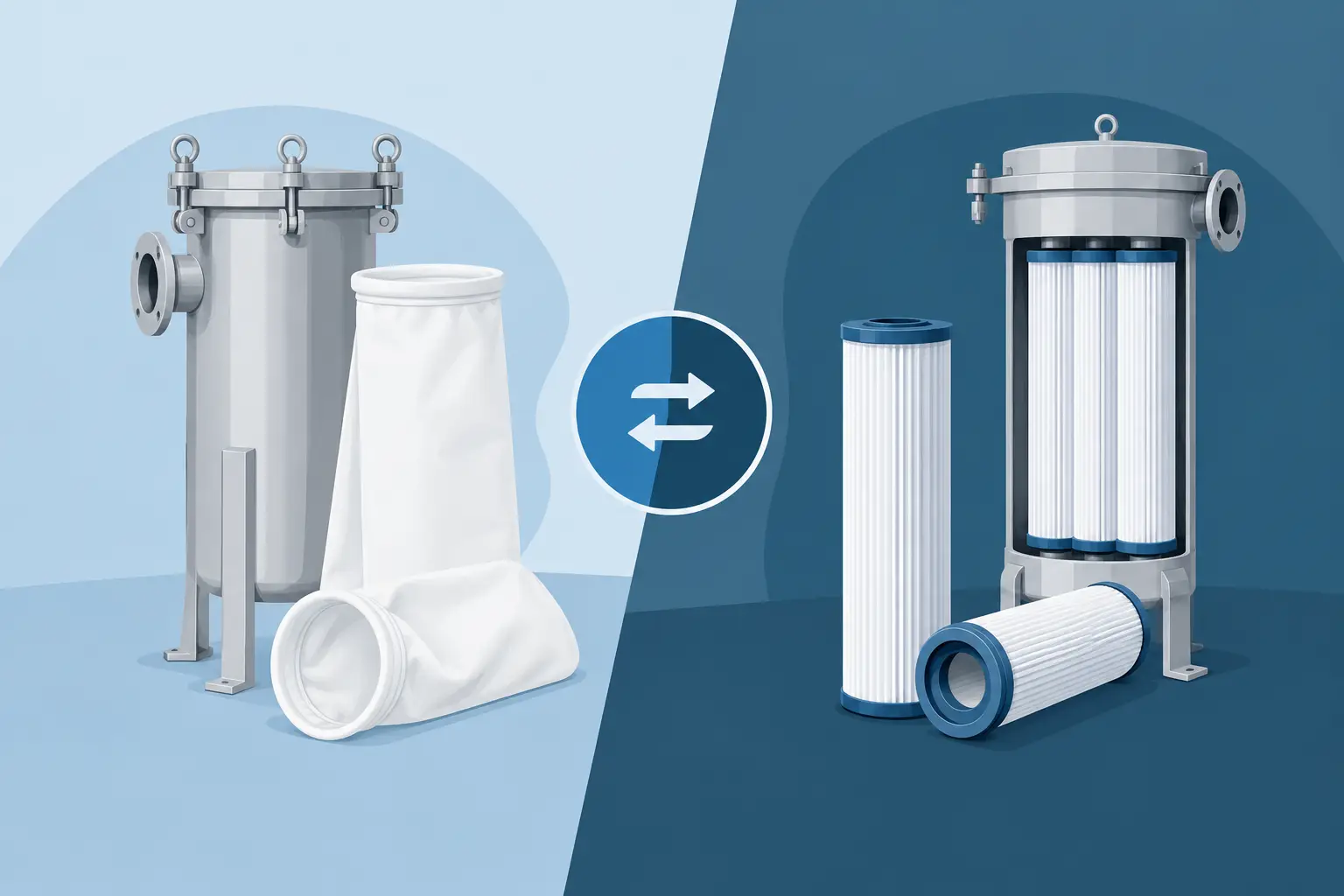
Mechanical filtration captures shell fragments, debris, waste, and suspended solids before they break down further or foul downstream components. Its capacity depends on particle load and how frequently staff can service it. A filter that is technically large enough but neglected becomes a source of restriction and trapped organics.
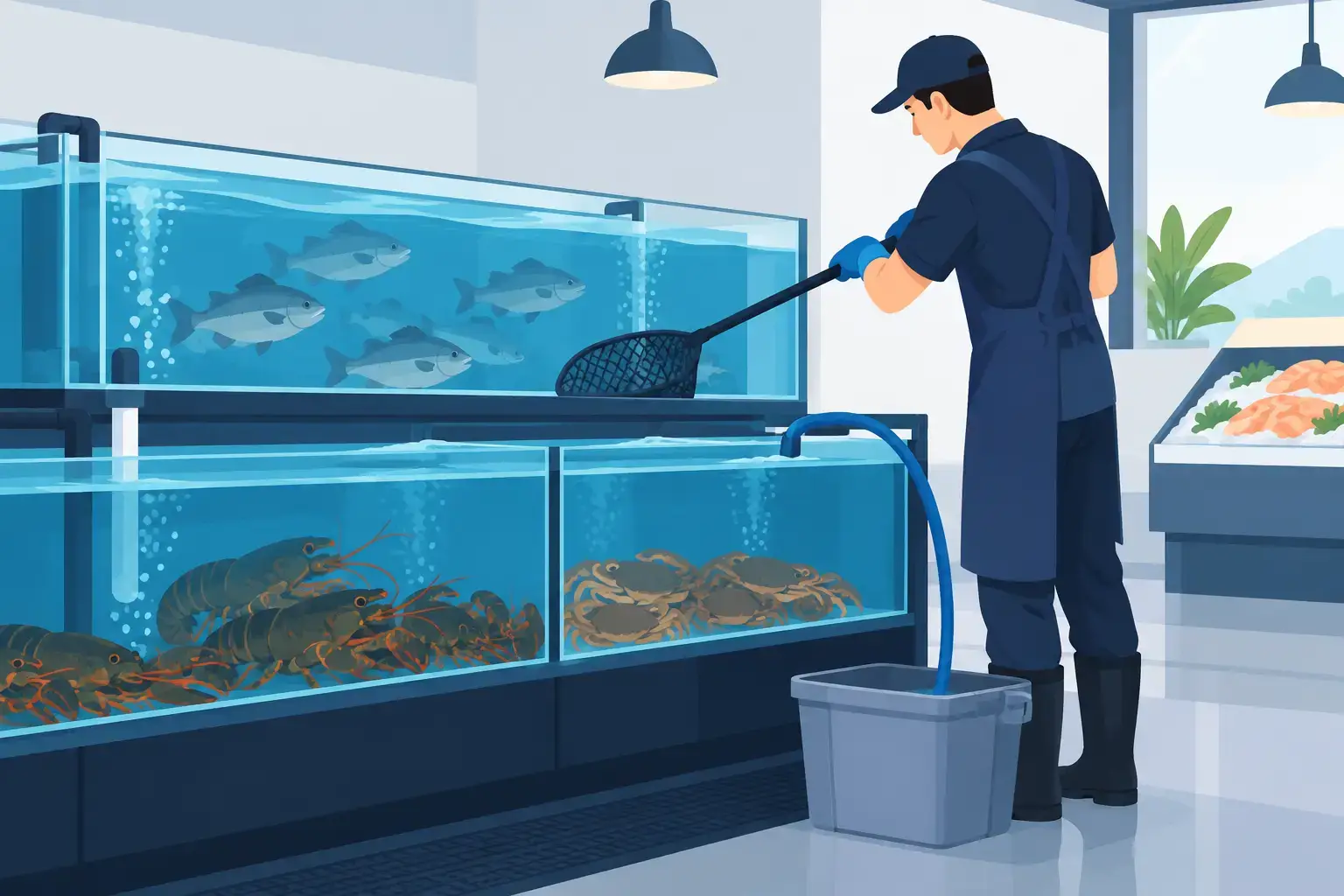
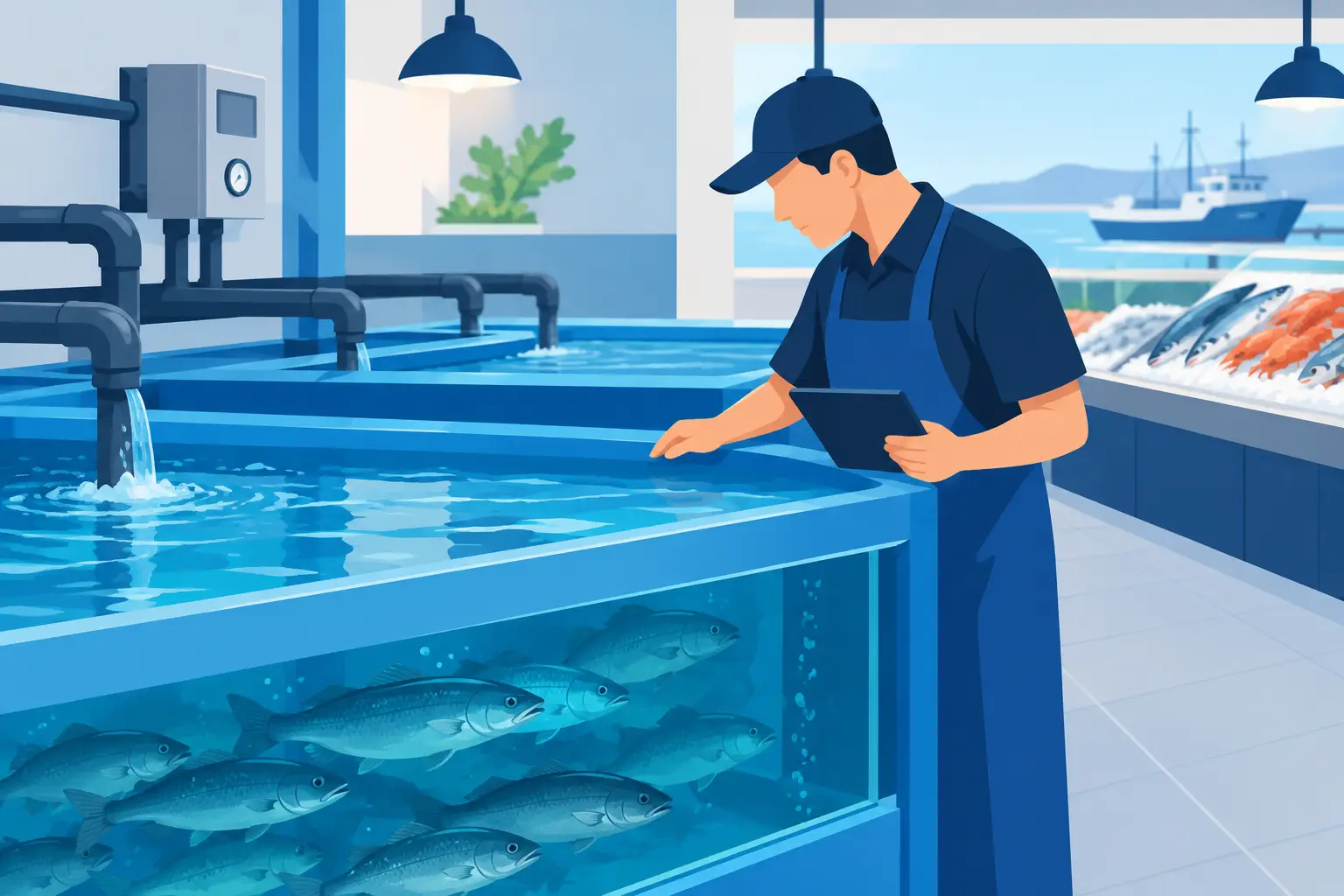
For high-turnover seafood departments, select mechanical filtration that is accessible and realistic for the staff schedule. If cleaning requires extensive disassembly, it is less likely to happen at the right interval. Serviceability is part of sizing.
Biological Media Must Carry the Ammonia Load
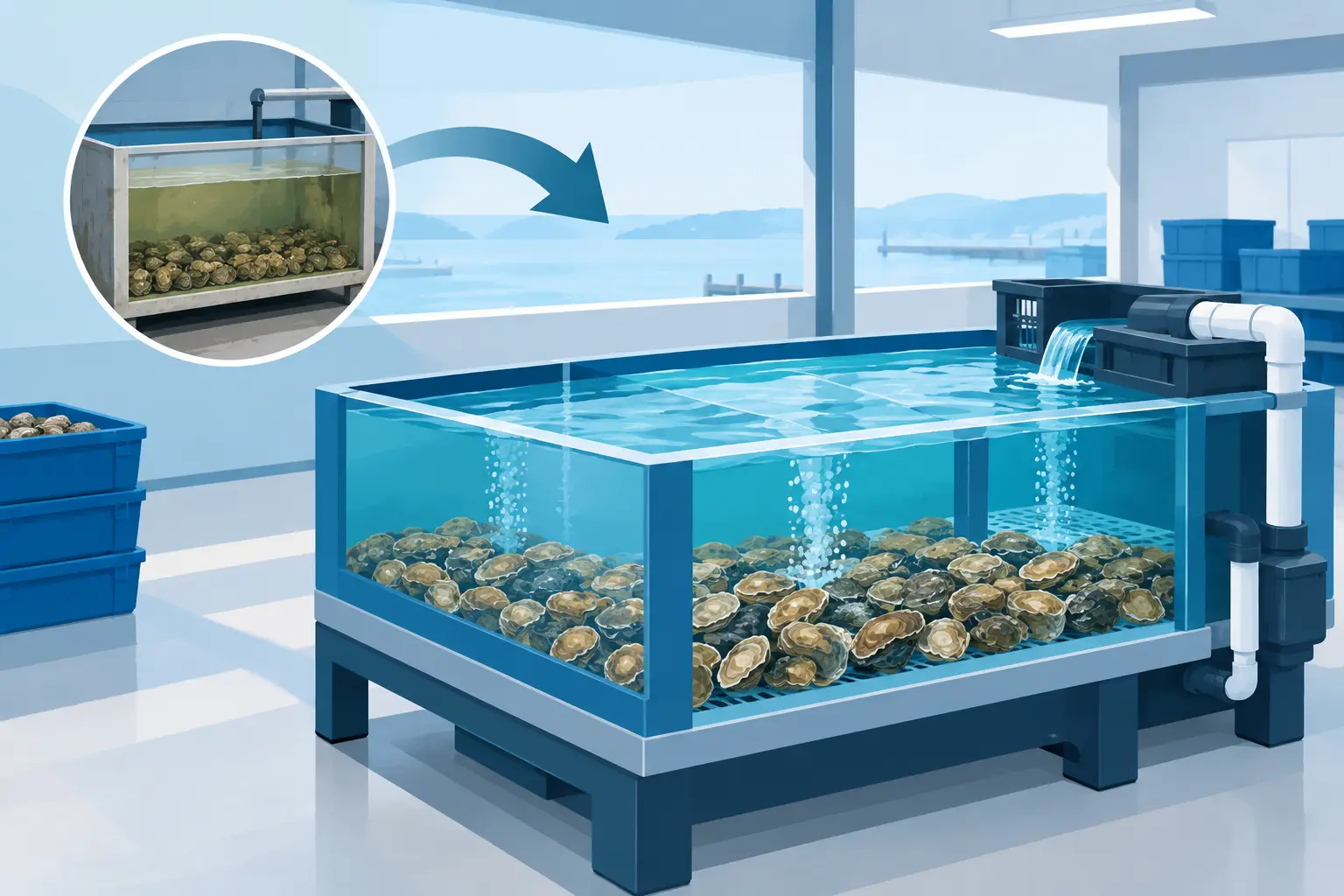
Biological filtration provides surface area for beneficial bacteria that convert toxic ammonia and nitrite into less harmful compounds. It needs stable water flow, oxygen, appropriate salinity, and time to mature. New systems, major cleanings, medication events, and sudden increases in holding weight can all disrupt biological performance.
Sizing biological media with a safety margin is one of the most valuable decisions an operator can make. It provides room for fluctuations in inventory and reduces the chance that a short-term spike becomes an animal-health issue. That margin should be paired with regular water testing, not used as an excuse to overload the system.
Activated Carbon and Other Chemical Media Need a Replacement Plan
Activated carbon helps manage dissolved organics, odor, discoloration, and compounds that mechanical and biological filtration do not fully remove. Its effectiveness declines as it becomes exhausted. Adding more carbon than needed without a replacement schedule does not solve the problem.
Carbon quantity, contact time, water flow, and replacement frequency should match the system’s use. A busy retail tank with frequent new inventory and heavy customer-facing expectations may need more attention than a lightly loaded holding system. Chemical media should support a complete filtration design, not compensate for undersized biological treatment or poor housekeeping.
Build in Capacity for Real Operating Conditions
The most expensive filtration system is often the one sized too close to the edge. It may cost less at installation but creates higher risk during delivery surges, hot weather, pump wear, staffing gaps, or a change in product mix. Commercial seafood operators need capacity that reflects how the department actually runs.
A sound design review should consider four operating questions:
- What is the highest live weight the system will hold at one time?
- How long will that inventory remain in the tank before sale or shipment?
- What equipment will restrict flow as it becomes dirty or ages?
- What happens if one pump, filter chamber, or treatment stage is offline for service?
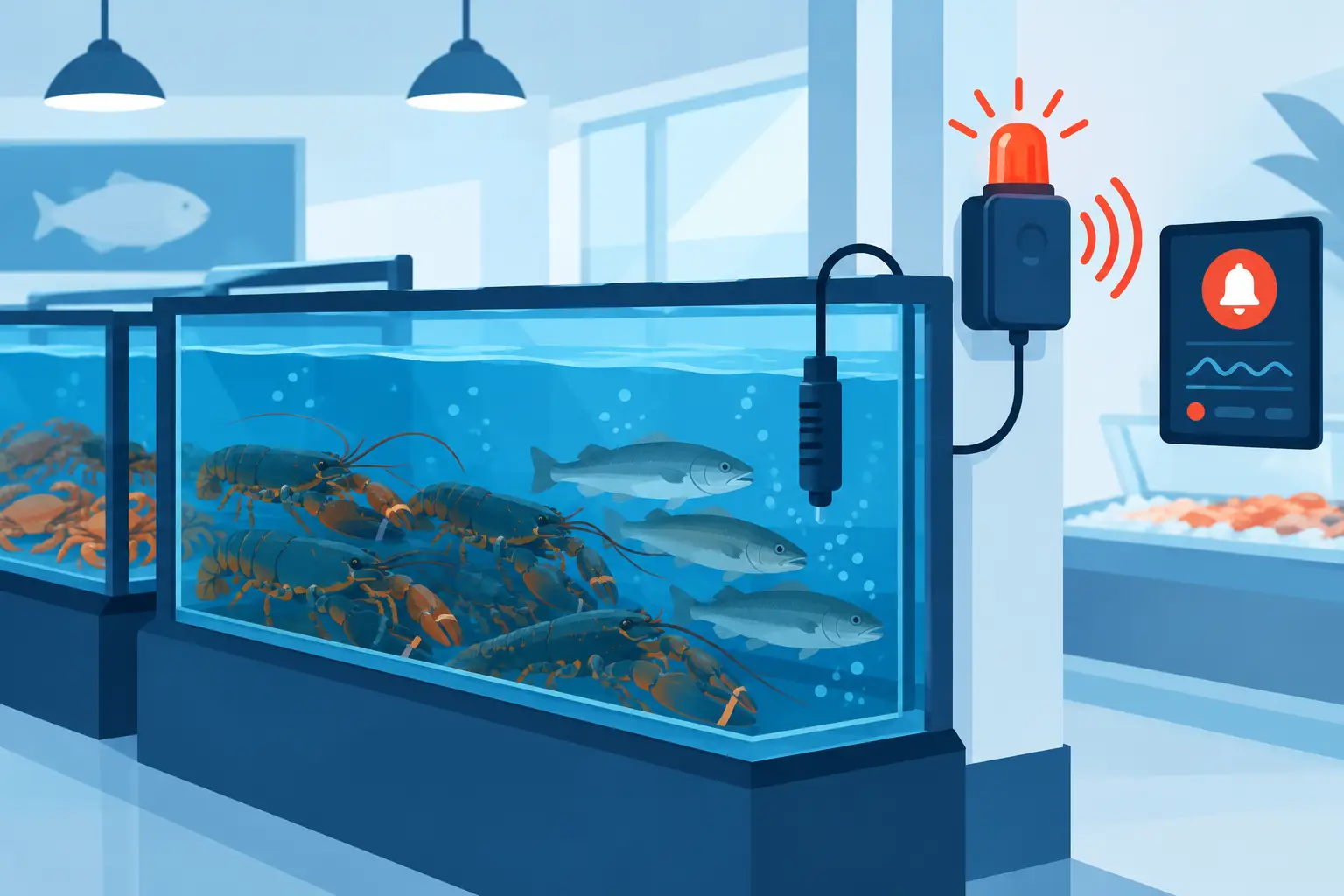
Redundancy is not necessary at the same level for every installation. A small display tank and a high-volume wholesale holding room do not carry the same exposure. Still, every operator should know what backup plan protects inventory when a pump fails, a line clogs, or water quality shifts outside the acceptable range.
Avoid the Common Sizing Mistakes
Undersizing usually comes from relying on gallons alone, using nominal pump ratings, or planning around average inventory. Oversizing can also create problems when equipment is mismatched, water moves through media too quickly, or staff cannot maintain the system efficiently.
Another frequent issue is adding livestock capacity without revisiting filtration, aeration, chilling, and electrical needs. The tank may be physically larger after an expansion, but the support equipment may still be serving the old load. Every expansion should be treated as a system review, not just a tank purchase.
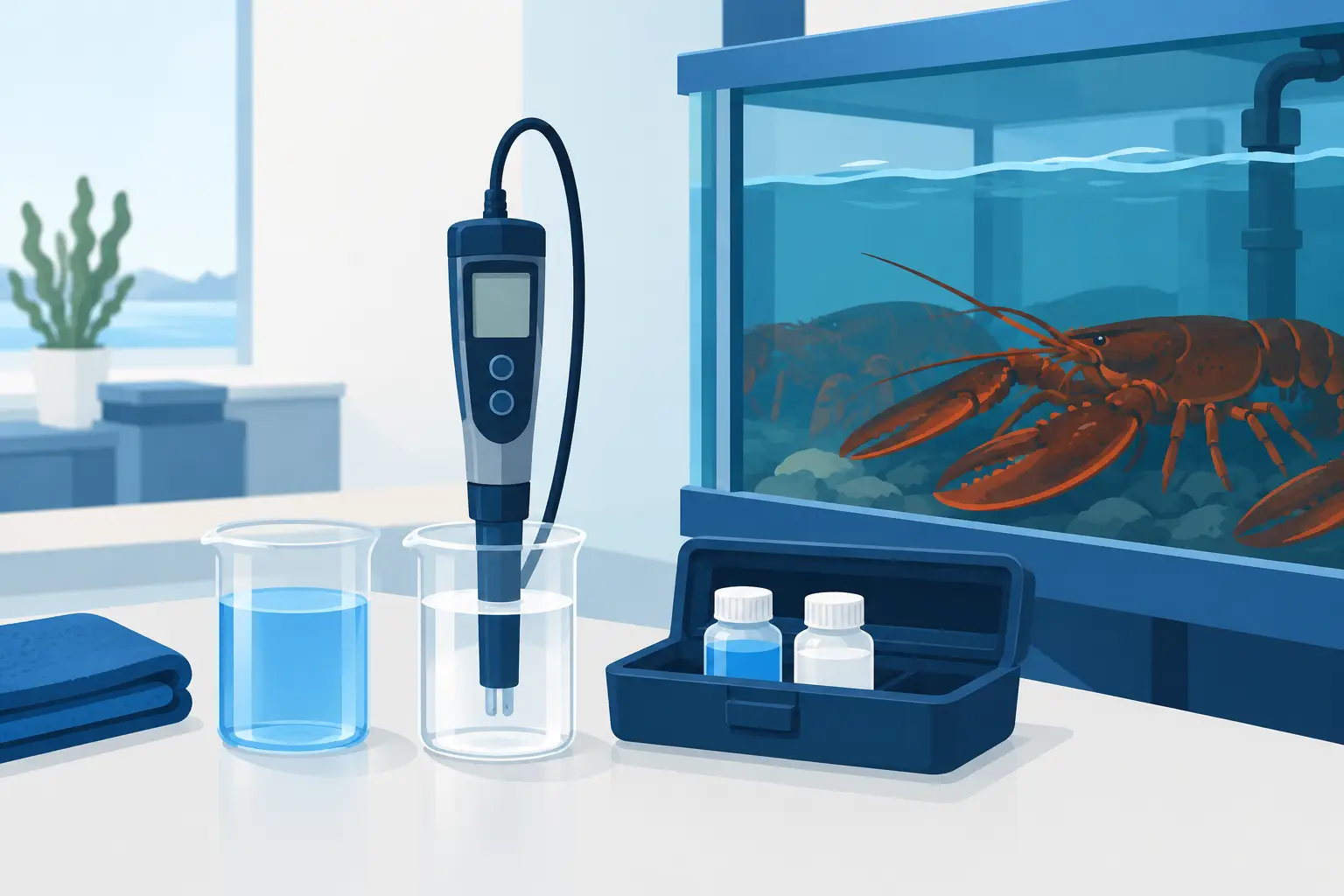
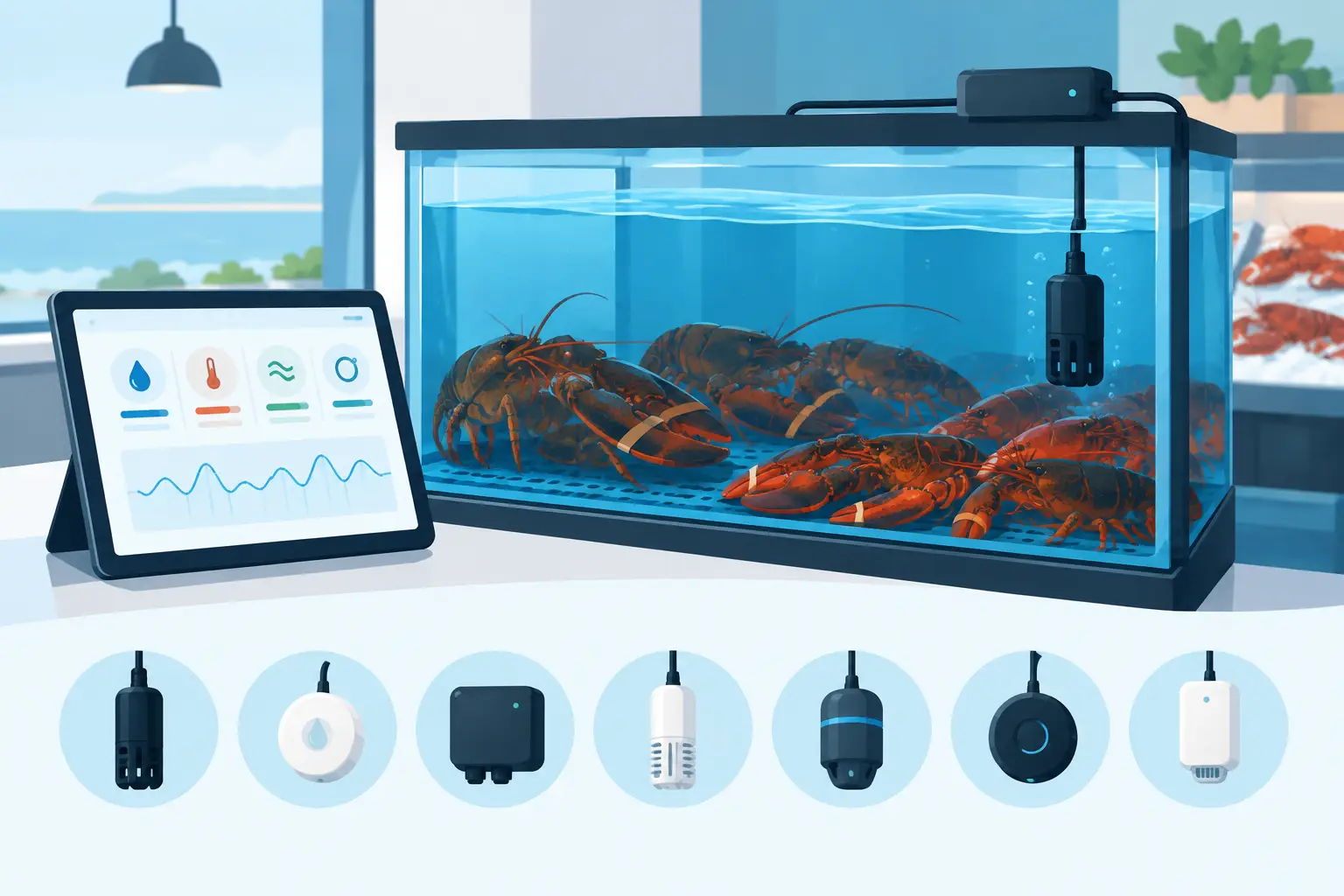
Water testing is the field check that confirms whether the sizing assumptions are holding up. Monitor ammonia, nitrite, nitrate, pH, salinity, temperature, dissolved oxygen, and visual conditions on a defined schedule. Track results alongside stocking weight and maintenance activity. That record shows whether a recurring issue is operational, mechanical, or a sign that the system needs more capacity.
Choose a Partner That Sizes for Your Business
A commercial seafood system should be designed around product, volume, staffing, floor layout, and service expectations. Off-the-shelf equipment can have a place, but it often leaves the operator responsible for making components from multiple sources work together.
Lobster Life Systems designs and supports commercial live seafood systems with the full operating picture in mind: tank fabrication, marine salt, filtration media, replacement components, and ongoing service. That one-place approach matters when a department needs dependable answers instead of a list of vendors to call.
Before your next tank installation, remodel, or busy-season inventory increase, document the heaviest load you expect to hold and ask whether the filtration is sized for that day, not an average one. That question can protect more than water quality. It can protect the inventory your customers came in to buy.