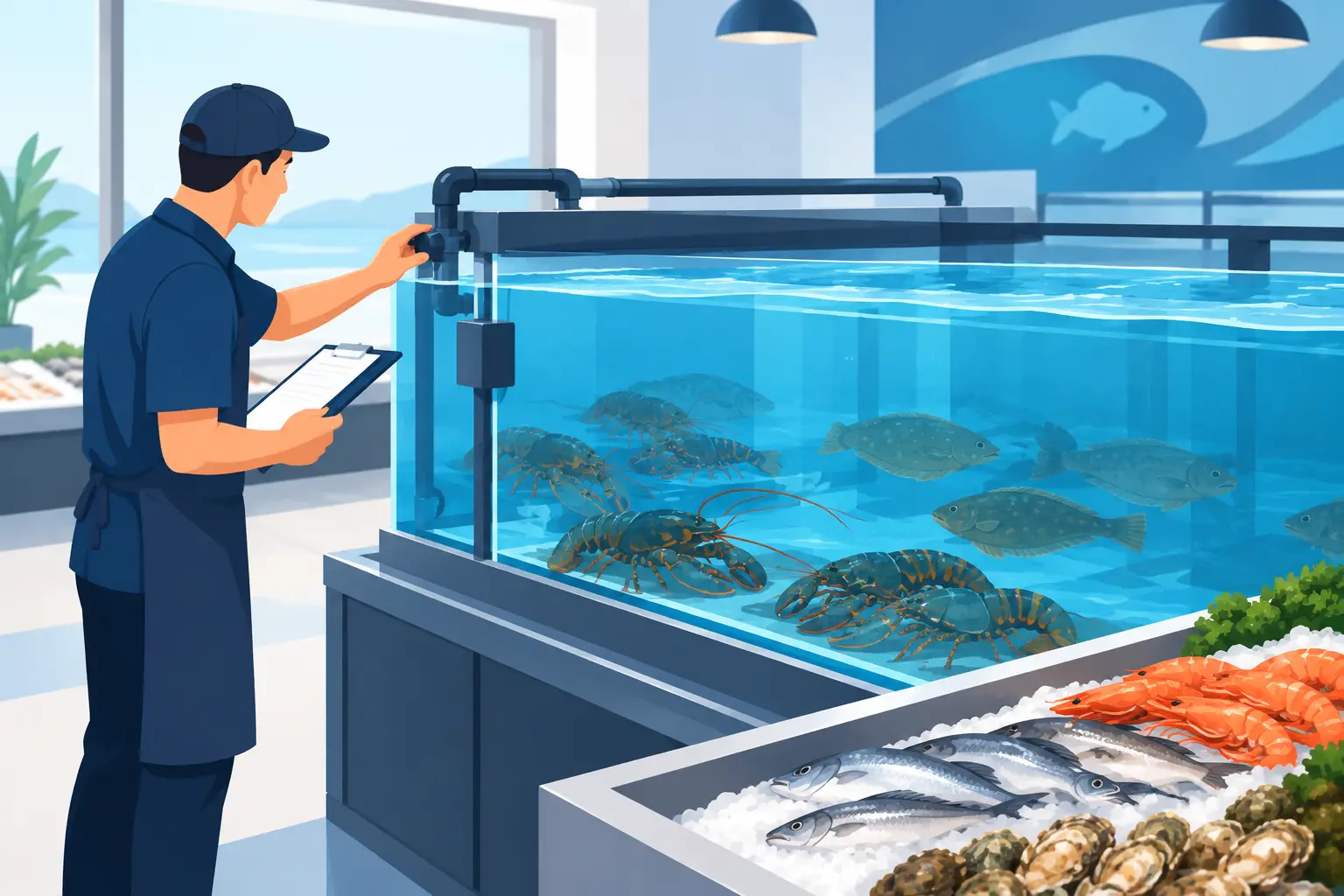

A tank wall is not just a material choice. It affects how customers see your product, how your crew cleans the system, how easily damage can be repaired, and how the installation will perform after years of saltwater exposure. When comparing acrylic versus stainless seafood tanks, the right answer depends on the job the tank must do – display live product, support back-of-house holding, or deliver both functions in one system.
For supermarkets, fish markets, wholesalers, and restaurants, the most effective choice is usually not about which material is universally better. It is about matching the tank construction to product presentation, traffic levels, cleaning practices, available space, and service expectations.
Acrylic versus stainless seafood tanks: the practical difference
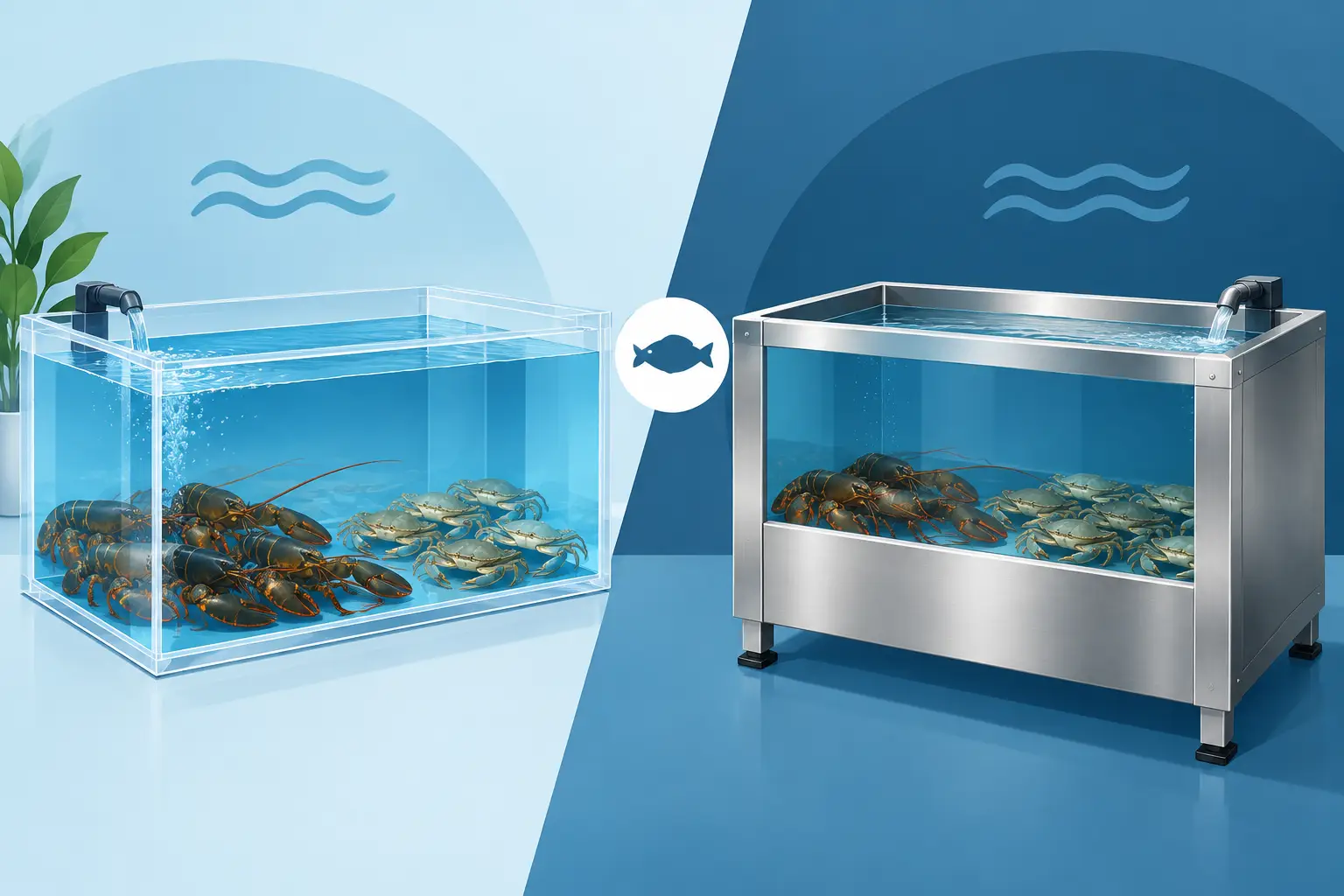
Acrylic tanks put the livestock and the water itself on display. Stainless steel tanks prioritize workability, durability, and sanitation in demanding commercial settings. Both can be built into reliable recirculating systems with the filtration, refrigeration, circulation, and water treatment needed to hold live lobster, crab, shellfish, or fish.
The material choice changes the operator experience. A clear acrylic display can help sell premium live seafood at the counter. A stainless tank can take the daily wear of a busy prep area, loading dock, wholesale operation, or kitchen where presentation is secondary to capacity and dependable holding.
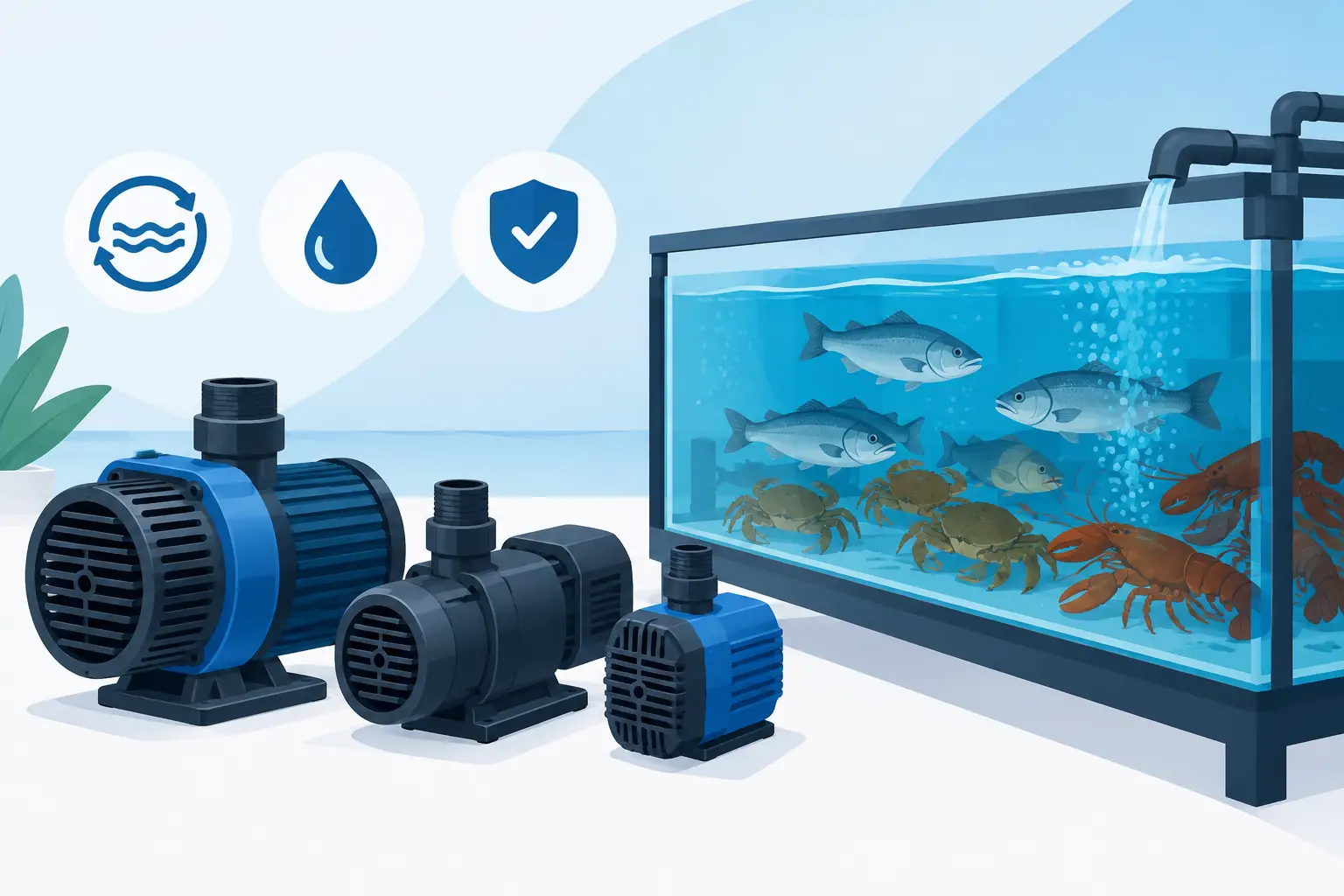
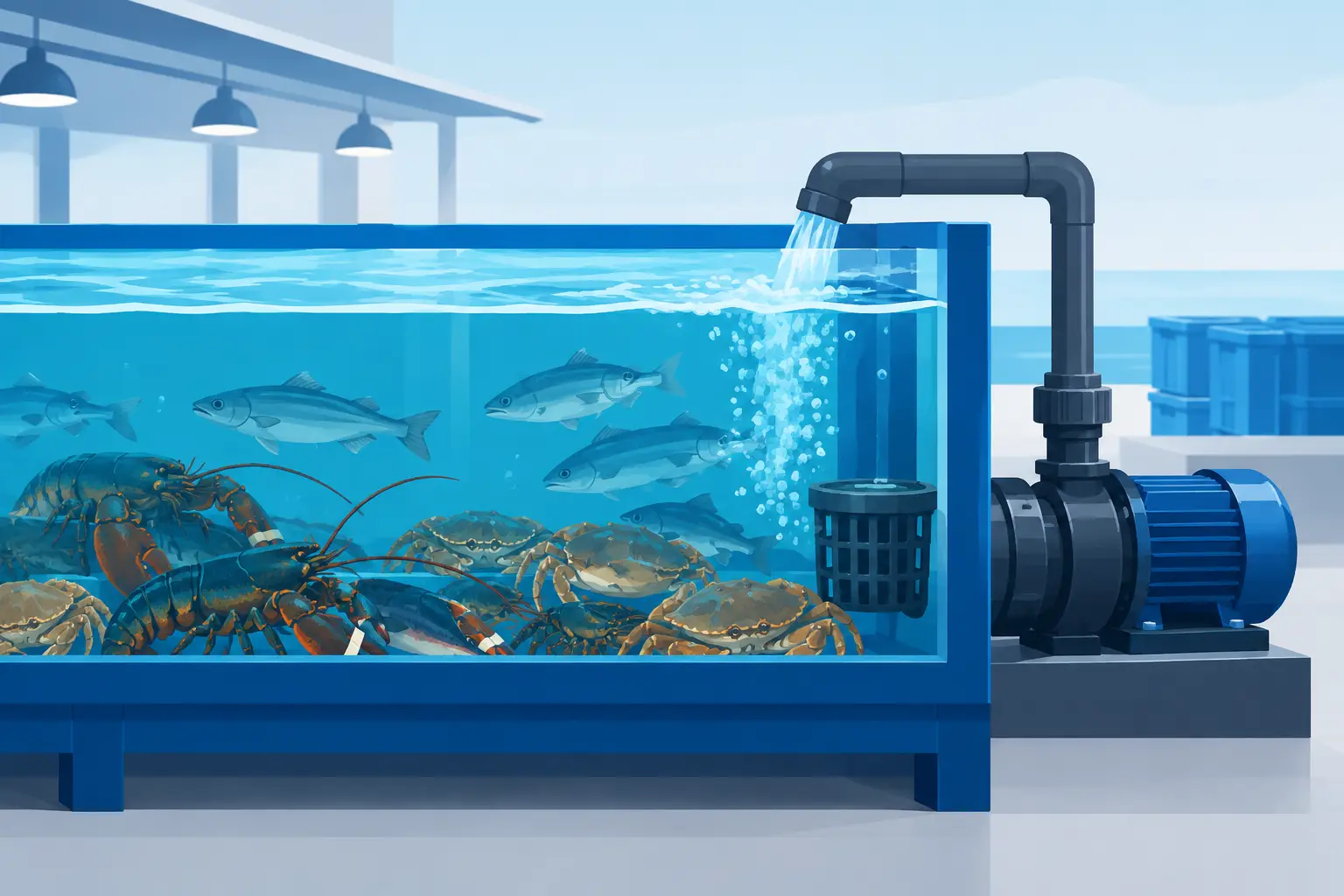
A well-designed system also considers more than the tank shell. Filtration access, drain location, pump service, water volume, insulation, lid design, plumbing routes, and cleaning access will often have a greater effect on daily performance than the face material alone.
When acrylic is the better choice
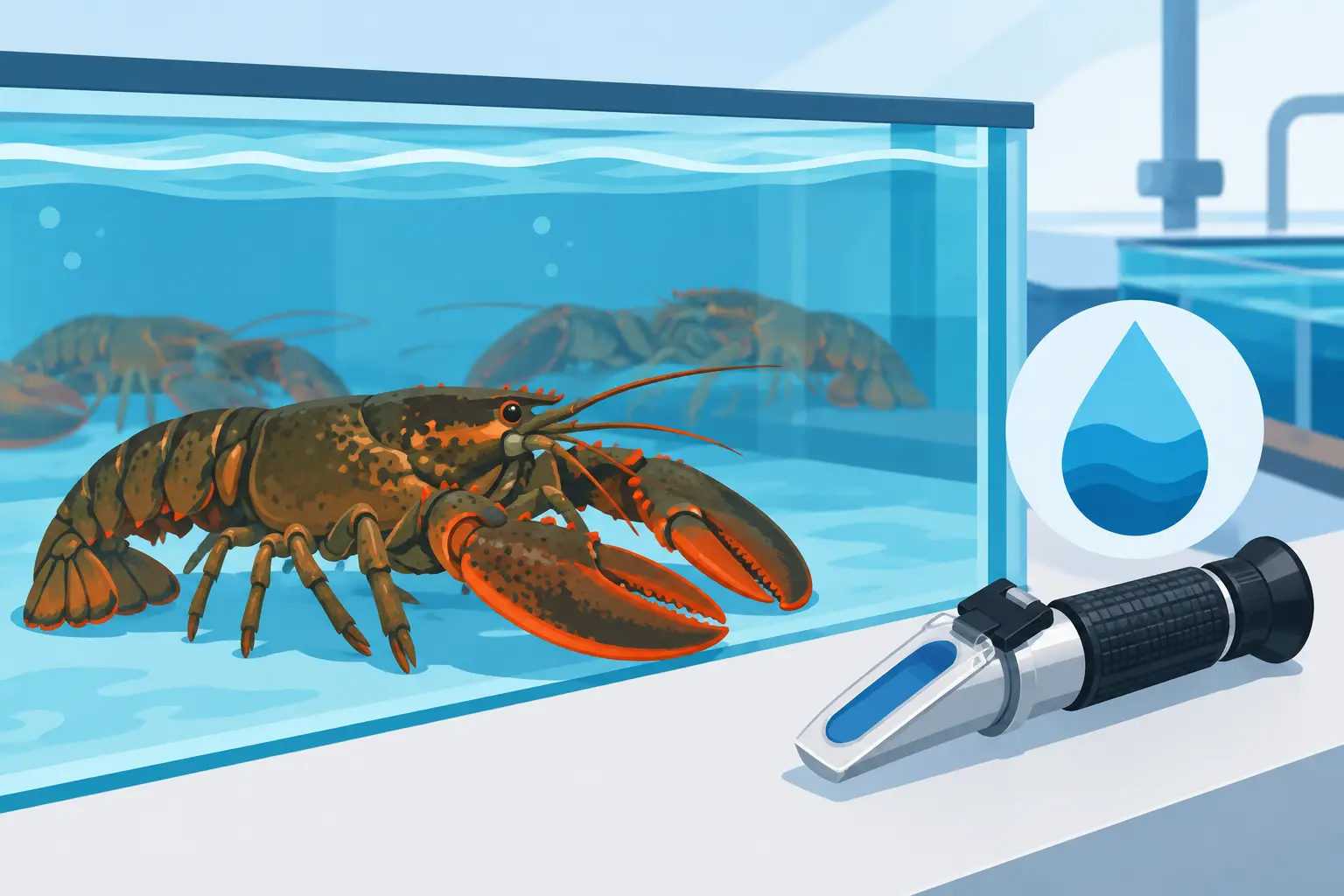
Acrylic is the natural fit when the tank is a merchandising fixture. It gives customers a clear view of live lobsters and other seafood, creating the visual proof of freshness that supports a higher-value purchase. For a seafood department, gourmet market, or restaurant entrance, that visibility can turn a holding system into part of the sales floor.
Acrylic also provides design flexibility. It can be fabricated in forms that work with a service counter, a wall display, a center island, or a custom footprint. Clear panels make it easier for staff to monitor animal behavior, water clarity, and the condition of the product without repeatedly opening the tank.
That transparency comes with responsibilities. Acrylic can scratch when abrasive pads, rough tools, or improper cleaning methods are used. Scratches may be polished out in some cases, but prevention is less disruptive than restoration. Staff should use approved non-abrasive cleaning tools and avoid placing hard objects against exposed panels.
Acrylic may also show mineral film, salt creep, fingerprints, and water spotting more readily than stainless. In a customer-facing application, the display needs a consistent cleaning routine. A clean, well-lit acrylic tank communicates care. A cloudy or scratched viewing panel can work against the very merchandising advantage acrylic provides.
For operators considering acrylic, ask a straightforward question: Will customers spend enough time looking at this tank for visibility to influence sales? If the answer is yes, acrylic deserves serious consideration.
Acrylic works best in these settings
Acrylic is especially effective at seafood retail counters, upscale markets, restaurant display areas, and specialty shops where live product is part of the customer experience. It can also work well in marine exhibits where guests need an unobstructed view.
In these locations, the tank should be treated like any other customer-facing equipment. Proper lighting, clean sightlines, accessible service areas, and a design that keeps hoses and equipment out of view all matter. The display should look intentional, not like a utility system placed beside the register.
Where stainless steel earns its keep
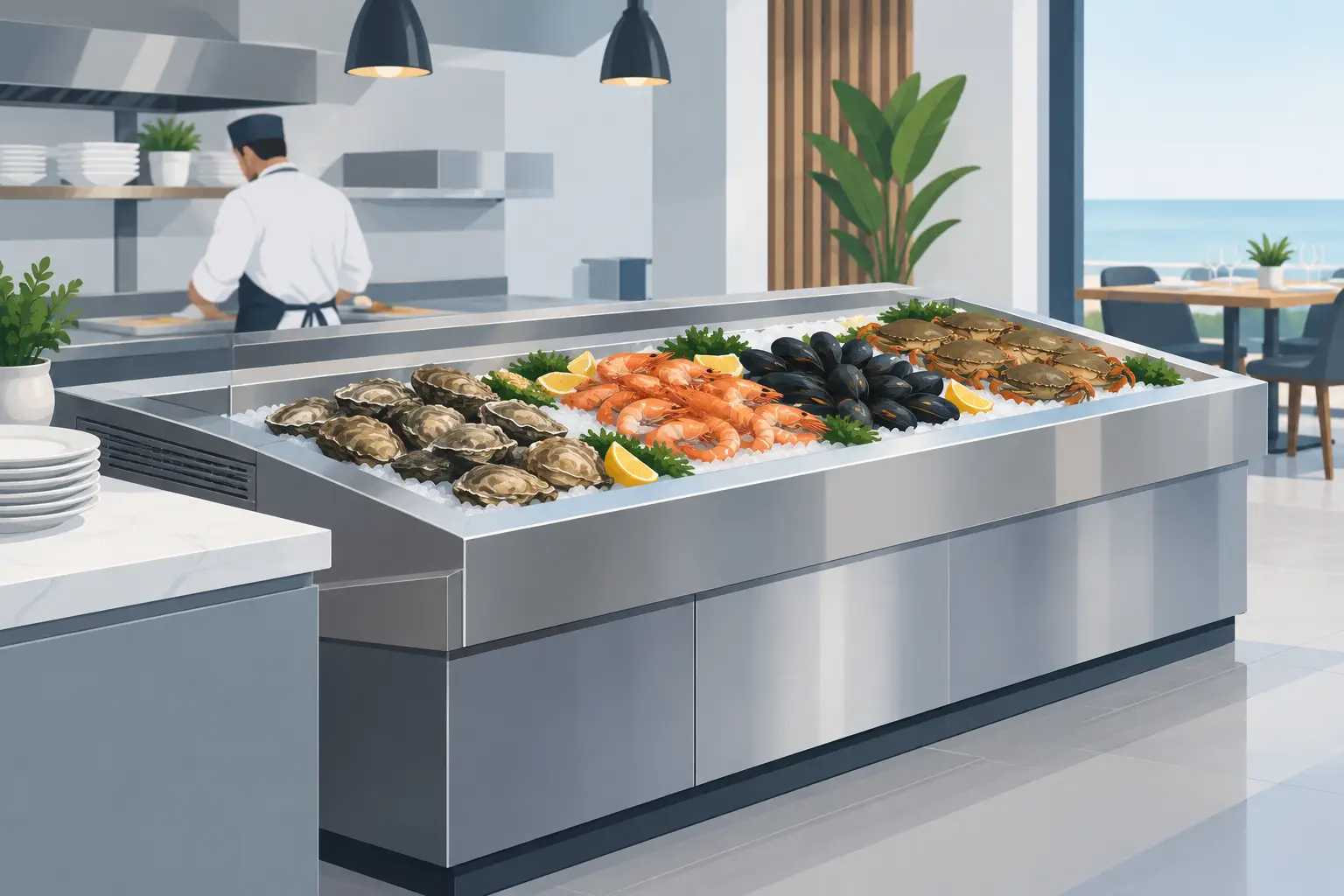
Stainless steel is built for commercial punishment. In back-of-house holding areas, high-volume seafood departments, processing environments, and wholesale facilities, crews need equipment that can stand up to carts, bins, routine washdowns, and frequent handling. Stainless is typically the better choice when the tank is primarily an operational tool.
Its opaque walls can be an advantage in these settings. They help reduce external visual stimulation around the livestock and conceal plumbing, equipment, and normal water movement from public view. The focus stays on holding capacity, cleaning access, and dependable operation rather than presentation.
Stainless surfaces are also familiar to foodservice and seafood teams. They fit naturally alongside prep tables, sinks, ice equipment, and other commercial fixtures. With proper fabrication, welding, finishing, and cleaning procedures, stainless tanks can provide a clean, professional work environment for years.
Not all stainless construction is equal, especially in marine applications. Saltwater is unforgiving. Material grade, weld quality, passivation, drainage, and the prevention of standing saltwater all affect long-term performance. A tank that looks fine at installation can develop avoidable issues if it is not designed and maintained for the marine environment.
Stainless is not maintenance-free. Chloride exposure, incompatible chemicals, neglected salt residue, and damaged surface finishes can contribute to corrosion problems. The right cleaning products and rinse practices matter. So does choosing a manufacturer that understands saltwater service rather than treating the tank like ordinary foodservice equipment.
Stainless is often right for high-volume holding
If your staff is moving product constantly, receiving shipments, sorting live inventory, or working in a space where the tank may be bumped by equipment, stainless offers practical confidence. It is particularly well suited to wholesale facilities, kitchen holding rooms, processing operations, and non-public supermarket back rooms.
The trade-off is straightforward: stainless does not create the same customer-facing visual impact as acrylic. If guests will not see the tank, that trade-off is usually easy to make. If they will, some operators choose a stainless structure with acrylic viewing panels, giving them durability where the crew works and visibility where customers look.
Consider cleaning, service, and replacement before installation
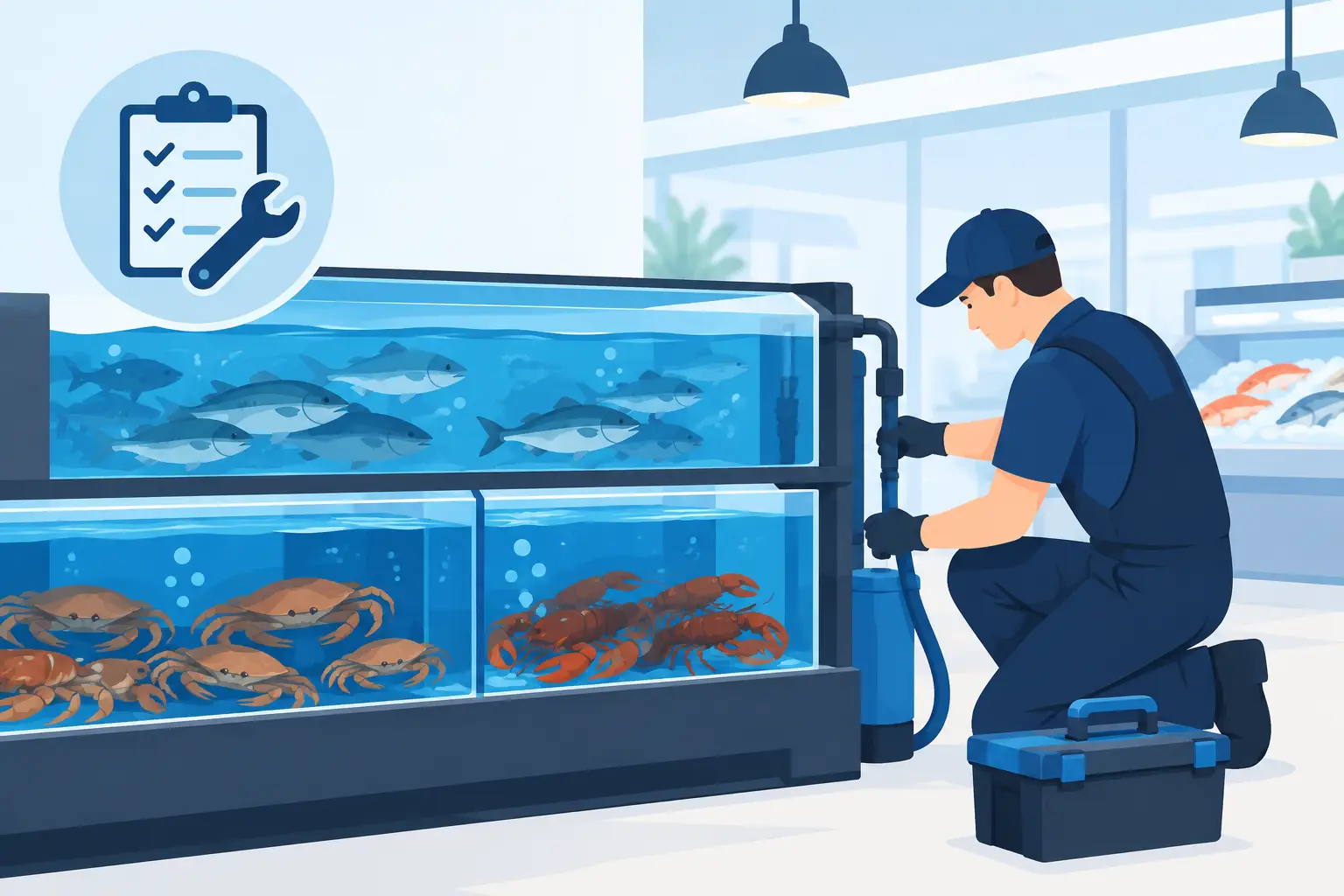
The best tank material on paper can become the wrong choice if it does not fit your maintenance reality. Before approving a system, consider who will clean it, how often it will be cleaned, and whether the staff has room to access pumps, filters, valves, drains, and refrigeration components safely.
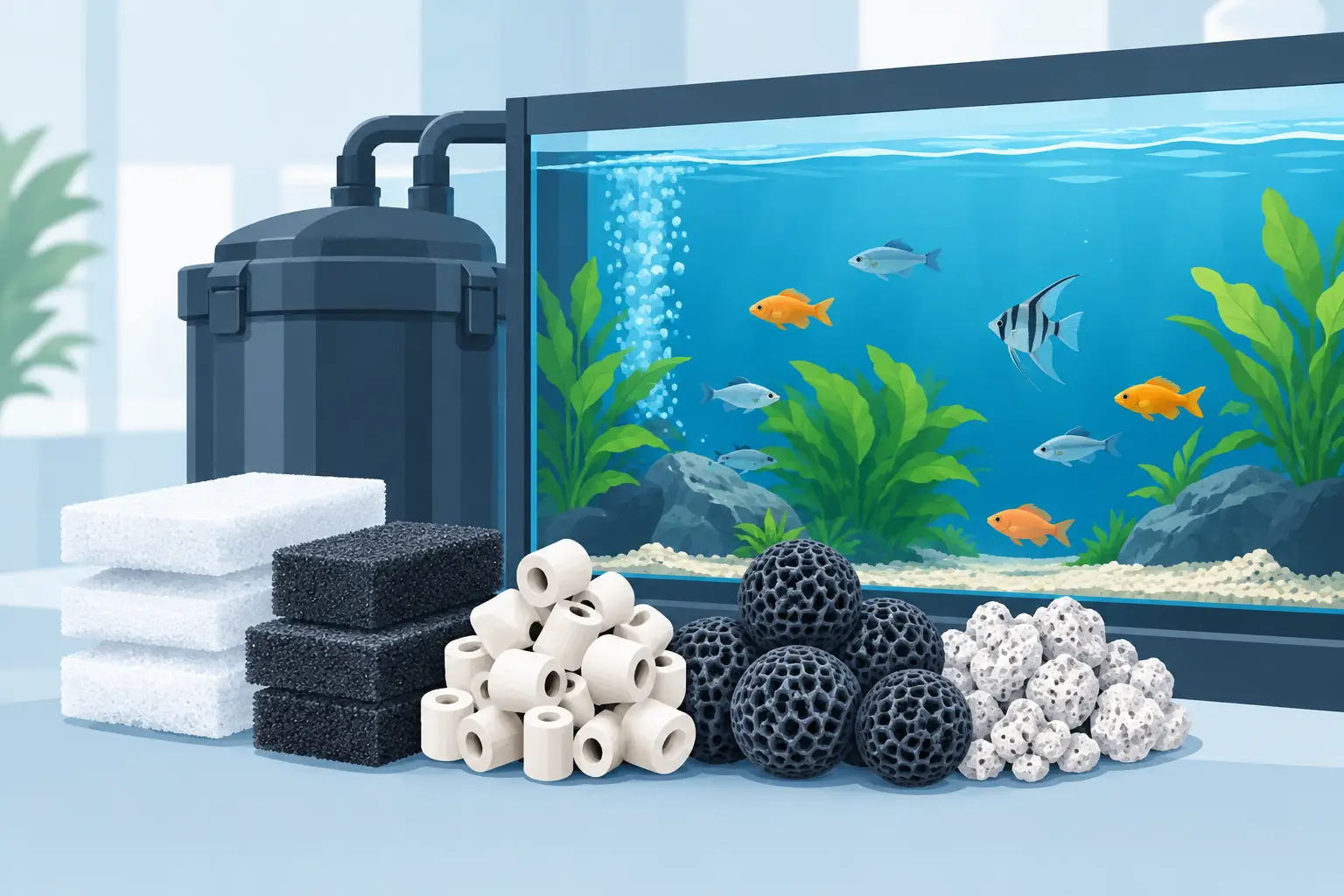
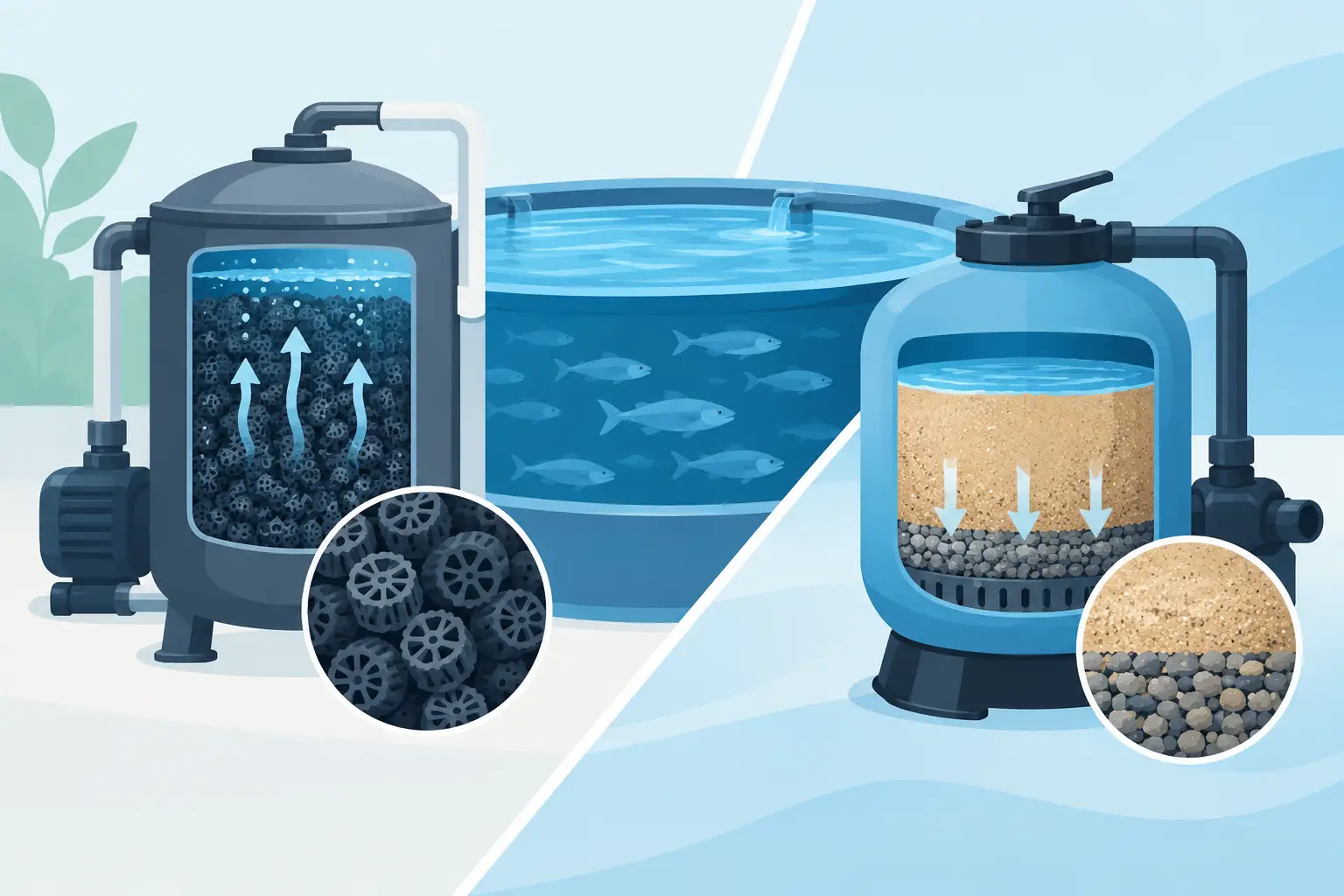
Acrylic demands careful surface care. Stainless demands saltwater-aware sanitation practices. Both require routine attention to water quality, filtration media, marine salt, mechanical filtration, activated carbon, and circulation equipment. A live seafood system is a working environment for valuable inventory, not a set-it-and-forget-it appliance.
Service access deserves special attention. A compact display tank may look efficient until a technician cannot reach a valve or remove a filter without disrupting the entire counter. A larger stainless system may offer excellent capacity but create unnecessary labor if drains and cleanout points are poorly positioned. Custom fabrication should solve these problems before the tank arrives, not after it is full of live product.
Replacement and repair should also be part of the purchasing conversation. Ask how panels, lids, pumps, chillers, fittings, and filtration components can be serviced. Know what support is available when a component fails during a holiday rush or weekend delivery cycle. Inventory loss moves fast when circulation or temperature control is compromised.
Build around the product, not the material
Lobster, crab, shellfish, and finfish do not all have identical holding requirements. Stocking density, water temperature, salinity, oxygen demand, handling frequency, and purging needs should drive the system design. Material selection follows that operational plan.
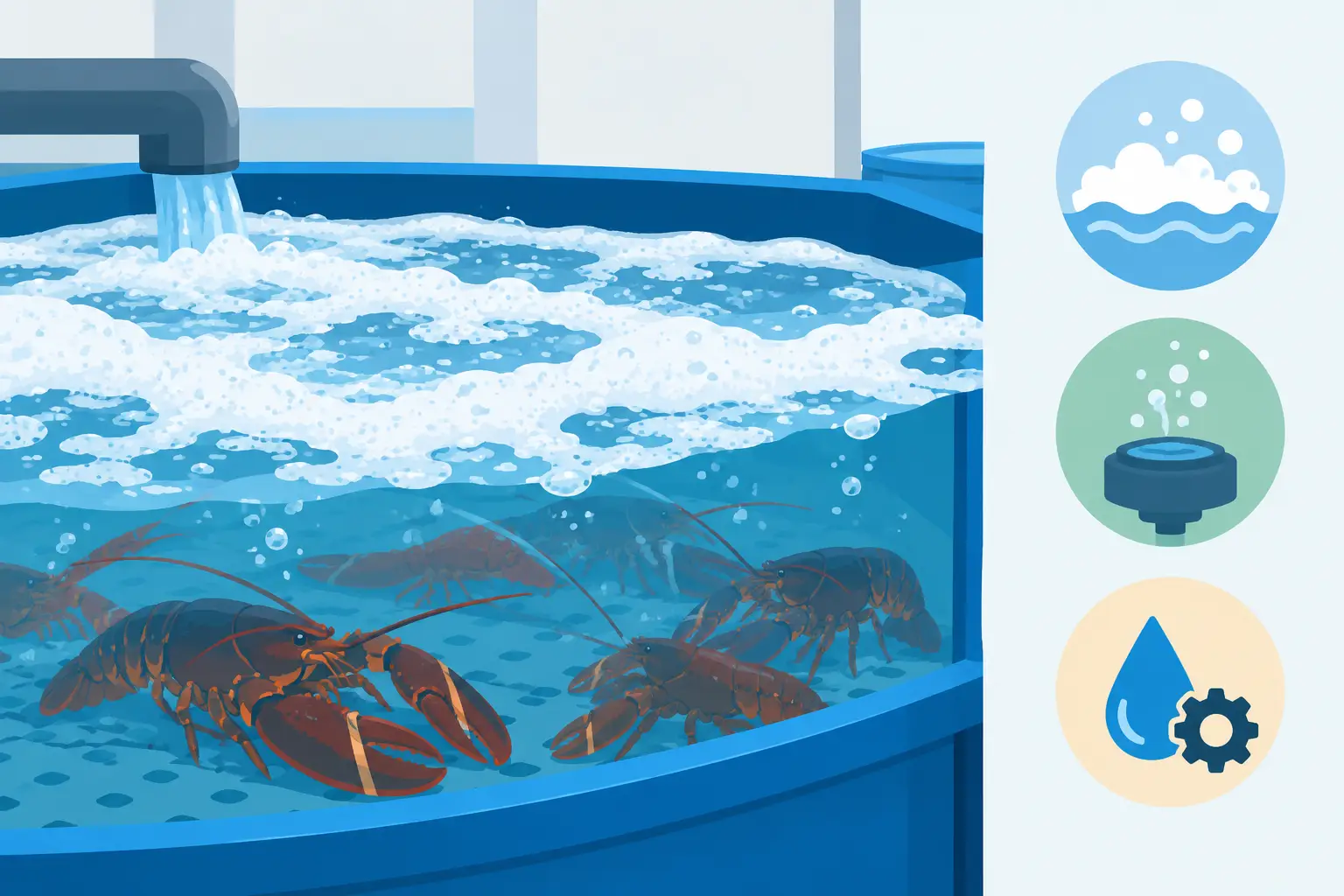
For live lobster programs, a purpose-built system with dependable filtration and purging capability can be more valuable than choosing one wall material over another. For a retailer selling directly from a prominent seafood counter, acrylic may help make the product visible and compelling. For a wholesaler managing volume in a working facility, stainless may better support daily throughput.
Many successful installations use both materials where each makes sense. A public display area can feature acrylic viewing surfaces, while the holding, filtration, and service portions use stainless or other commercial-grade components. This approach avoids forcing a single material to do every job.
Choose the partner that can support the full system
A tank purchase should begin a long-term operating relationship, not end at delivery. The supplier should understand fabrication, water chemistry, marine filtration, replacement supplies, and field service. When one company can design the equipment, supply the ongoing salt and filtration media, and help troubleshoot the system, your team has fewer gaps to manage.
Lobster Life Systems has worked with commercial seafood operators since 1989, building USA-made live seafood systems around real retail and wholesale conditions. The goal is not to push acrylic or stainless as a default. It is to build the tank system that protects live inventory, fits the operation, and gives your staff a dependable way to do the job.
Before selecting your next tank, walk the site with the people who will stock it, clean it, sell from it, and service it. Their daily workflow will tell you whether acrylic, stainless, or a combination of both will serve your seafood operation best.