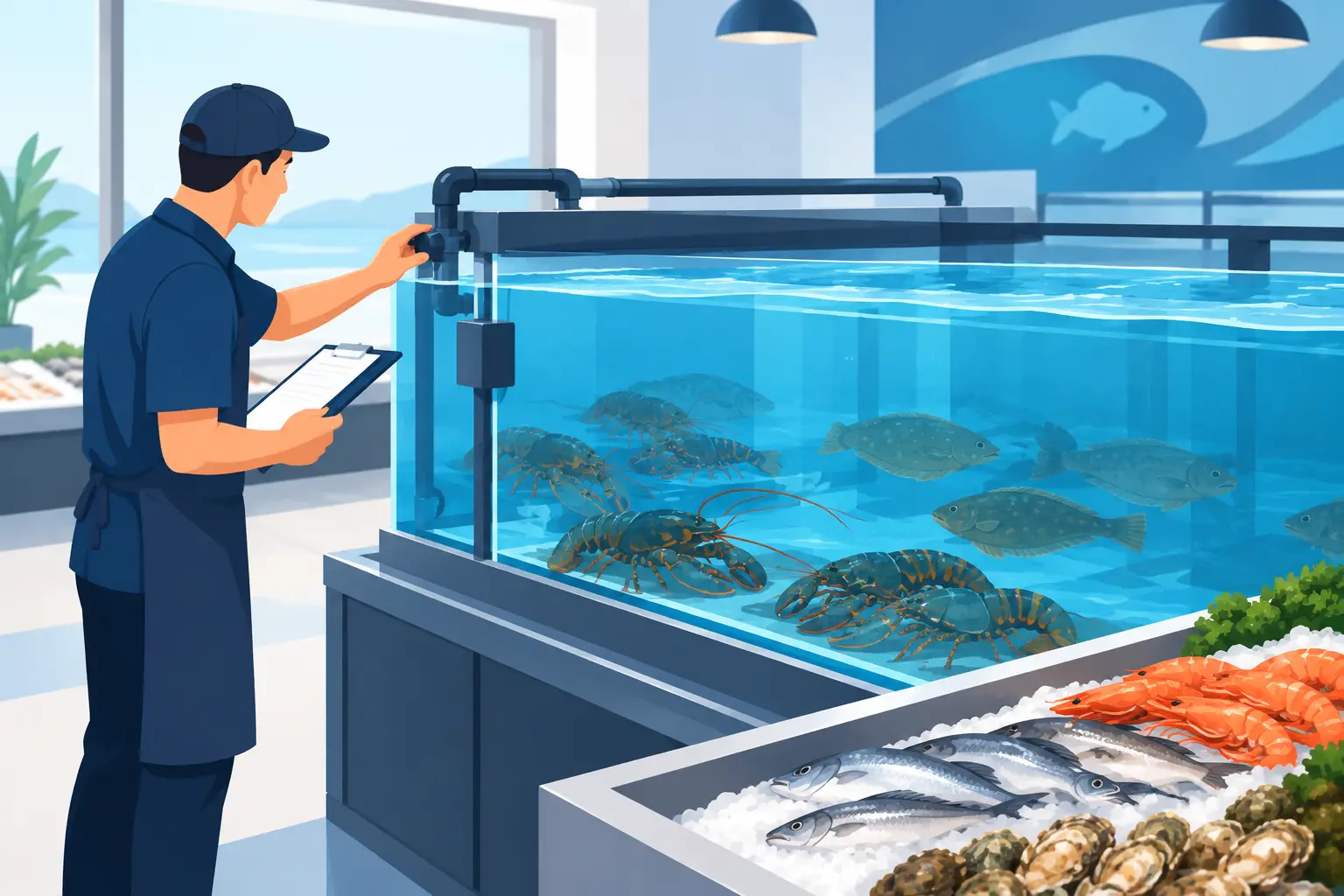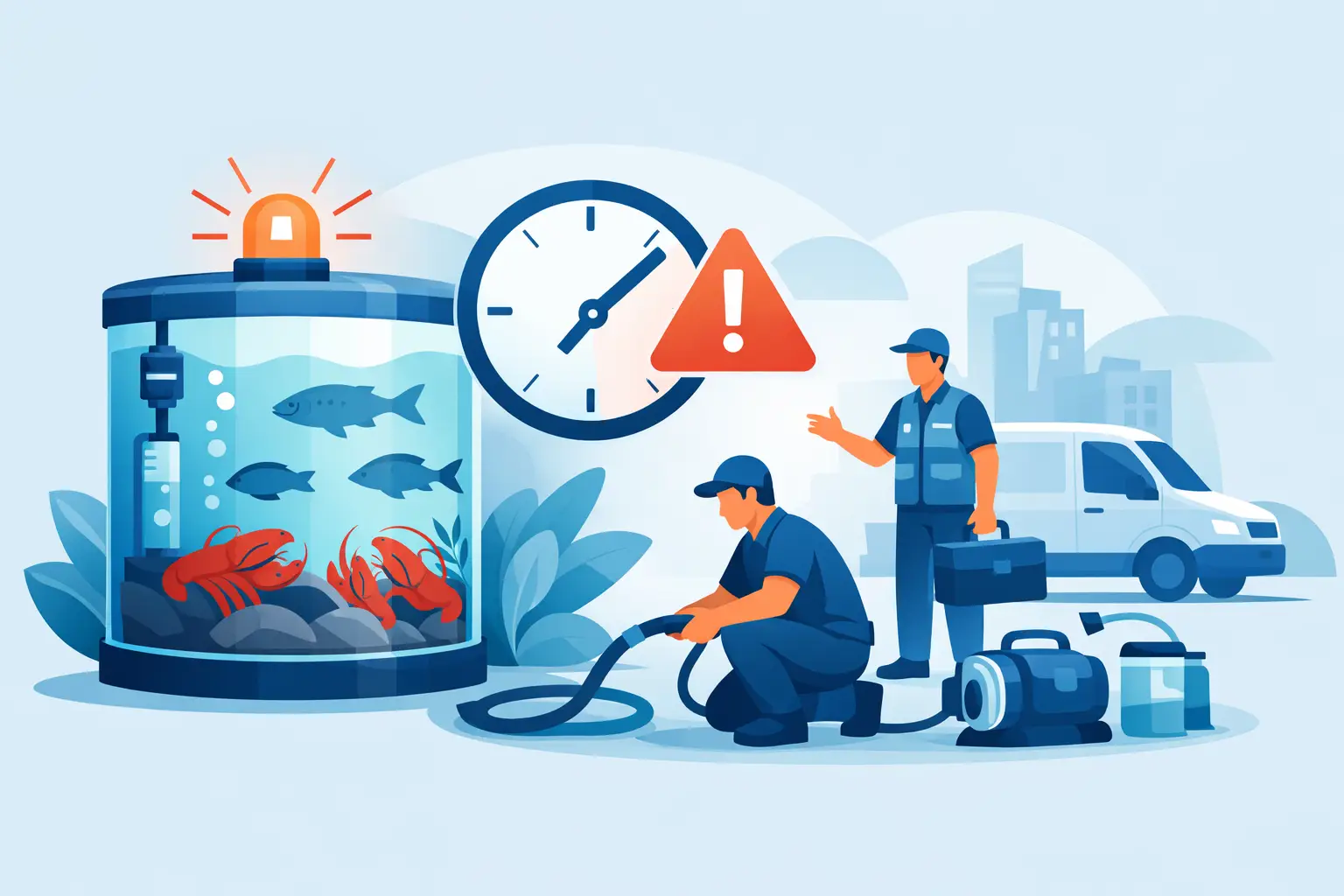
A live lobster or shellfish tank does not give you much time to deliberate. When water temperature climbs, circulation stops, foam builds, or animals show signs of stress, emergency seafood tank support becomes an inventory-protection decision. The priority is simple: stabilize the environment, protect product quality, and get qualified technical help moving before a small failure becomes a major loss.
For seafood departments, wholesalers, restaurants, and marine exhibitors, the cost is not limited to the animals in the tank. A visible tank problem can interrupt service, create waste, pull staff away from customers, and damage confidence in the seafood case. The strongest response comes from knowing what your system is telling you and having a service partner that understands commercial live-seafood equipment.
What Qualifies as an Emergency?
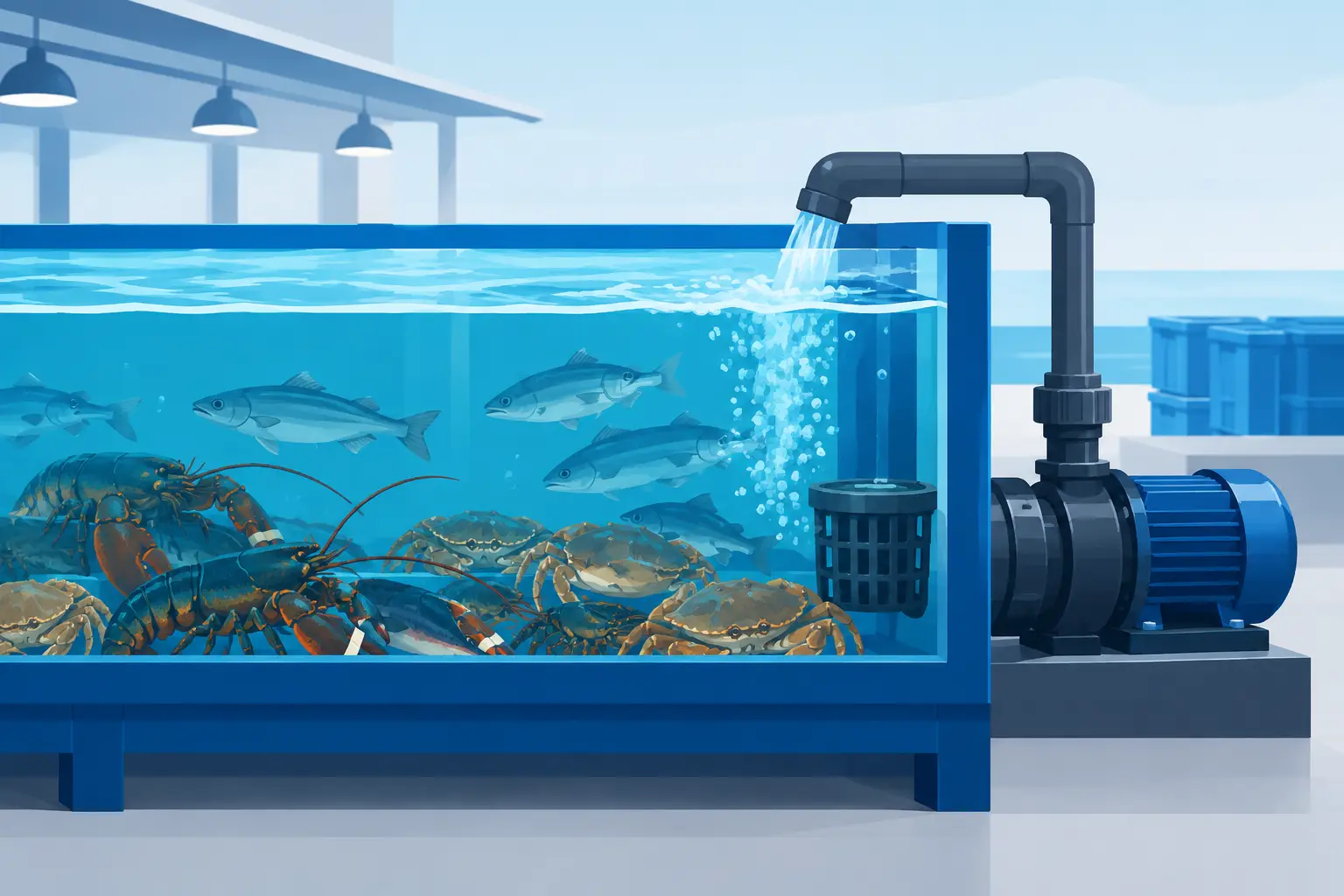
Not every tank alarm requires the same response, but live seafood systems should be treated as time-sensitive when a core life-support function is compromised. Loss of circulation, aeration, refrigeration, filtration, or electrical power can quickly change water conditions. A leaking fitting or failed pump may look like a mechanical issue, yet it can become an animal-health and merchandising problem within hours.
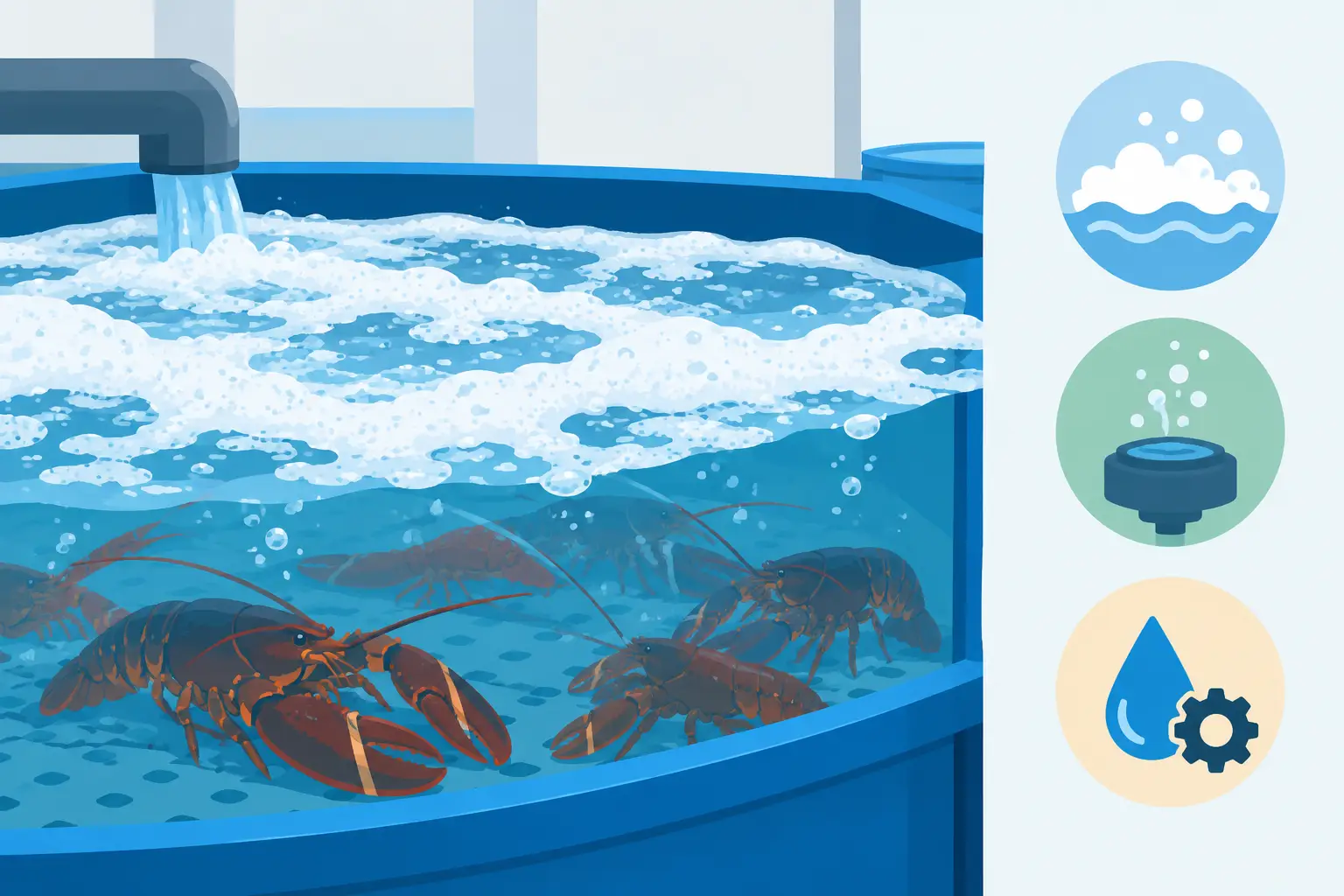
Watch for obvious warnings: water that is unusually warm, cloudy, foamy, discolored, or low in flow; a loud or silent pump where normal operation should be steady; tripped breakers; overflowing sumps; persistent odors; or animals that are unusually inactive, weak, or clustered near areas of higher oxygen. Do not assume the issue will correct itself during the next service interval.
The right urgency depends on the tank load, species, water temperature, system design, and how long the condition has existed. A lightly stocked system with temporary backup may allow more room to troubleshoot. A fully stocked lobster system during a busy weekend does not. When in doubt, treat a change in circulation, cooling, or water quality as a reason to act immediately.
Emergency Seafood Tank Support Starts With Stabilization
Before attempting a repair, protect the basics. Confirm that the tank has power and that any GFCI, breaker, disconnect, and control switch is in its normal operating position. If there is a facility-wide outage, follow your backup-power plan rather than repeatedly cycling equipment. Pumps and refrigeration components can be damaged by improper restarts or unstable power.
Next, check water movement and aeration. In many failures, the fastest way to limit stress is to maintain oxygen transfer and circulation while the underlying issue is diagnosed. Use only approved backup equipment and procedures for your system. Improvised hoses, additives, or freshwater top-offs can create a second problem, particularly in recirculating saltwater systems where salinity and filtration balance matter.
Keep staff focused on observation. Record the time the issue was discovered, current tank temperature, visible water level, equipment status, and any changes in animal behavior. Those details help a technician narrow the cause before arriving, and they create a clear record for management.
If water is leaking near electrical components, there is a burning smell, or equipment is operating unsafely, do not continue hands-on troubleshooting beyond what your trained staff can do safely. Isolate the hazard according to facility procedures and call for qualified support.
Avoid the Quick Fix That Makes Recovery Harder
During an emergency, it is tempting to clean every filter, add chemicals, drain water, or move animals at once. That approach can upset biological filtration, change temperature or salinity too quickly, and make it harder to identify the original failure.
Use the operating procedures developed for your tank. Replace only the consumables and components your team is trained to handle, such as designated filter media or a spare part kept for that purpose. If a pump has failed, for example, replacing it with a mismatched unit may produce the wrong flow, heat load, or plumbing connection. Commercial seafood tanks are systems, not just displays with water in them.
What Your Service Partner Needs to Know
Fast service begins with useful information. When calling for support, have the tank location, model or system configuration, issue start time, and a clear description of what has changed. Tell the technician whether power is present, whether the pump and refrigeration are running, whether there is a leak, and what temporary measures are in place.
Photos or video can help when they are safe to capture, especially for control panels, water levels, plumbing leaks, error displays, and equipment noise. Do not open electrical panels or bypass safety controls to gather more information. A precise initial call can prevent a technician from arriving without the part, material, or equipment needed to restore operation.
For operators within Southern Maine, Massachusetts, New Hampshire, Rhode Island, Connecticut, New York, New Jersey, Delaware, Maryland, and parts of Virginia, local emergency response coverage can make a significant difference. LLS provides 24/7/365 support for commercial systems in its service area, backed by technicians who work specifically with live seafood operations rather than general-purpose aquarium equipment.
The Parts of a Tank That Cannot Be Treated Separately
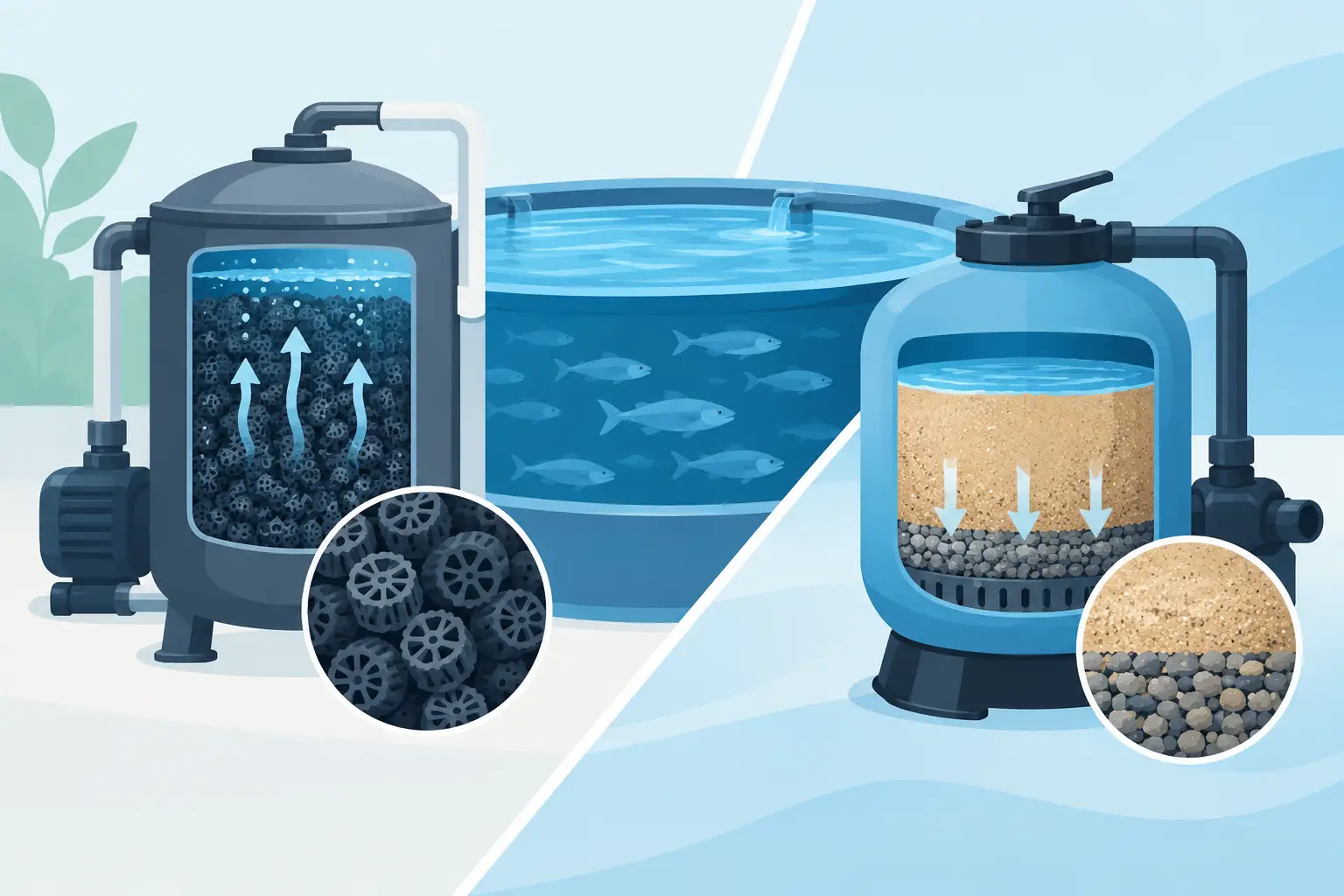
A tank emergency is often blamed on the component that stopped first, but the cause may sit elsewhere in the system. A circulation pump can lose performance because a strainer is blocked. Poor temperature control may be tied to airflow, refrigeration capacity, dirty heat-exchange surfaces, or an incorrect system load. Cloudy water may point to exhausted filtration media, excessive organic load, inadequate maintenance, or a disruption in the biological cycle.
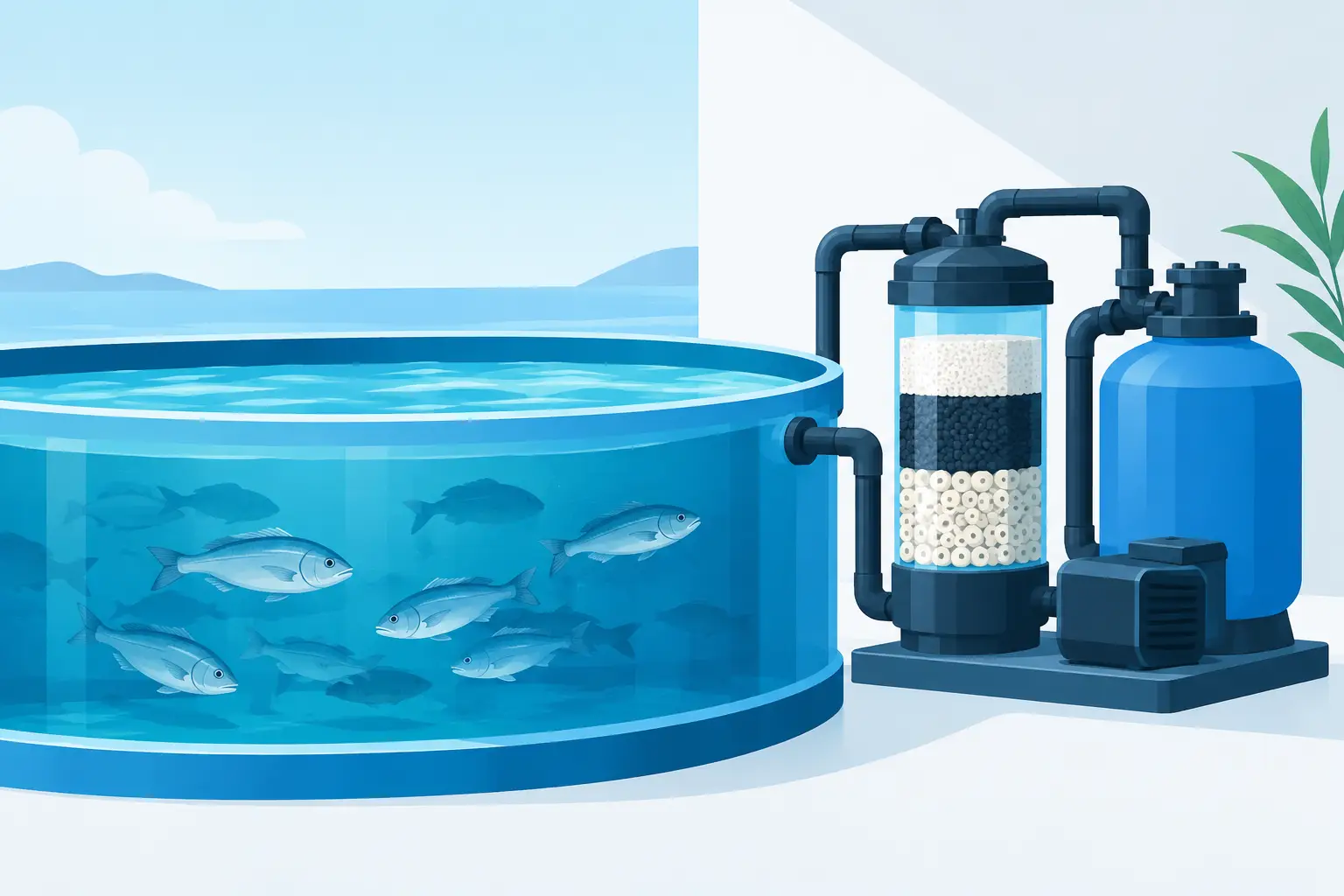
That is why commercial operators benefit from working with one specialized provider for tank design, filtration, marine salt, replacement media, maintenance, and service. When suppliers are fragmented, each party may diagnose only its own component. A full-service seafood tank partner can assess the operating conditions as a whole and recommend the correction that fits the actual system.
This matters especially for lobster systems, where consistent chilled saltwater, proper filtration, and controlled conditions protect holding quality. A tank that looks acceptable from the sales floor may still be trending toward an issue in the equipment room. Routine inspections catch many of these conditions before they become after-hours calls.
Build a Response Plan Before the Next Failure
The best emergency call is the one made early, with a prepared team and working backup options. Every location with live inventory should keep a simple, current response plan where seafood and facilities staff can find it. It should identify the normal operating ranges for that location, the emergency contacts, power and water shutoff locations, approved backup equipment, and the steps staff are authorized to take.
Keep critical supplies on hand based on your specific system and service history. That may include approved filter media, marine salt, activated carbon, gaskets, fittings, or a designated backup pump. Stocking every possible component is usually inefficient. Stocking the high-use items that allow a trained team to stabilize a known system is practical.
Maintenance contracts are also part of emergency preparedness, not a separate expense. Scheduled service gives technicians a baseline for how your equipment should sound, flow, cool, and filter. It also identifies wear items before a busy holiday, weekend promotion, or delivery cycle puts more demand on the tank.
Protect the Sale, Not Just the System
When an emergency occurs, assign someone to manage the customer-facing side of the seafood department. Keep the display clean, remove any compromised product according to your food-safety procedures, and avoid letting an equipment-room issue become a visible problem at the counter. Operations, seafood management, and service should communicate clearly about what is known, what is being done, and whether inventory handling needs to change.
A dependable tank is part of your merchandising program. It supports healthier live product, a better appearance, and a more confident sale. But dependability is not luck. It comes from correctly designed equipment, proper replenishment of filtration and salt products, disciplined maintenance, and experienced emergency service when conditions change.
When a tank shows the first signs of trouble, act on the condition you see, document the facts, and bring in seafood-system expertise early. That decision gives your team the best chance to protect live inventory and keep the case ready for the next customer.