A few points of salinity can separate a stable live-seafood display from stressed inventory, weak presentation, and unnecessary loss. Knowing how to dose marine salt is not about dumping product into a tank until a reading looks right. It is a controlled water-quality procedure that starts with accurate system volume, the right target salinity, and reliable testing.
For commercial lobster and shellfish systems, consistency matters as much as the number itself. A sudden correction can be harder on live product than a slightly off-spec reading caught early and adjusted properly. Treat salt dosing as part of the operating routine, alongside temperature, dissolved oxygen, filtration checks, and sanitation.
Start With a Salinity Target for Your System
There is no responsible one-number answer for every live seafood operation. The correct salinity depends on the species being held, the source water, the holding period, tank design, local operating protocols, and the salt formulation in use. A lobster holding system may have a different working target than a tropical marine fish display or a shellfish system designed around a specific supply chain.
Your established system target should be documented in standard operating procedures and checked with the same type of instrument each day. If a tank has been operating successfully at a stable level, do not make a major correction simply because a generic chart suggests a different number. Review the reading, confirm the meter is calibrated, and consider the condition of the livestock before changing the water.
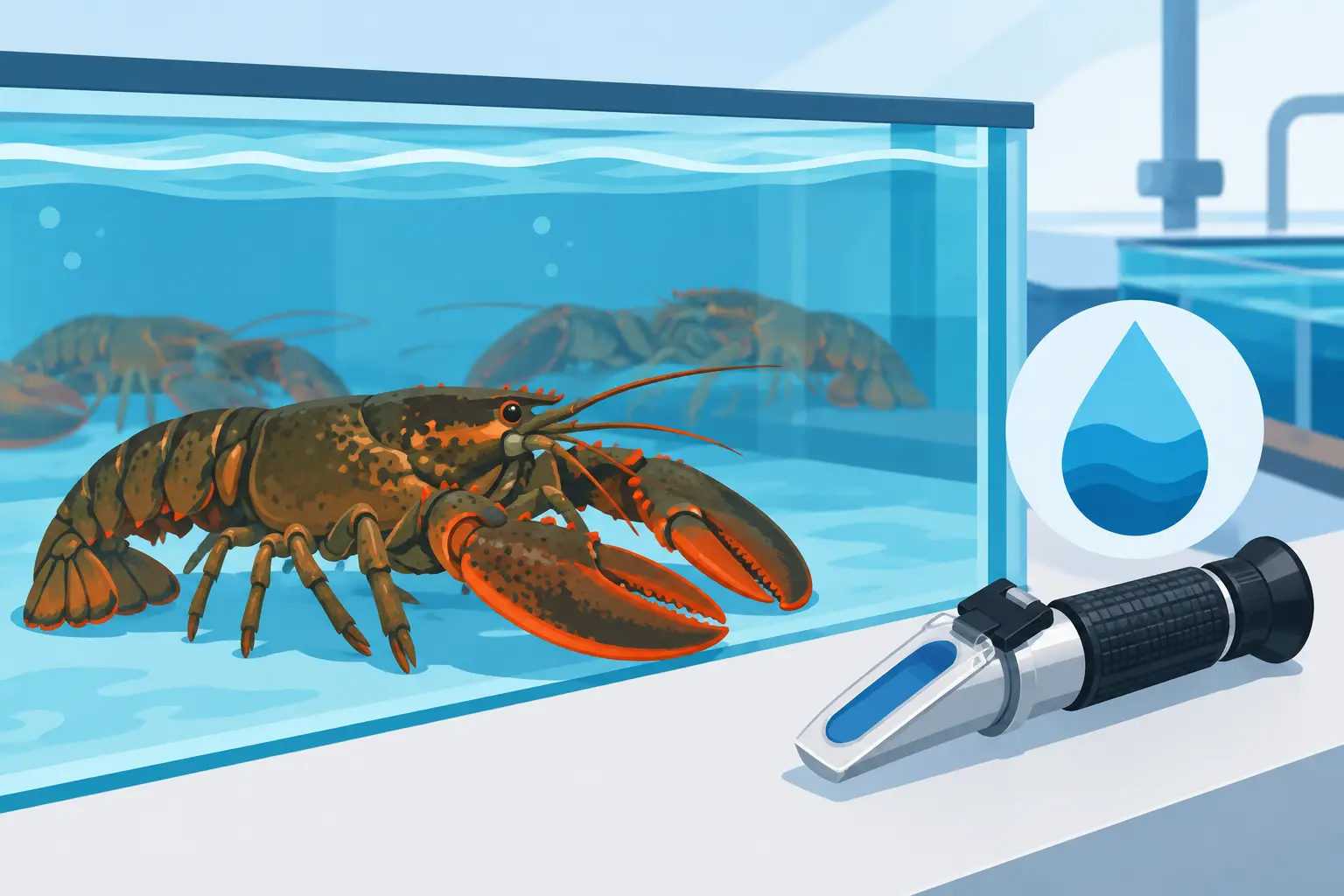
Salinity is commonly expressed as parts per thousand, or ppt, and may also be shown as specific gravity or conductivity. For commercial work, a calibrated refractometer or conductivity meter is generally a better choice than an inexpensive swing-arm hydrometer. Hydrometers can be useful as a backup, but they are more vulnerable to residue, bubbles, temperature differences, and handling errors.
Measure the Real Water Volume Before You Dose
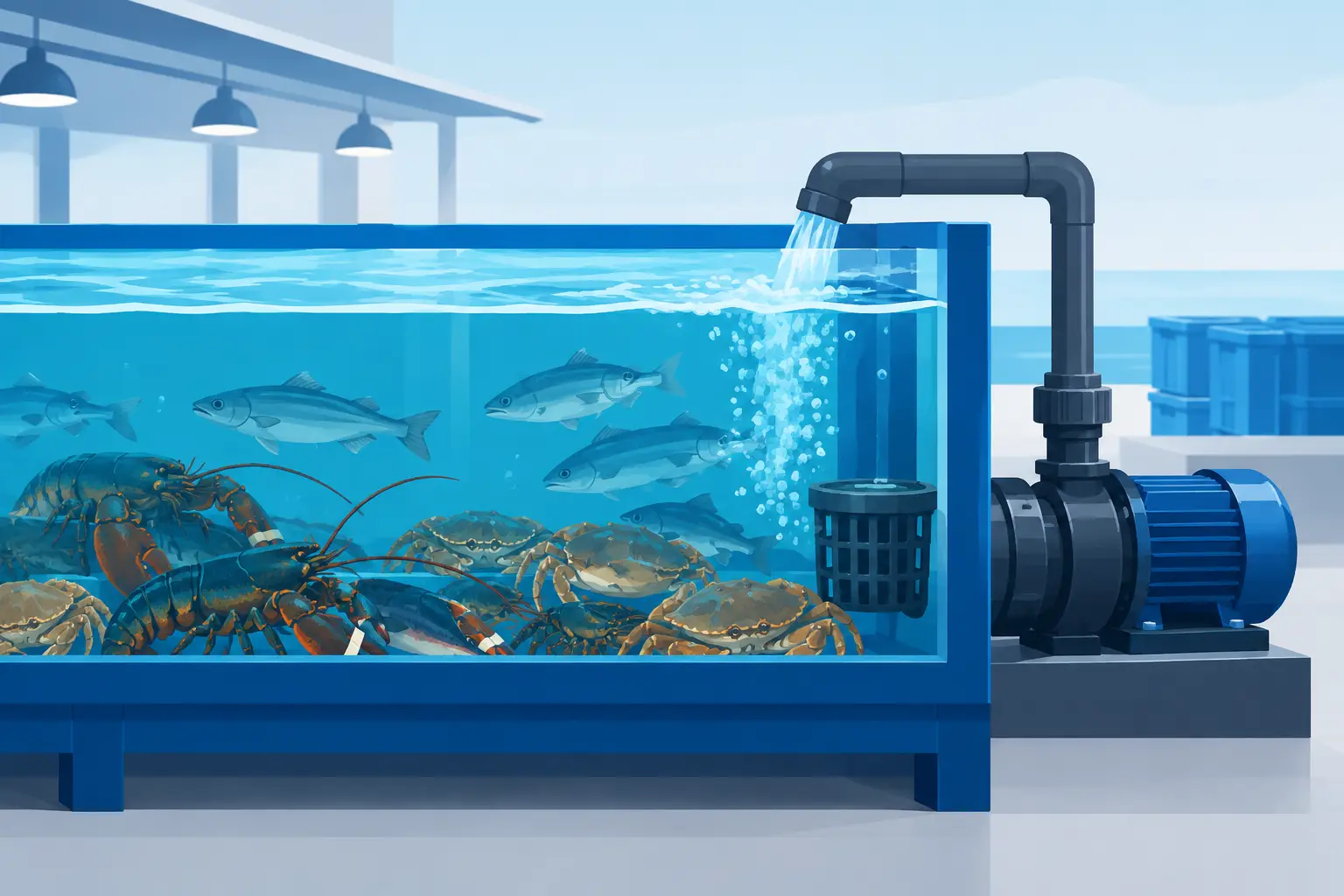
Tank label capacity is not always the amount of water circulating through the system. Commercial systems include display tanks, sumps, plumbing, filters, reservoirs, and sometimes additional holding compartments. They also contain water displaced by live product, filter media, rock, grates, and equipment.
Use the operating water volume, not the empty-tank capacity, when calculating a dose. For a new installation, confirm this figure during commissioning and record it where the seafood team and maintenance staff can find it. For an existing system, review any changes to plumbing, auxiliary tanks, or filtration that may affect total volume.
This step protects against the most common dosing mistake: calculating salt for 300 gallons when the active system actually holds 240 gallons. In a commercial tank, that error is not academic. It can shift salinity fast enough to put expensive live inventory under avoidable stress.
How to Dose Marine Salt Without Shocking Livestock
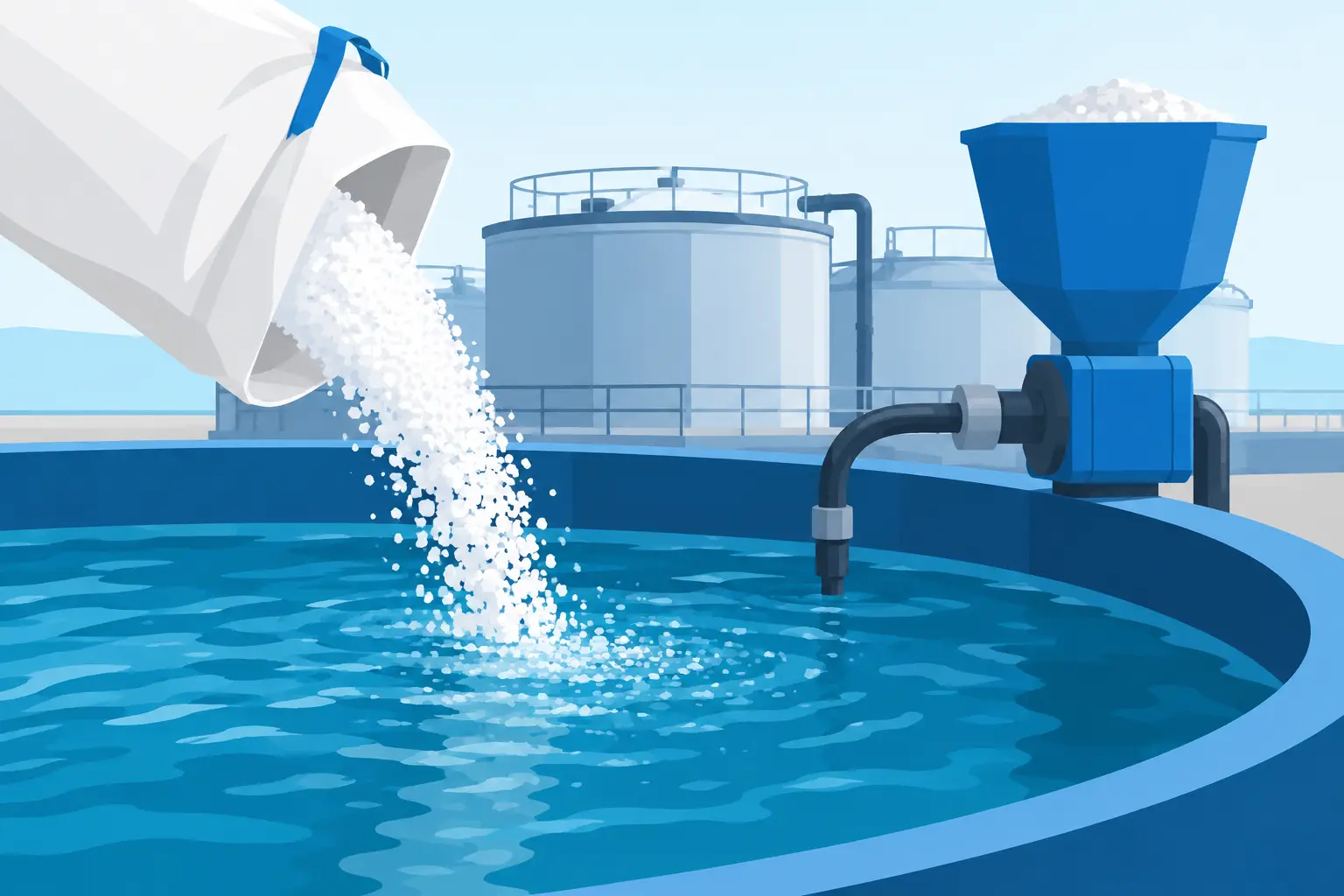
Marine salt should be added to properly prepared water whenever possible, not poured dry into an occupied display tank. Dry salt can create a concentrated pocket before it dissolves. That localized spike can irritate or stress animals and may leave undissolved material in low-flow areas.
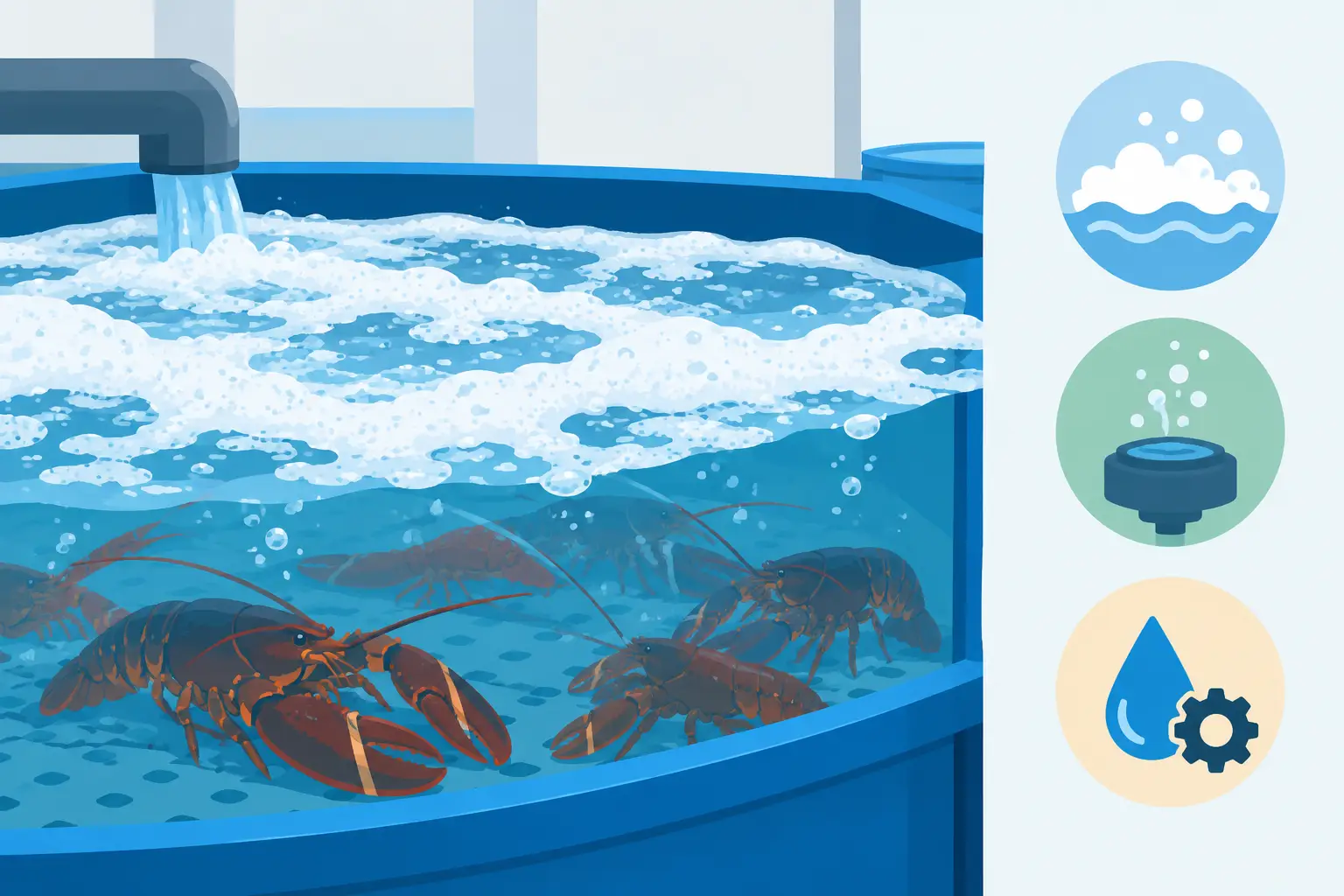
The preferred method is to prepare replacement water in a clean, food-appropriate mixing container. Add the measured salt gradually to circulating or vigorously aerated water, following the mix manufacturer’s instructions. Allow time for the salt to dissolve fully, then match temperature as closely as practical to the system water. Test the mixed water before it enters the tank.
For a routine water change, dose the replacement water to the target salinity and add it at a controlled rate. For a correction to a low-salinity system, use smaller, measured additions and allow full circulation between tests. The right correction speed depends on the livestock, the size of the discrepancy, and the system’s condition. When valuable inventory is in the tank, a conservative approach is usually the better business decision.
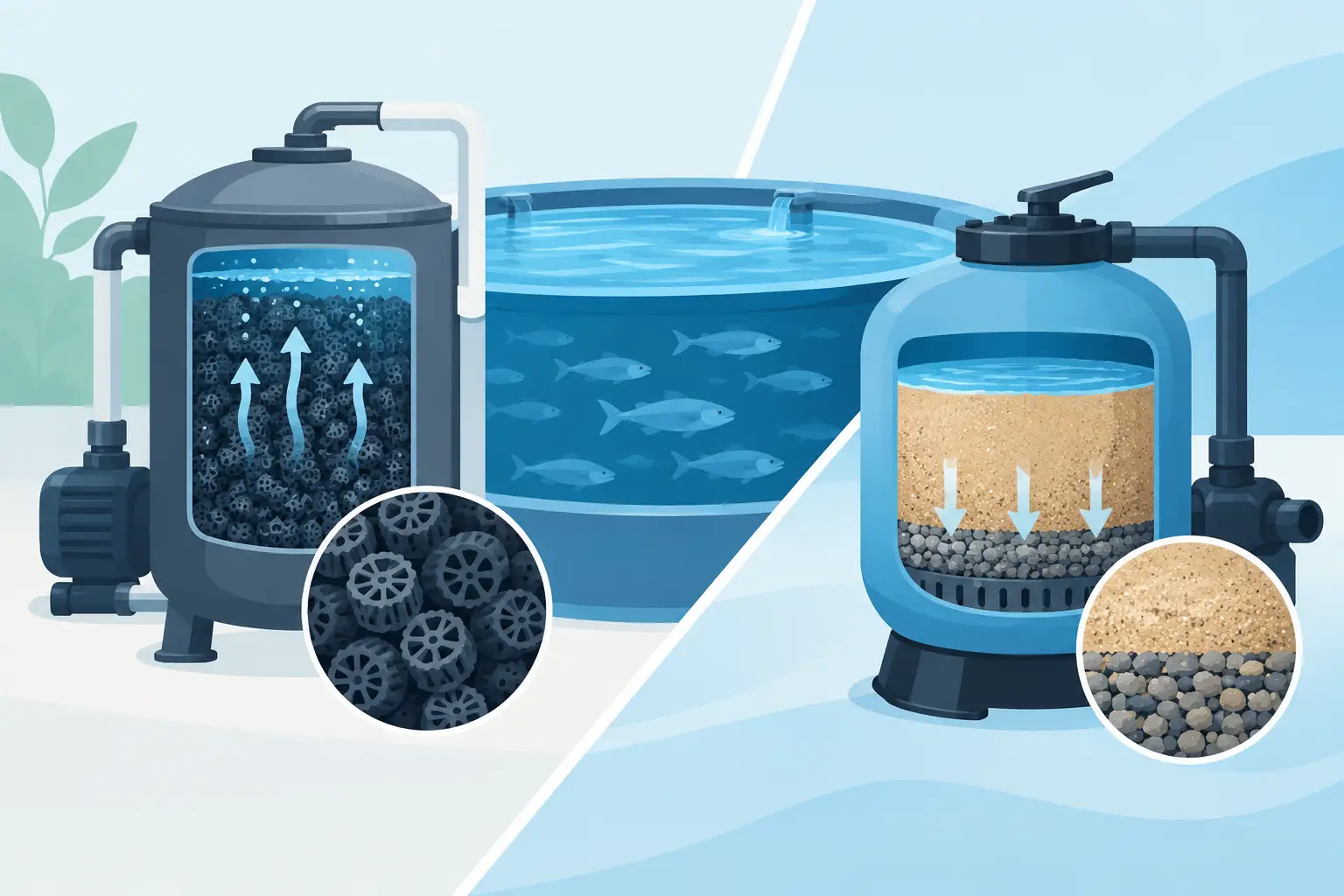
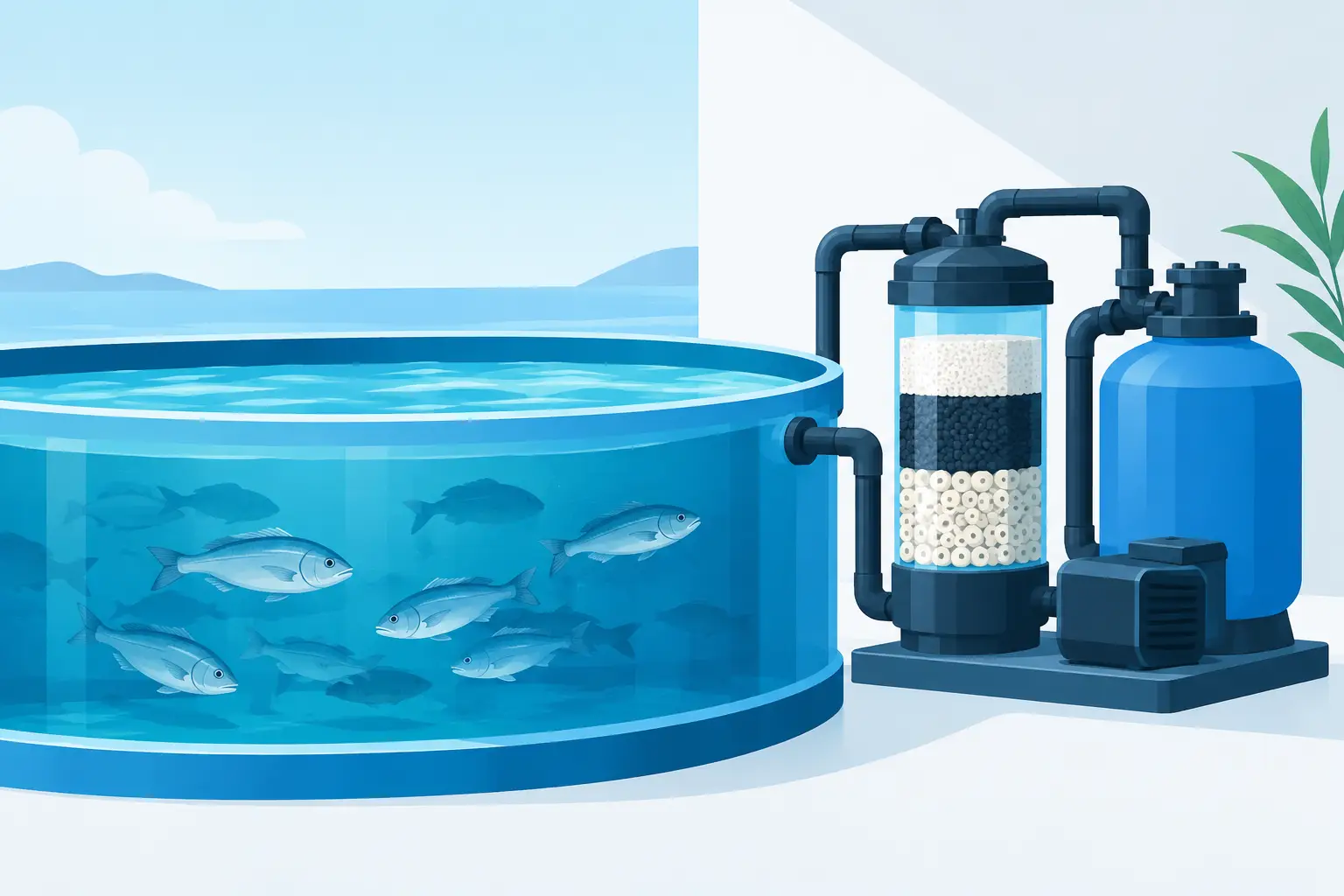
Do not use marine salt to solve a problem that is actually caused by ammonia, nitrite, depleted oxygen, poor circulation, overloaded filtration, or a failed chiller. Salt restores the mineral balance and salinity of the water. It does not replace sound filtration and daily system management.
Use a Calculation as a Starting Point, Not a Final Answer
For small salinity corrections, this approximation can help estimate the amount of dry marine salt needed:
Pounds of salt = system gallons × desired salinity increase in ppt × 0.00834
For example, raising a verified 500-gallon system by 2 ppt would call for approximately 8.34 pounds of salt. That figure is a starting estimate, not a substitute for the salt manufacturer’s mixing directions or a post-mix test. Different products contain different blends of salts and trace minerals, and actual system volume is rarely perfect.
For new water mixed to full-strength marine salinity, follow the product label first. Most commercial marine salt blends provide a ratio by weight for a target salinity. Weighing salt is more accurate than measuring by scoop, especially when multiple employees are responsible for tank care. A scale, a written log, and a calibrated test instrument turn an uncertain task into a repeatable process.
Test, Circulate, Then Test Again
Once the salt has been mixed into replacement water, verify salinity before introducing it to the live system. After adding the water, allow the system to circulate completely before taking the next reading. In a well-designed commercial system, this should be a normal part of the work sequence, not an afterthought.
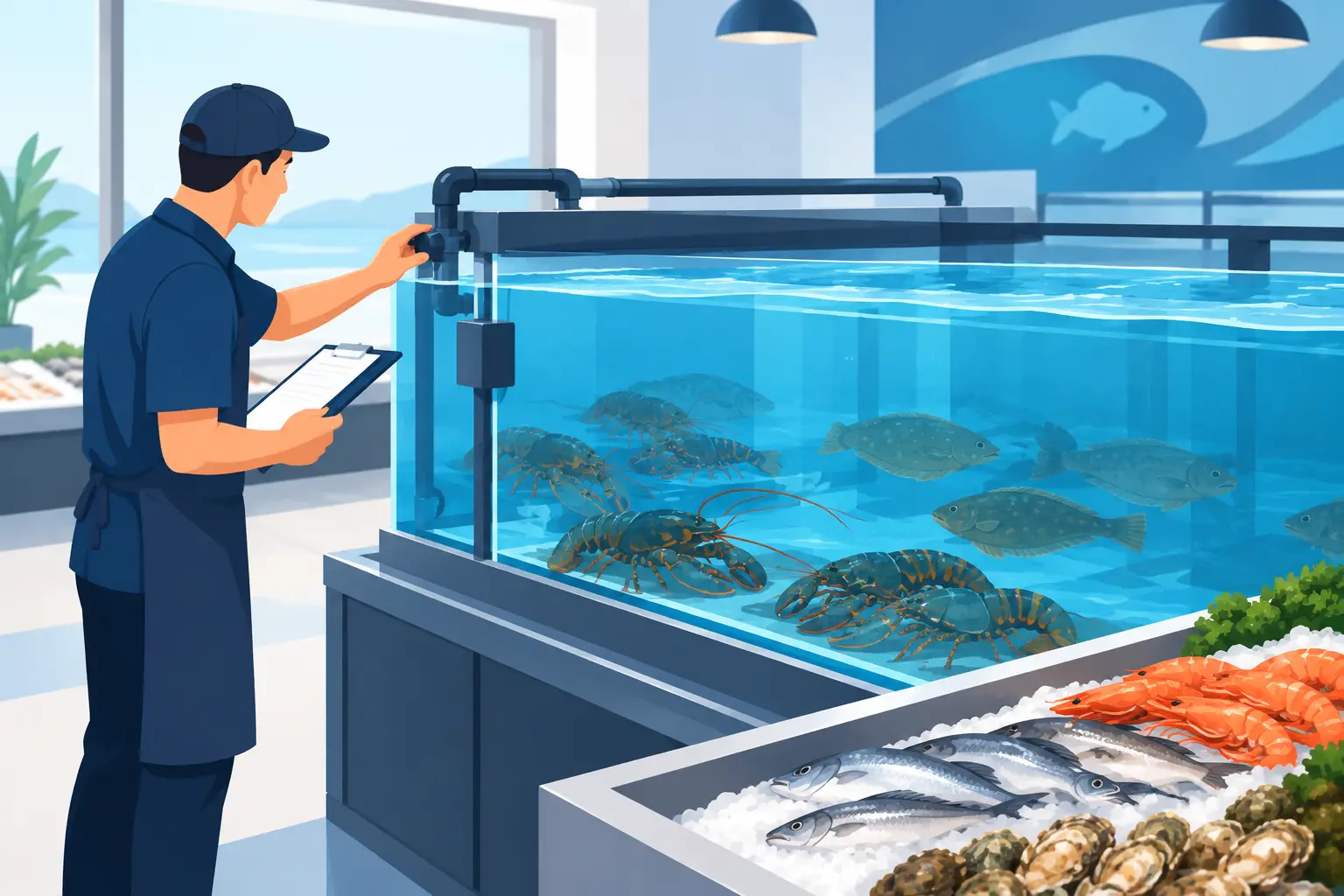
Test from a consistent location, preferably an area with representative flow rather than directly beside an inlet or in a stagnant corner. Rinse the instrument with appropriate water between samples and calibrate it on a scheduled basis. A refractometer that has drifted out of calibration can lead a crew to make repeated corrections to a problem that does not exist.
Record the date, time, tank identification, salinity reading, amount of salt added, water-change volume, and technician initials. If the system begins trending up or down, this record points to the cause faster. It can reveal evaporation, a top-off error, a water-source change, a leak, or inconsistent mixing practices before the issue becomes a livestock loss.
Avoid These Costly Salt-Dosing Errors
The first error is topping off evaporated water with saltwater. Evaporation removes water, not salt. If the water level drops and salinity rises, add fresh, properly treated water according to the system’s requirements. Adding more saltwater compounds the problem.
The second is changing salinity based on one questionable reading. Confirm the instrument, sample again, and check temperature compensation before taking action. A rushed correction can create more risk than the original reading.
The third is adding dry salt directly into a display or holding tank. Even if the system has good flow, concentrated salt can contact live product before it disperses. Mix it separately whenever the setup allows.
The fourth is treating every tank the same. A large recirculating lobster system, a small retail display, and a quarantine tank do not respond at the same rate. Volume, turnover, loading, and livestock condition all affect the safest correction plan.
Finally, do not overlook the salt itself. Use a quality marine salt formulated for the intended application, store it dry and sealed, and keep lot information available if your team is troubleshooting water chemistry. Product that has absorbed moisture can be difficult to measure consistently and may not dissolve as expected.
Build Salt Dosing Into a Commercial Maintenance Plan
A reliable live-seafood operation does not depend on one experienced employee remembering what happened last week. It depends on repeatable checks, documented targets, correctly sized equipment, and support when conditions change. Daily salinity checks may be appropriate for heavily loaded systems or locations with frequent water changes, while other systems may follow a different schedule based on their operating history.
Lobster Life Systems supports commercial seafood operators with marine salt, filtration components, tank service, and the technical experience needed to keep live systems working as intended. When a salinity problem keeps returning, the cause may be upstream in the makeup-water process, system design, filtration performance, or maintenance routine.
The practical goal is simple: mix accurately, add gradually, verify the result, and keep a record. That discipline protects live inventory, supports a cleaner display, and gives your team confidence when the seafood department is at its busiest.