A lobster can look fine at opening and be in trouble by the afternoon if lobster tank salinity has drifted outside a stable range. For seafood departments, wholesalers, and restaurants holding valuable live inventory, salinity is not a minor water-quality detail. It affects osmotic balance, stress level, feeding behavior, shell condition, and ultimately whether lobsters remain marketable in the tank.
The goal is not to chase a single reading every hour. The goal is to maintain a clean, consistent saltwater environment that matches the system design, the species being held, and the operating conditions in your store or facility. Stable water protects product, reduces avoidable losses, and gives customers the clear, active live display they expect.
What Lobster Tank Salinity Should Be
For most commercial American lobster holding systems, a practical target is generally in the natural seawater range of about 32 to 35 parts per thousand (ppt). Depending on the meter used, that commonly corresponds to a specific gravity around 1.023 to 1.026 when measured at the appropriate reference temperature.
That range is a starting point, not permission to ignore the rest of the system. Temperature, dissolved oxygen, pH, ammonia, nitrite, biological filtration capacity, stocking density, and the time lobsters are held all affect outcomes. A tank operating at the right salinity but with poor circulation or an overloaded filter is still a risk to inventory.
Your tank manufacturer’s recommended setpoint should take priority, especially on a self-contained or purging system built around a specific operating volume and filtration configuration. The most dependable programs establish an acceptable operating range, document readings, and correct a trend before it becomes a problem.
Why Stable Salinity Matters to Live Lobsters
Lobsters are marine animals. When salinity drops too low, water moves into their bodies differently than it would in natural seawater, creating physiological stress. When salinity rises too high, the opposite pressure can dehydrate and weaken them. Either condition can reduce their ability to tolerate handling, crowding, temperature swings, and routine shipping or transfer.
In a commercial setting, stress has a cost. It can show up as reduced activity, poor appearance, unexplained mortality, or a shorter holding window. It also makes every other water-quality issue harder on the animal. A lobster that is already compensating for salinity stress has less margin when ammonia rises or oxygen falls.
Consistency matters as much as the number itself. A sudden correction from an improper reading to a perfect reading can be more damaging than a small deviation corrected gradually. Your live product does not benefit from dramatic swings, even when the final number looks right on paper.
What Causes Salinity to Drift
Evaporation is one of the most common reasons salinity climbs. Water leaves the system, but salt remains behind. This is especially common around warm equipment rooms, dry retail environments, or tanks with significant surface agitation. Replacing evaporated water with premixed saltwater only adds more salt and can push the system farther out of range. Evaporation should generally be replaced with properly treated fresh water, added in a controlled way.
Salinity can drop when fresh water enters the system through overfilling, leaks, cleaning practices, condensation, or an incorrectly mixed batch of replacement water. It may also fall after a large water change if the new water was not fully mixed and verified before use.
Human error is another frequent cause. A container marked “saltwater” does not guarantee the concentration is correct. Measuring salt by scoop count instead of verifying with a calibrated instrument creates unnecessary uncertainty, particularly when different salt brands, bag sizes, water sources, or mixing volumes are involved.
Equipment problems deserve attention as well. A failed float valve, a malfunctioning top-off setup, a cracked plumbing connection, or a maintenance procedure that bypasses normal controls can change tank volume quickly. Good service records make these causes easier to spot because they reveal whether the issue is gradual, recurring, or sudden.
Test the Tank, Not Assumptions
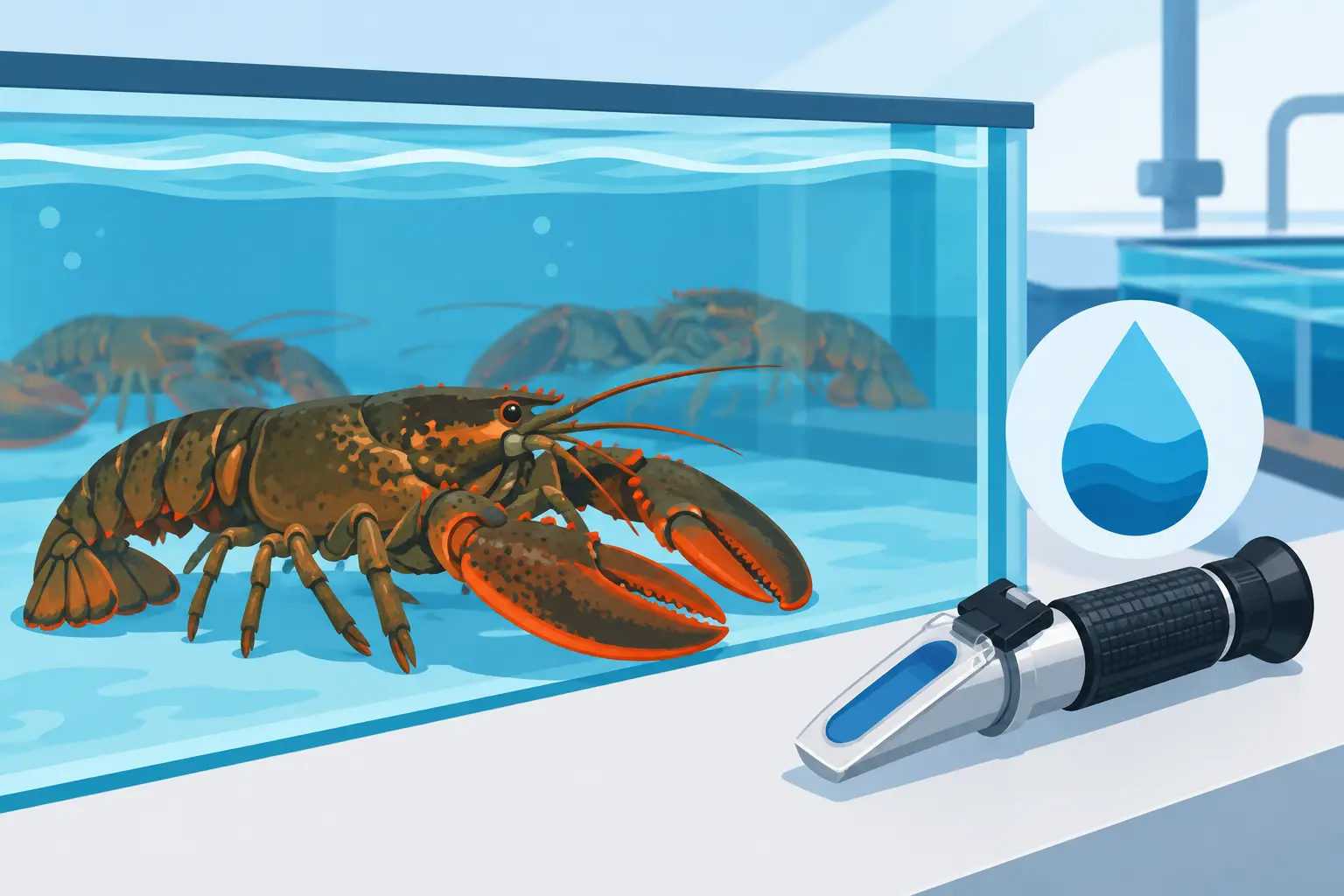
A reliable salinity program starts with dependable measurement. Commercial operators commonly use a refractometer, conductivity meter, or digital salinity meter. Any of these tools can work when used correctly, but a reading is only as good as the instrument and the person taking it.
Check salinity at least daily in active lobster systems, and increase the frequency when conditions change. New saltwater batches, water changes, high-volume sales periods, equipment work, hot weather, and filter service all justify additional checks. Record the date, time, reading, temperature, technician, and any action taken. That simple log gives managers and service teams a useful history when diagnosing a problem.
Calibrate the instrument according to its instructions. Refractometers need clean optics and the correct calibration fluid or standard. Conductivity probes need to be rinsed, maintained, and checked against an appropriate standard. Do not rely on a meter that has been dropped, stored dry when it should not be, or used for months without verification.
Temperature matters because it changes how water density and conductivity are interpreted. Use temperature-compensated equipment where appropriate, and measure according to the device’s stated procedure. If readings seem inconsistent, verify with a second instrument before making a major adjustment to the tank.
A Practical Daily Check
Before the seafood counter gets busy, look at more than the display. Confirm the water level and salinity reading, observe circulation and aeration, and watch the lobsters’ general condition. Check for unusual foam, cloudy water, odor, weak flow, or animals behaving differently than normal. Salinity does not operate in isolation, and the tank often provides visual clues before a test result becomes alarming.
This routine does not need to slow down your department. It needs to be repeatable. A few disciplined minutes at the beginning of the day can prevent an inventory issue that takes far more time and money to resolve later.
How to Correct High or Low Salinity Safely
The right correction depends on how far the system has moved, how quickly it happened, the tank volume, and the condition of the lobsters. Avoid treating every deviation with the same large adjustment.
If salinity is high because of evaporation, add the appropriate treated fresh water gradually while monitoring the tank. Do not dump a large volume into one area of the system. Slow, well-circulated correction limits abrupt exposure to different water conditions.
If salinity is low, use fully dissolved, properly aerated marine saltwater mixed in a separate container. Never pour dry salt directly into an occupied lobster tank. Undissolved salt can create concentrated pockets that burn or stress animals, and it does not give you a controlled final reading.
Recheck after each measured adjustment and allow circulation time before deciding whether more correction is needed. If the reading is significantly outside the established range, if lobsters are showing stress, or if the source of the drift is unclear, contact a qualified tank service provider before making aggressive changes. Protecting the animals comes before getting back to a target number quickly.
Use Marine Salt Made for Commercial Systems
Not all salt products are suitable for lobster holding. Table salt, water-softener salt, and improvised mixtures do not provide the mineral balance expected in marine systems and can introduce unwanted additives. Commercial marine salt is formulated to produce consistent saltwater when mixed with the correct volume and quality of water.
Consistency in product and procedure matters. Use the same approved marine salt, measure water volume accurately, allow the mix to dissolve completely, and verify salinity before it enters the tank. Keep a dedicated mixing container and clean tools so that cleaning chemicals, food residue, or fresh water do not contaminate replacement water.
For operations with multiple tanks or recurring water changes, standardized mixing procedures reduce dependence on individual staff judgment. That is especially valuable across supermarket departments, wholesale facilities, and restaurant groups where personnel and shift schedules can change.
Salinity Works With Filtration, Not Instead of It
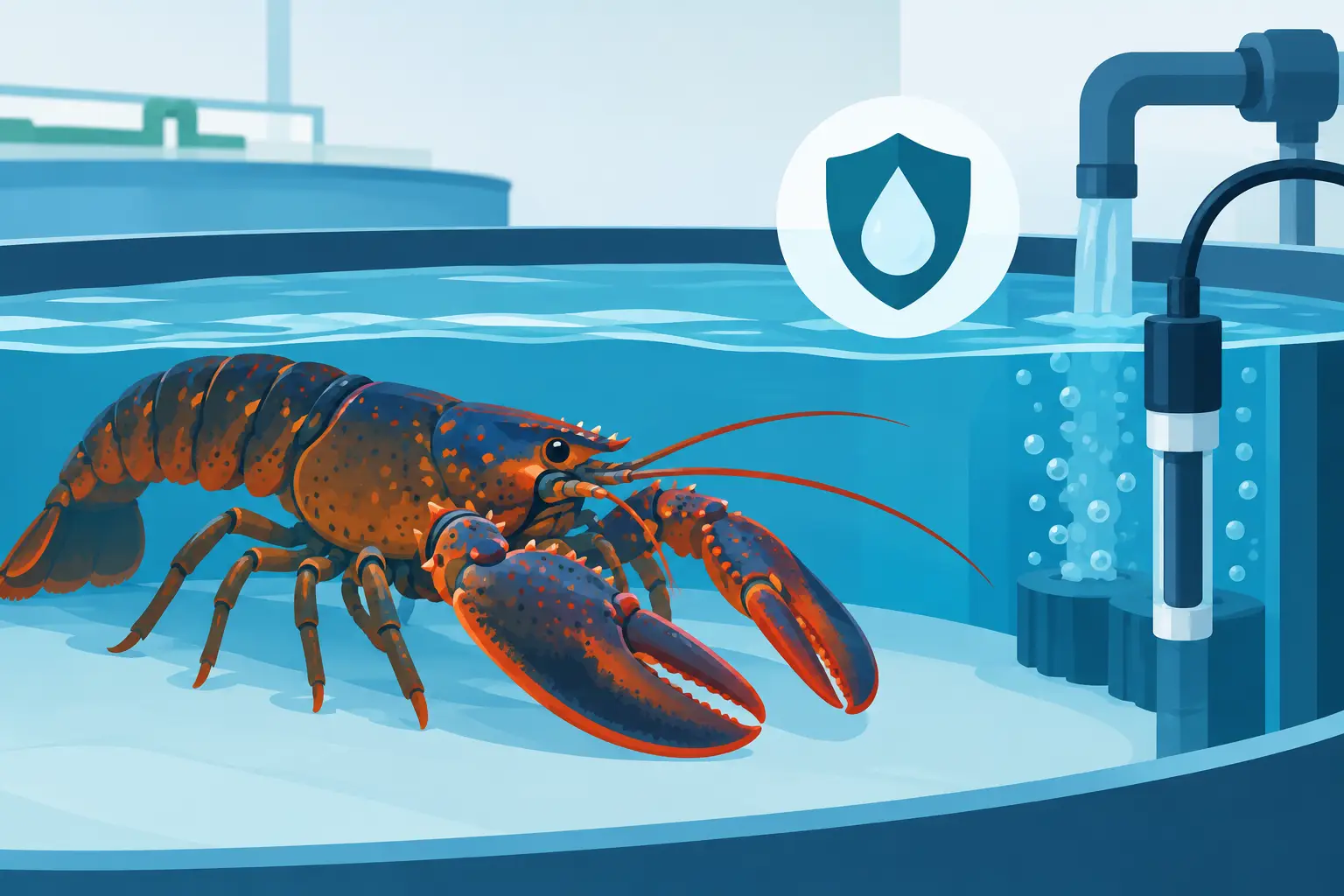
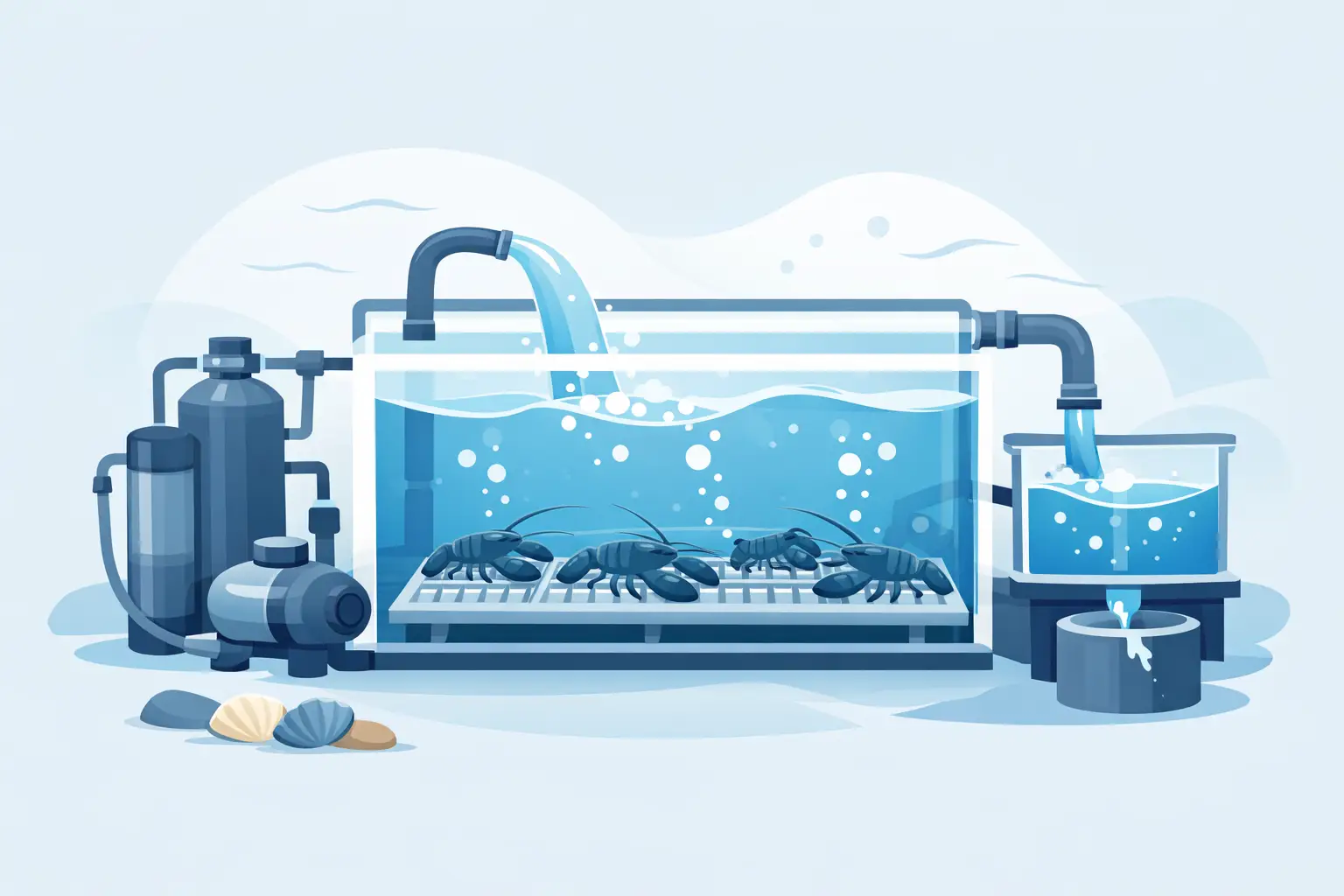
A proper salinity reading does not replace preventive maintenance. Lobster tanks need steady circulation, effective filtration media, clean mechanical filters, biological filtration support, and regular inspection of pumps, chillers, plumbing, and controls. Saltwater quality declines when solids accumulate, flow is restricted, or the biological filter cannot keep pace with the load.
This is where a full-service tank partner earns its value. Lobster Life Systems supports commercial operators with USA-made tank systems, marine salt, filtration supplies, maintenance, and technical service in one place. Instead of treating water chemistry, equipment, and inventory health as separate problems, the right service plan looks at the entire holding system.
A well-run lobster tank should not demand constant emergency correction. Keep the salt mix consistent, test with calibrated tools, record trends, and make measured adjustments before small changes become inventory losses. That steady routine keeps the display stronger, gives your team more confidence, and helps every live lobster arrive at the customer counter in better condition.